 how-to
How Often to Service Car Air Conditioning: A 2026 Guide
Table of Contents
- How Often Should You Service Car Air Conditioning
- Signs Your Car AC Needs Service
- Routine AC Maintenance and Tune-Ups
- How Long Does a Car AC Recharge Last
- Car AC Maintenance Tips to Extend System Life
- Understanding Car AC Service Cost and What to Expect
- Frequently Asked Questions
Last Updated: October 20, 2026
How Often Should You Service Car Air Conditioning
Your car's air conditioning system needs regular attention, and learning when to service car air conditioning keeps it working properly. Most vehicles benefit from a professional AC service every two to three years, though your specific needs depend on several factors. At Q3 Car & Truck Repair, we recommend starting with your owner's manual, which contains manufacturer guidance tailored to your vehicle's design and expected operating conditions.
The truth is that many car owners ignore their AC until it stops blowing cold air. By then, the problem has usually gotten worse and more expensive to fix. A little preventive maintenance now saves you from bigger headaches down the road.
Manufacturer Recommendations vs. Real-World Conditions
Your vehicle's manufacturer provides specific guidance in the owner's manual. Most automakers recommend servicing your car air conditioning every 12 to 24 months or every 12,000 to 15,000 miles, whichever comes first.
Real-world conditions often demand more service than the baseline recommendation. If you live in a hot climate or drive in stop-and-start traffic, your AC system works harder and degrades faster.
The key difference between manufacturer specs and actual practice comes down to usage intensity. A vehicle that sits in a garage most days will age differently than one that runs daily in summer heat.
Climate and Usage Impact on Service Intervals
Heat and humidity accelerate wear on your AC components. Drivers in hot climates should consider servicing every 12 months instead of waiting the full two years. The compressor, which is the heart of your system, works overtime in extreme temperatures.
Your driving style matters too. Stop-and-go city driving puts more strain on the AC than highway miles. Short trips don't give the system time to reach full operating temperature, which can trap moisture inside.
Consider these factors when planning your service schedule:
- Climate: Hot, humid regions need more frequent service
- Driving patterns: City driving stresses the system more than highway miles
- Vehicle age: Older vehicles accumulate wear and need closer monitoring
- Mileage: High-mileage vehicles require more attention
- Storage: Vehicles stored in extreme heat or cold need extra checks
If you manage a fleet of work trucks or commercial vehicles, you'll want to schedule service more aggressively than a personal vehicle owner would. The cost of downtime often exceeds the cost of preventive maintenance.
Signs Your Car AC Needs Service
Don't wait for your scheduled service date if your AC shows warning signs. Some problems develop quickly and need immediate attention. Catching them early prevents expensive repairs and keeps you comfortable on the road.
Performance Red Flags You Shouldn't Ignore
Weak airflow is often the first sign something's wrong. If air comes out of the vents but feels less cold than it used to, your refrigerant may be low or a component is failing.
Warm air blowing from the vents is a clear signal to stop driving and get service. This typically indicates refrigerant loss, a compressor problem, or a failed condenser. Continuing to run a failing AC system can damage the compressor beyond repair.
Inconsistent cooling, where the air gets cold, then warm, then cold again, suggests a refrigerant leak or electrical issue. These problems won't fix themselves and usually get worse with time.
Watch for these performance issues:
- Air starts cold but warms up after a few minutes
- One vent blows cold while others blow warm
- You have to set the temperature much colder than before to feel cool
- The AC cycles on and off rapidly instead of running smoothly
- Reduced airflow from all vents even with the blower on high
Unusual Noises and Odors
Strange sounds from under the hood often point to AC problems. A grinding noise usually means the compressor is failing. A squealing sound typically indicates a worn serpentine belt. Clicking or clunking suggests a loose component or internal damage.
Bad smells are equally important. A musty odor means moisture and mold are growing inside your evaporator core. This is common in humid climates and requires professional cleaning. A burnt smell could indicate electrical problems or refrigerant leaks.
If you notice any unusual noises or odors, schedule service with a qualified technician right away. These warning signs help prevent catastrophic failures that leave you stranded in the heat.
Routine AC Maintenance and Tune-Ups
Regular maintenance keeps your AC running efficiently and extends the lifespan of expensive components. A professional tune-up involves inspection, cleaning, and testing to catch problems before they become emergencies.
What Happens During a Professional AC Service
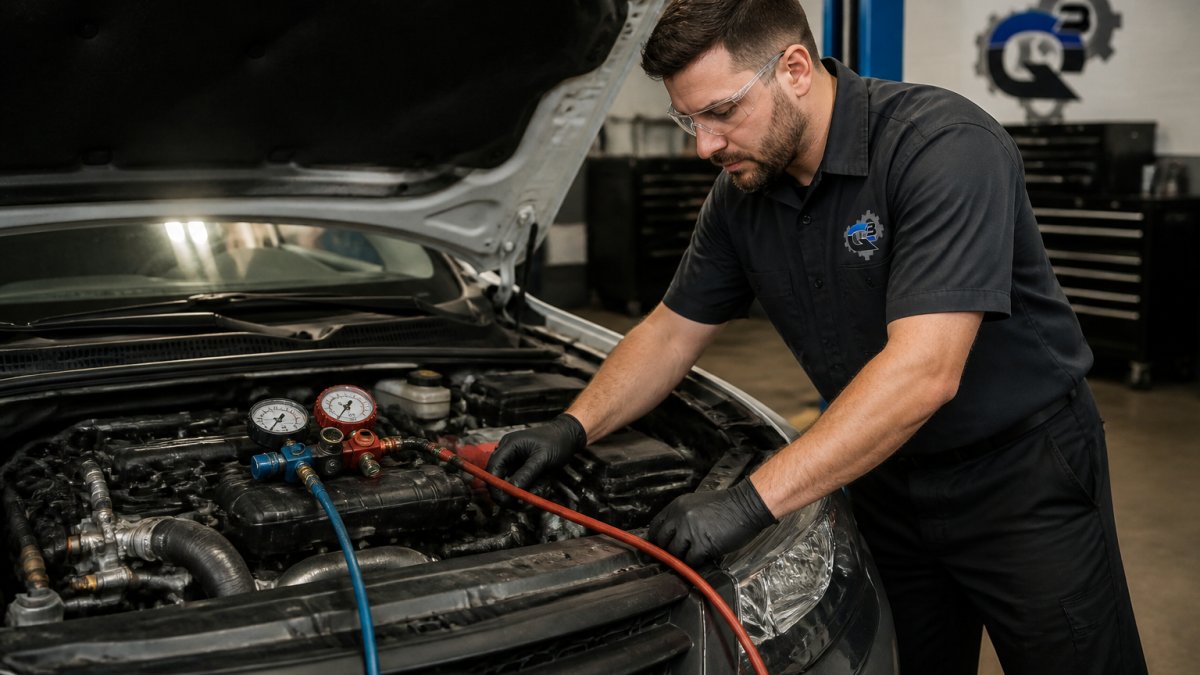
A complete AC service includes several steps that take about an hour to complete. The technician starts by checking refrigerant pressure and temperature to see if the system is operating within normal ranges.

Next, the system gets flushed to remove debris and moisture that accumulate over time. The compressor oil is checked and replaced if necessary.
If refrigerant is low, the system gets recharged to the manufacturer's specification. The cabin air filter gets replaced if it's dirty or clogged.
A proper AC service at Q3 Car & Truck Repair includes:
- Pressure and temperature diagnostics
- Hose and connection inspection
- System flushing and cleaning
- Refrigerant recharge if needed
- Compressor oil check and replacement
- Electrical component testing
- Cabin air filter replacement
- Full system performance verification
DIY Checks vs. Technician Work
Some AC maintenance tasks you can handle yourself. Checking your cabin air filter is straightforward, most filters are accessible behind the glove box. Visually inspecting hoses and connections for obvious damage takes just a few minutes. Listening for unusual noises helps you catch problems early.
You should never attempt to recharge refrigerant yourself. Modern refrigerants are regulated substances that require proper equipment and certification to handle safely. The wrong type or amount of refrigerant damages the system and voids warranties.
Compressor replacement, condenser repair, and evaporator core work absolutely require a professional. These components are complex and require proper tools and training to install correctly.
Leave these tasks to a qualified technician:
- Refrigerant recharge and leak detection
- Compressor replacement or repair
- Condenser or evaporator core work
- Electrical diagnostics and component replacement
- System pressure testing and diagnostics
How Long Does a Car AC Recharge Last
A properly functioning AC system shouldn't need refrigerant added between services. If your system needs recharging every season or every few months, you have a leak that needs fixing. Ignoring a leak wastes refrigerant and money while letting your car get hotter.
Refrigerant Lifespan and Leak Detection
Refrigerant doesn't get "used up" like gasoline. A sealed system keeps the same refrigerant circulating for years. If refrigerant is disappearing, there's a leak somewhere. Small leaks develop slowly, you might lose half a pound per year.
Finding a leak requires professional equipment. Technicians use dye tracing or electronic leak detectors to pinpoint where refrigerant escapes. Once located, the leak gets sealed, and the system gets recharged.
Common leak locations include:
- Hose connections and fittings
- Compressor seals
- Condenser tubes
- Evaporator core
- Expansion valve
The environmental impact of refrigerant leaks matters too. Modern refrigerants are less harmful than older CFC-based coolants, but they still contribute to atmospheric issues. Fixing leaks promptly protects the environment and keeps your system working.
Car AC Maintenance Tips to Extend System Life
Simple habits keep your AC running longer and more efficiently. Running your AC regularly, even in winter, helps maintain system pressure and lubricates components. Parking in shade reduces the workload on hot days. These small actions add up to better performance and lower repair costs.
Cabin Air Filter Replacement
Your cabin air filter traps dust, pollen, and debris before they enter the passenger compartment. A clogged filter reduces airflow and makes your AC work harder. Replacing it every 12 to 15 months keeps air flowing freely and improves cooling efficiency.
Most cabin filters are easy to access and replace. The filter sits behind the glove box or under the hood, depending on your vehicle. Check your owner's manual for the exact location and part number.
Clean air means better AC performance and healthier air inside your vehicle. If you notice reduced airflow or stale smells, check the filter first. It's often the simplest fix that makes the biggest difference.
Seasonal Preparation and Winter Care
Before summer arrives, run your AC system for a few minutes during each drive to keep it ready for heavy use. This maintains pressure, circulates lubricant, and helps you catch problems early.
In winter, run your AC on recirculation mode for a few minutes every month. This keeps the system from sitting idle for months at a time. When spring arrives and temperatures climb, your AC will be ready to perform without strain.
Protect your compressor by letting the engine warm up before blasting the AC at full power. Gradual cooling is gentler on components than sudden temperature changes.
Understanding Car AC Service Cost and What to Expect
Service costs vary based on what your system needs. A simple refrigerant recharge costs less than a compressor replacement. Understanding the difference between routine maintenance and emergency repairs helps you budget and make informed decisions.
Preventive Maintenance vs. Emergency Repairs
Regular service catches problems early when they're cheaper to fix. A refrigerant recharge during a scheduled tune-up prevents the compressor from running dry and failing. A clogged cabin filter gets replaced for minimal cost before it damages the blower motor.
Emergency repairs happen when you ignore warning signs. A failed compressor or condenser replacement costs significantly more than preventive service. The longer you wait after noticing problems, the higher the repair bill climbs.
Think of AC service like oil changes for your engine. Spending a little now prevents catastrophic failure later. The math always favors prevention.
Getting a Transparent Estimate
Before any work begins, ask for a detailed written estimate. The estimate should list each service, the parts needed, and the labor cost. A reputable shop explains what's being done and why it's necessary.
If you're unsure about a recommendation, ask questions. A good technician explains the problem in plain language and shows you the issue if possible. They respect your budget and suggest priorities if multiple repairs are needed.
Get estimates from multiple shops if you're uncertain. Comparing prices helps you understand what's fair. However, the cheapest option isn't always the best, quality workmanship matters more than saving a few dollars.
Keeping your car's air conditioning system in good condition protects your comfort and your investment. Q3 Car & Truck Repair offers transparent diagnostics and honest recommendations to help you make the right decisions about your vehicle's maintenance. Request an appointment today and let our skilled technicians keep your AC system running smoothly year-round.
Frequently Asked Questions
How often should you service your car's air conditioning system?
Most manufacturers recommend servicing your car air conditioning every two to three years as part of routine maintenance. However, if you live in a hot climate or drive frequently in high-temperature conditions, annual inspections are wise. Check your vehicle's owner manual for specific guidance, as some newer models have extended intervals. Signs like weak airflow or warm air warrant immediate service regardless of the schedule.
How long does a car AC recharge last?
A properly functioning AC system should retain its refrigerant for years without needing a recharge. However, refrigerant can escape through microscopic leaks in hoses, seals, or connections. If your car requires a recharge every year or more frequently, a leak exists that needs repair. A technician can detect leaks using specialized equipment and address the root cause rather than repeatedly recharging the system.
What are the signs that your car's AC needs service?
Watch for weak or warm airflow from vents, unusual hissing or grinding noises when the AC runs, musty odors, or visible refrigerant leaks under the car. Performance drops gradually as the system ages, but sudden changes signal an urgent problem. If your AC worked fine last month and now blows warm air, have it inspected promptly. Catching issues early prevents compressor damage and costly repairs.
Does regular car AC maintenance really prevent expensive repairs?
Yes. Preventive maintenance catches small issues before they damage the compressor or other major components. A worn cabin air filter reduces cooling efficiency, while low refrigerant forces the compressor to work harder, leading to failure. Annual inspections cost far less than replacing a compressor or rebuilding the entire AC system. Regular service also extends the lifespan of your car's cooling system and keeps your vehicle comfortable year-round.