 how-to
Tips for Finding a Reliable Local Mechanic
Table of Contents
- Why Finding a Reliable Local Mechanic Matters
- Verify Certifications and Professional Credentials
- Questions to Ask a Mechanic Before Repair Work Begins
- Red Flags: Signs of a Dishonest Auto Repair Shop
- Check Reputation Through Reviews and Referrals
- Evaluate Transparency and Communication
- Build a Long-Term Relationship With Your Mechanic
- Frequently Asked Questions
Last Updated: September 24, 2026
Finding a trustworthy mechanic is one of the most important decisions car owners make. A reliable local mechanic can save you thousands in unnecessary repairs and give you peace of mind knowing your vehicle is in capable hands. This guide walks you through the essential steps to find a reliable local mechanic you can trust with your car or truck.
Why Finding a Reliable Local Mechanic Matters
Your vehicle is one of your biggest investments. A dishonest shop can drain your wallet with unnecessary repairs. A skilled, trustworthy mechanic protects both your car and your finances, communicates clearly about what needs fixing, and stands behind their work with solid warranty coverage.
Verify Certifications and Professional Credentials
Dealership shops vs. independent shops: When to choose each
This is one of the most common decisions car owners face, and it hinges on certifications, warranty coverage, and vehicle age.
Dealership repair shops:
Dealerships employ technicians trained specifically on their brand (Ford, Toyota, BMW, etc.). Advantages include manufacturer-specific expertise, OEM parts, recall service at no cost, and advanced diagnostics for newer vehicles. Drawbacks: labor costs 20-40% more than independents ($100-$180/hour vs. $60-$120/hour), less flexibility on parts, and longer wait times.
When to use a dealership: Your vehicle is under manufacturer warranty, has a known recall, is newer (under 5 years) with complex electronics, or needs work on brand-specific systems.
Independent repair shops:
Independent shops employ technicians with varied backgrounds, often specializing in specific brands or repair types. Advantages: 20-40% lower labor rates, flexibility on parts, personalized service, and faster turnaround. Drawbacks: variable expertise, warranties covering only the repair performed, and potential manufacturer warranty risks (though federal law limits this).
When to use an independent shop: Your vehicle is out of warranty, you want lower costs, you have a trusted shop with strong reviews, or your vehicle is older (10+ years).
Specialty independent shops: Some specialize in specific brands or repair types and rival dealerships in expertise while charging less. Look for shops specializing in your vehicle type, technicians with 10+ years of experience, and ASE certifications.
ASE Certification and What It Means
ASE (Automotive Service Excellence) certification is the gold standard for mechanic credentials across all shop types. An ASE-certified technician has passed rigorous exams and proven hands-on experience in their specialty area.
ASE certification means the technician has met national standards and demonstrated knowledge of current repair techniques. Look for the blue ASE seal and ask which specific certifications each technician holds:
- A1-A9 certifications, Cover different vehicle systems (engine repair, transmission, brakes, suspension, electrical, heating/air conditioning, engine performance, light repair, and diesel engines).
- L1 certification, Advanced engine performance specialist.
- X1 certification, Exhaust systems specialist.
A transmission specialist carries different credentials than an engine specialist. A shop working on diesel trucks should have technicians with diesel certifications (A9).
Other Relevant Certifications to Look For
Other relevant certifications include manufacturer training programs (Ford, GM, Chrysler, Toyota, Honda), diesel engine certifications (ASE A9), transmission specialist certifications (ASE A2), hybrid/EV training, smog check licenses, and I-CAR certification for collision shops.
How to verify certifications:
- Ask to see the technician's ASE card or certification documents (legitimate shops display these or can show them upon request)
- Check the ASE registry at ASE Technician Registry to verify a technician's current certifications
- Ask about continuing education, ASE certifications require ongoing training to maintain (every 5 years for ASE)
- Look for shops that display certifications on their website or in their waiting area
Questions to Ask a Mechanic Before Repair Work Begins
Diagnostic and Estimate Questions
Ask about the diagnostic process:
- "What diagnostic tools will you use?" (Modern shops use computerized equipment)
- "How much is the diagnostic fee, and will you credit it toward repairs?" (Honest shops credit the fee)
- "Can you show me the diagnostic results?" (You should see the actual scan tool readout)
Ask about the estimate:
- "Will you provide a written estimate before starting work?" (Never accept verbal estimates)
- "What's included in this estimate?" (Clarify every line item)
- "What happens if the actual cost exceeds the estimate?" (Most shops cap overages at 10% without approval)
Parts and Warranty Questions
Ask about parts:
- "Will you use OEM or aftermarket parts?" (OEM matches factory specs; aftermarket costs less)
- "Can I bring my own parts?" (Some shops allow this)
- "Do you guarantee the parts you install?" (Reputable shops stand behind their parts)
Ask about warranties:
- "How long is the warranty on parts and labor?" (Standard is 12 months or 12,000 miles)
- "What does the warranty cover?" (Only the repair or the entire system?)
- "If something goes wrong, can I bring it back?" (Honest shops fix mistakes without argument)
Red Flags: Signs of a Dishonest Auto Repair Shop
During Your First Visit
Watch for these warning signs:
- The shop is filthy or disorganized
- Technicians can't explain work in terms you understand
- Service advisor pressures immediate approval
- They recommend major repairs without showing the problem
- Your car isn't ready when promised with no explanation
- The waiting area is uncomfortable or nonexistent
In Communications and Estimates
Red flags in writing and conversation:
- Vague estimates with "miscellaneous" or "additional repairs as needed"
- Estimates jumping dramatically from initial quote to final bill (over 10% without approval is unacceptable)
- Refusal to provide written estimates
- Using technical jargon to confuse you
- Unwillingness to answer direct questions about pricing or warranty
- Pressure to decide immediately
A reliable local mechanic answers your questions completely and without defensiveness. If they seem bothered by your questions, that's a sign they're not being honest.
Check Reputation Through Reviews and Referrals
Online reviews and personal referrals are your best research tools.
Evaluate Transparency and Communication
Transparency separates honest shops from dishonest ones. A reliable local mechanic explains what's happening at every step, increasingly through digital documentation.
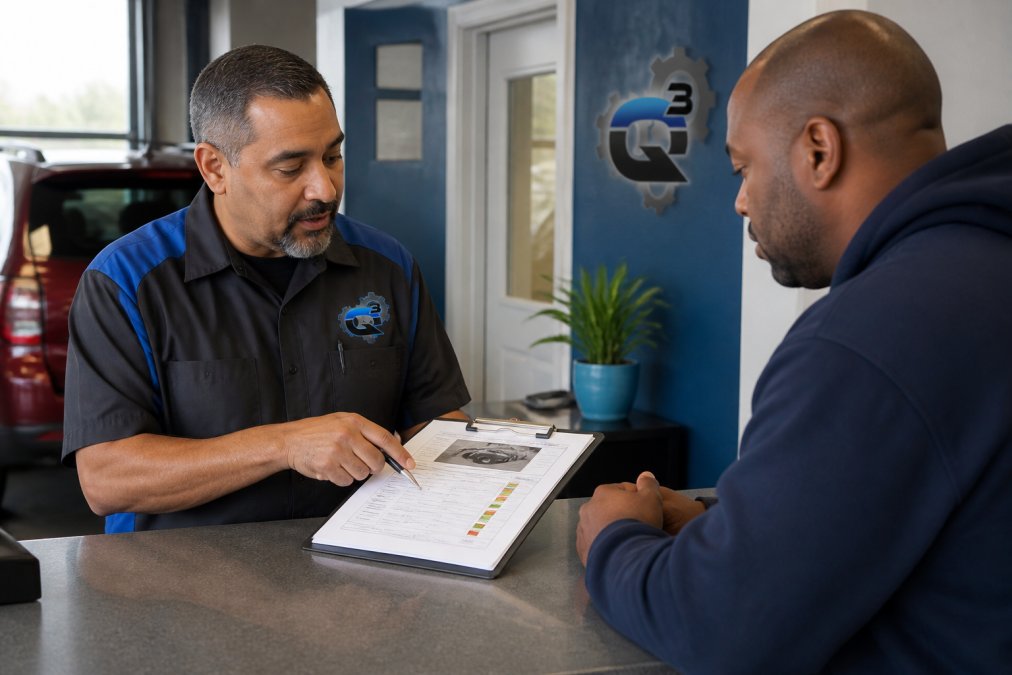
Digital diagnostic transparency: What to expect and ask for
- Digital scan tool readouts, Actual diagnostic trouble codes and sensor data. Ask: "Can you email me the scan tool screenshot?"
- Photo and video documentation, Before-and-after photos of worn parts, leaks, or damage.
- Digital inspection reports, Professional reports with photos, measurements, and repair recommendations.
- Labor time documentation, Detailed breakdowns based on manufacturer service guides, not guesswork.
How to verify transparency during your visit:
What transparency looks like in practice:
- Service advisor walks you through diagnostic results on screen or printout
- They explain why each repair is necessary with reference to diagnostic data
- They show photos or video of damaged parts before and after repair
- They provide detailed invoices listing every part, labor hours, and diagnostic fees
- They answer follow-up questions without irritation and explain technical terms in plain language
Red flags in communication:
- The shop avoids showing you diagnostic data or damaged parts, citing "liability" or "shop policy"
- They use technical terms without explaining them or refuse to simplify explanations
- The invoice lists vague charges like "miscellaneous," "additional repairs as needed," or "shop supplies" without itemization
- They discourage questions, seem annoyed by requests for documentation, or rush you through the explanation
- They won't provide written documentation of what was done or email digital reports
- They claim their diagnostic equipment is "proprietary" and can't be shared with you (legitimate shops can always explain findings in customer-friendly terms)
Why digital transparency matters:
Build a Long-Term Relationship With Your Mechanic
The best mechanics are the ones you return to repeatedly. Long-term relationships benefit both you and the shop.
How to build that relationship:
- Stick with one shop for routine maintenance (they learn your vehicle's history and quirks)
- Keep all service records in one place (your mechanic can reference what's been done)
- Ask about preventative maintenance schedules (good shops help you avoid expensive repairs later)
- Communicate clearly about any concerns or changes in how your vehicle drives
- Pay promptly and treat the staff with respect (good relationships go both ways)
Frequently Asked Questions
What should I look for when choosing a reliable local mechanic?
Look for ASE-certified technicians, verified customer reviews, transparent pricing practices, and clear communication about repairs. Ask about their experience with your vehicle type, check how long they've been in business, and verify their shop is clean and organized. A reliable mechanic explains what's wrong with your vehicle and why repairs are necessary before proceeding.
How can I tell if an auto repair shop is dishonest?
Red flags include refusing to provide written estimates, pressuring you into immediate repairs, recommending unnecessary work, avoiding questions about parts or labor, and having poor online reviews mentioning overcharging. Dishonest shops may also discourage you from getting a second opinion or fail to explain repair details clearly. Trust your instincts if something feels off.
What are the benefits of ASE certified technicians?
ASE certification means technicians have passed rigorous exams and meet industry standards for technical knowledge and skill. ASE-certified technicians stay current with automotive technology, follow best practices, and demonstrate accountability to professional standards. This certification gives you confidence that your vehicle is handled by someone with verified expertise in their specialty area.
What questions should I ask before agreeing to repairs?
Ask: What's the diagnostic fee? What parts will you use, original equipment manufacturer or aftermarket? What's your labor rate? Do you offer a warranty on parts and labor? How long will repairs take? Can I see the vehicle inspection and repair order? Will you call before doing any work beyond the estimate? These questions help you understand costs and set clear expectations.