 how-to
How to Verify Mechanic Certifications: A Step-by-Step Guide
Table of Contents
- Why Verifying Mechanic Certifications Matters
- What Is ASE Certification and How It Differs From Licensing
- How to Use ASE Certification Lookup Tools
- Step-by-Step Process to Verify Mechanic Certifications
- Questions to Ask Your Mechanic Before Service
- Red Flags: Identifying Unqualified or Fraudulent Mechanics
- What to Do If You Discover Fraudulent Credentials
- Conclusion
Last Updated: August 21, 2026
Why Verifying Mechanic Certifications Matters
Finding a trustworthy mechanic is critical, your car's safety depends on it. A technician who misdiagnoses a brake problem, skips safety checks, or performs unnecessary repairs can cost thousands of dollars and endanger your family. Professional certifications and licensing requirements exist to protect consumers from unqualified or fraudulent mechanics.
At Q3 Car & Truck Repair, we believe transparency starts with credentials. When you verify a mechanic's qualifications, you gain peace of mind by confirming professional competency through official registries and industry standards.
Verifying mechanic certifications is entirely within your power and requires no technical knowledge. This guide walks you through exactly how to do it, what to look for, and what red flags should send you elsewhere.
What Is ASE Certification and How It Differs From Licensing
ASE certification is a voluntary credential earned by automotive technicians who pass rigorous testing in specific repair areas. ASE stands for the National Institute for Automotive Service Excellence and is the industry standard for technical proficiency across the United States.
Licensing is mandatory in most states, a government-issued credential allowing someone to legally operate a repair facility. Licensing requirements vary by state and sometimes by county.
ASE certification is voluntary and signals that a technician has invested in professional development and passed comprehensive testing. ASE covers eight primary service areas: engine repair, automatic transmission/transaxle, manual drive train and axles, suspension and steering, brakes, electrical/electronic systems, heating and air conditioning, and engine performance (ase.com).
Many shops employ technicians with both credentials. The best shops typically have technicians with multiple ASE certifications.
ASE certification represents voluntary professional development and testing. A technician who pursues ASE credentials shows commitment to industry standards and technical competency through study, exams, and continuing education.
How to Use ASE Certification Lookup Tools
The ASE maintains an official online registry where you can verify whether a technician holds current ASE certifications.
Visit the ASE website and navigate to their credential verification portal. You'll need the technician's name and either their ASE ID number or date of birth. The registry displays current certifications held, expiration dates, areas of specialization, and whether certifications are active or expired. This takes roughly two minutes and is free and public-facing.
Look for active certifications with expiration dates in the future. If a technician's ASE certification expired years ago and hasn't been renewed, that's a red flag. Maintaining ASE certification requires passing recertification exams every five years (ase.com).
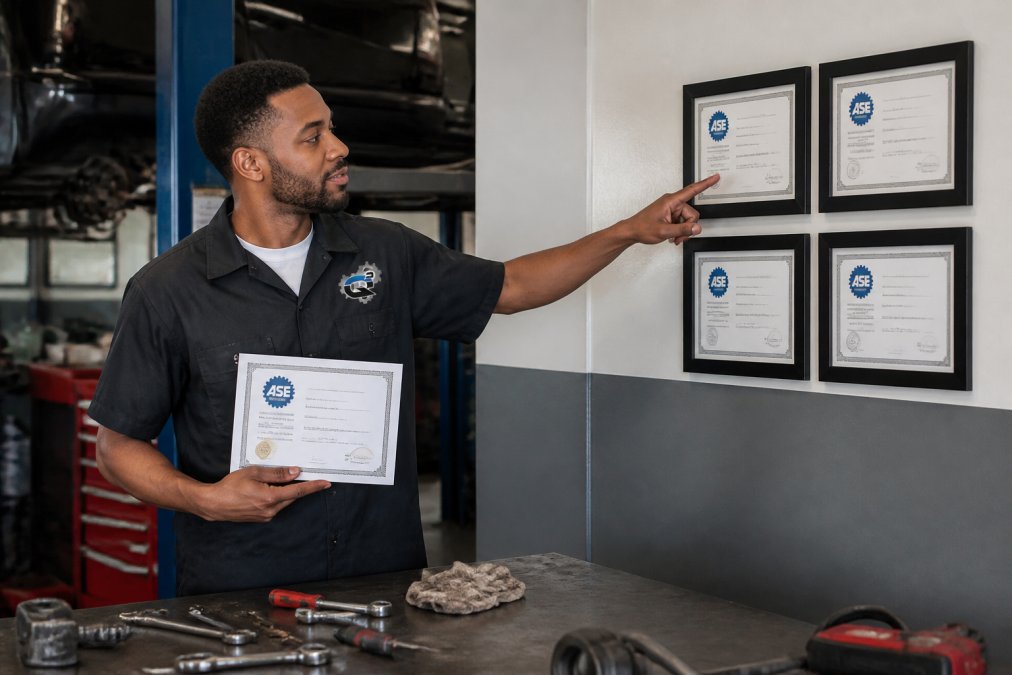
Many repair shops display ASE certifications prominently in their lobbies. If you visit a facility and see no certification documentation, ask directly. A legitimate shop will have records available.
Step-by-Step Process to Verify Mechanic Certifications
Verifying a mechanic's credentials involves multiple checks. Layer your verification sources to build confidence.
Step 1: Request Credentials and Identification Numbers
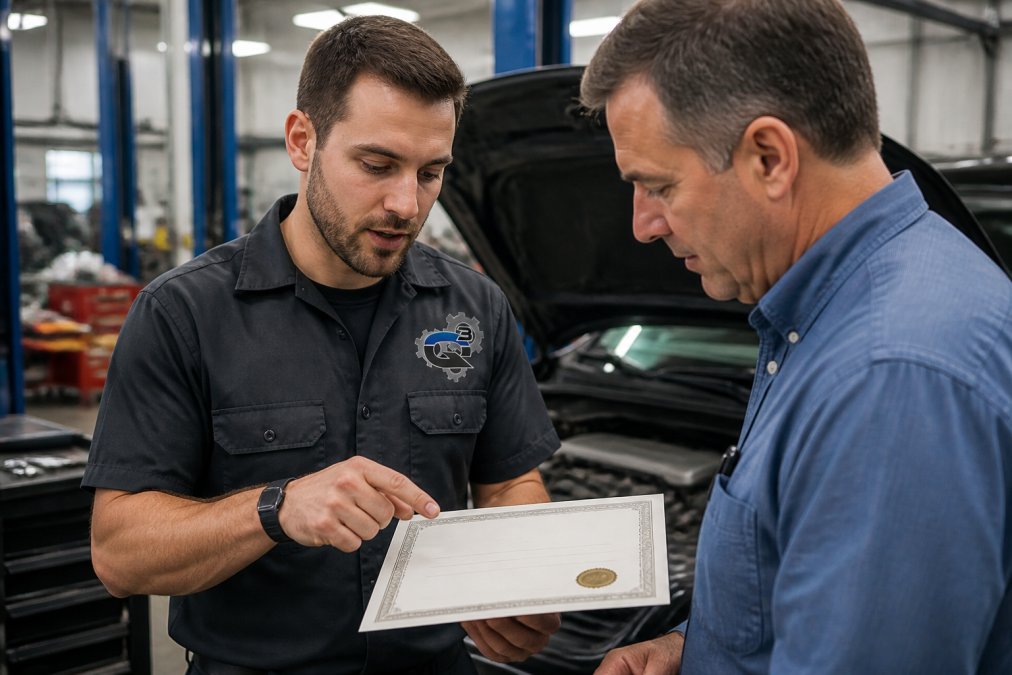
Ask your mechanic directly for their credentials. A legitimate technician will provide this information without hesitation. Request their full name, ASE ID number (if ASE-certified), state license number, and any other relevant certifications.
If a mechanic refuses to provide this information or becomes defensive, find someone else. Transparency about professional qualifications is non-negotiable.
Step 2: Check ASE Registry and State License Databases
With the information in hand, verify through official channels. Visit the ASE credential verification portal and search for the technician's ASE certifications.
Next, check your state's licensing database. Most states maintain online registries for automotive service professionals. Search your state's department of motor vehicles or professional licensing board website. The registry will show whether the license is active, in good standing, and whether any complaints or disciplinary actions are on file.
This step takes 10-15 minutes but provides official confirmation against government registries.
Step 3: Verify Shop Accreditation Status
Check whether the repair shop itself meets industry standards. Many shops pursue accreditation through organizations like the National Institute for Automotive Service Excellence or state-specific repair shop associations.
Call the shop and ask: "Is your facility accredited?" If yes, ask which organization accredited them, then verify that accreditation through the organization's website. Accreditation indicates the shop has met professional standards and submitted to inspection.
Step 4: Review Service Records and Professional Development
Ask to see records of the technician's professional development and service history. Technicians committed to industry standards pursue ongoing training and manufacturer-specific certifications.
Also ask about the shop's service record: How long have they been in business? Do they have customer reviews? Have they resolved complaints professionally? These questions reveal whether the shop prioritizes service excellence and customer satisfaction.
Questions to Ask Your Mechanic Before Service
Before handing over your vehicle, ask these questions:
"Can you walk me through why this repair is necessary?" A competent mechanic explains the problem clearly without using jargon to confuse you.
"How long will this take, and what will it cost?" You deserve a clear estimate before work begins.
"Do you warrant your work?" Reputable shops stand behind their repairs with warranties on parts and labor.
"Are you using OEM parts or aftermarket parts?" You should know which you're getting and why.
"Can I see your technician's certifications?" This demonstrates you care about professional standards.
"What's your cancellation or rework policy?" Clear policies protect both of you if issues arise.
Red Flags: Identifying Unqualified or Fraudulent Mechanics
Pressure to decide immediately. A mechanic who rushes you into authorizing repairs without time to think operates against your interests.
Vague explanations. If a mechanic can't clearly explain what's wrong or why a repair is necessary, they may not understand the problem.
Unwillingness to show credentials. If a mechanic resists providing ASE ID numbers, state license information, or certification documentation, that's a deal-breaker.
Inflated repair estimates. Compare estimates from multiple shops. If one is dramatically higher without clear justification, ask why.
No written documentation. Legitimate shops provide written estimates, invoices, and warranty information.
Facility appearance. A professional shop maintains clean work areas, organized parts storage, and proper safety equipment.
Lack of customer reviews or history. Check online reviews on Google, Yelp, or the Better Business Bureau.
Pressure to perform unnecessary repairs. If multiple shops recommend the same repair but one suggests many additional repairs the others didn't mention, be skeptical.
What to Do If You Discover Fraudulent Credentials
If you discover that a mechanic lied about credentials or performed poor work, take action.
Document everything. Keep copies of the estimate, invoice, warranty information, and correspondence. Take photos of the work if possible.
Contact the shop directly. Explain the issue professionally. Many problems get resolved through direct communication.
File a complaint with your state's licensing board. Most states have a process for filing complaints against licensed repair professionals. The licensing board investigates and can take disciplinary action.
Report to the Better Business Bureau. File a complaint with the BBB in your area.
Contact the ASE if applicable. If the mechanic falsely claimed ASE certification or violated ASE standards, file a complaint with the ASE directly.
Seek legal recourse if necessary. For significant financial losses, consult a small claims court attorney.
Leave honest reviews. Post factual, specific reviews on Google, Yelp, and the Better Business Bureau to warn other consumers.
Choosing the right mechanic is one of the most important decisions you'll make as a vehicle owner. Your car's safety and financial security depend on it. By verifying credentials, asking the right questions, and staying alert for red flags, you protect yourself from incompetent or dishonest service.
At Q3 Car & Truck Repair, we understand that trust is earned through transparency and professional competency. Our team of highly skilled technicians holds current certifications and maintains the highest industry standards. We welcome credential verification and pride ourselves on straightforward communication about every repair. When you need automotive service you can rely on, we're here to deliver the honest, expert care your vehicle deserves. Request Appointment today and experience the difference professional service makes.
Frequently Asked Questions
How do I know if a mechanic is actually certified?
Request your mechanic's ASE certification number and verify it through the ASE registry at ase.com. Ask to see their official certification card and confirm the expiration date hasn't passed. Check your state's licensing board for any disciplinary records. A legitimate technician will be transparent about their credentials and happy to provide documentation. Many shops also display their ASE Blue Seal certification prominently in the waiting area.
What's the difference between ASE certification and a state license?
ASE certification is a voluntary, industry-recognized credential that demonstrates technical proficiency in specific automotive specialties. State licensing requirements vary, some states mandate licensing for mechanics, while others do not. ASE certification shows a technician has passed rigorous testing and meets professional standards, while a state license (where required) is a legal requirement to operate. Both are important: verify that your mechanic holds the appropriate certification for the work they're performing and any licenses required in your state.
Can I look up an ASE certification online?
Yes. Visit the ASE website's credential verification portal and enter the technician's identification number or last name to confirm their certification status, expiration date, and certified specialties. You can also contact ASE directly by phone. The lookup is free and available to the public. This is one of the fastest ways to verify that a mechanic's credentials are current and legitimate.
What should I do if I discover a mechanic has false credentials?
Report the fraudulent claim to your state's Attorney General office, the Better Business Bureau, and your state's automotive licensing board if one exists. If you've already paid for services, file a complaint with your credit card company or payment service. Document everything: the false claims, dates, communications, and any evidence of fraud. You may have grounds for a chargeback or small claims action depending on the circumstances and your state's consumer protection laws.
This article was written using GrandRanker