 How-to
Finding Parts for Discontinued Trucks: A Sourcing Guide
Last Updated: November 17, 2026
Quick Summary
Finding discontinued truck parts starts with decoding your VIN to confirm fitment, then working sourcing channels in order: dealer parts locators, dedicated truck salvage yards, online used-parts marketplaces, aftermarket specialists, rebuilders, and owner forums. Classify each part by failure consequence to decide between OEM, remanufactured, and aftermarket options.
- Give the parts counter your full 17-character VIN, not just year and model, since mid-year production changes affect fitment.
- Dealers can run a parts locator search across each other's nationwide stock for discontinued components.
- Most warranties cover the part only, not labor, so a cheap part failing in six months can cost the install twice.
- Remanufactured units usually carry a core charge, a deposit refunded when you return the old unit within the window.
- Most used parts are sold as-is with no warranty, so assume no returns if the listing is silent.
Table of Contents
- Why Discontinued Truck Parts Are Harder to Find (and What Still Works)
- Start With Your VIN: Truck Parts Compatibility by VIN
- OEM vs. Aftermarket Truck Parts: Which to Choose for an Older Rig
- Where to Source: Six Channels for Hard-to-Find Components
- Used Truck Parts Inspection: What to Check Before You Pay
- Truck Parts Warranty and Return Policy: Read Before You Order
- Book an Inspection Before Your Replacement Part Goes In
- Frequently Asked Questions
Why Discontinued Truck Parts Are Harder to Find (and What Still Works)
Finding discontinued truck parts comes down to one shift in thinking: stop hunting for the part, start hunting for the number. Manufacturers stop stocking parts for older trucks years before the trucks stop running. Dealer shelves empty out, tooling gets scrapped, and the aftermarket fills the gap unevenly.
A work truck breaks down, the owner calls three dealers, hears "discontinued" each time, and assumes the truck is finished. It usually isn't.
What still works is a system: decode the VIN, decide between OEM and aftermarket, then work the sourcing channels in order. For a deeper look at the sourcing side, see our guide to finding authentic replacement parts for discontinued trucks.
The hard part isn't the search. It's knowing which part number actually fits your truck before you pay.
Start With Your VIN: Truck Parts Compatibility by VIN
Checking parts compatibility by VIN is a practical way to confirm a part fits before you buy. The VIN is a 17-character code that encodes the model year, plant, engine, and build details for your specific truck. Two trucks that look identical on the lot can take different parts.
Where to Decode Your VIN and What to Record
You'll find the VIN on the driver's side dashboard near the windshield, on the door jamb sticker, and on the registration. Write down these details before you call anyone:
- Full 17-character VIN
- Engine size and fuel type
- Cab and bed configuration
- Gross vehicle weight rating
- Axle and brake package
Give the parts counter the full VIN, not just the year and model. A common mistake is ordering by "2010 model year" alone. Mid-year production changes mean the VIN is the only reliable filter.
OEM vs. Aftermarket Truck Parts: Which to Choose for an Older Rig
OEM parts match the factory blueprint exactly. Aftermarket parts are made by other companies, and quality ranges from excellent to unusable. For an older rig, the right answer depends less on the label and more on three things: the part's failure mode, the warranty behind it, and how hard the truck works.
Start by classifying the part by what happens if it fails:
| Failure consequence | Default choice | Why |
|---|---|---|
| Safety-critical (brakes, steering, suspension) | OEM when available; otherwise a known aftermarket brand with a written warranty | A no-name part here risks a crash, not a comeback |
| Stranding failure (fuel pump, starter, alternator, sensors) | OEM or a reputable remanufactured unit | A breakdown on the road costs far more than the part |
| Progressive wear (hoses, belts, filters, brake pads) | Aftermarket is fine | Failure is gradual and the part is cheap to replace |
| Cosmetic (body panels, trim, interior) | Aftermarket or used | Fit and finish matter more than provenance |
The Warranty Math Nobody Runs
OEM parts usually carry a longer warranty and fit right the first time. Aftermarket parts cost less and are often the only option left. But the sticker price is not the real cost. Compare the part price plus the labor to install it, then ask what happens if the part fails inside the warranty window.
Most warranties cover the part only, not the labor. That means a cheap part that fails in six months can cost you the install twice. On a job that books several hours of labor, a part with a labor-inclusive warranty is often the better buy even at a higher price. Ask the counter or the seller directly: does the warranty cover labor, and for how long?
Remanufactured: The Third Option
Remanufactured parts sit between new and used. A rebuilder takes a core, replaces the wear components, and tests the unit to a specification. For alternators, starters, brake calipers, and injection components, a reputable reman is often the best value on an older truck, it restores the wear surfaces that a used part still has worn.
The trade-off is the core charge: you usually pay a deposit up front and get it back when you return the old unit (the EPA). Miss the return window and the deposit is gone. Confirm the core charge and the return window before you order.
How Duty Cycle Changes the Answer
A truck that runs short local routes on paved roads sees far less vibration and thermal cycling than a truck that hauls loaded on rough roads all day. The harder the duty cycle, the more the calculus tilts toward OEM or reman for anything that strands the truck. A common pattern is to spend the premium on the parts that stop the truck and save on the parts that only make it look tired.
Watch out: a seller who cannot tell you the warranty length, the labor coverage, and the core charge in writing is a seller to skip for anything beyond a cosmetic part. Our breakdown of OEM parts for vehicle repairs covers the warranty and trade-off details.
When Aftermarket Is the Only Option Left
Aftermarket becomes the right call when OEM supply has dried up entirely. That happens most on body parts, interior pieces, and accessories for trucks ten years and older. Stick to established brands with a real warranty, and avoid no-name parts for anything safety-related. Our guide on when to choose aftermarket over OEM parts walks through the decision.
Where to Source: Six Channels for Hard-to-Find Components
Six channels do most of the work when a part is discontinued. Work them in this order and you'll usually find the component without paying a premium.
- Dealer parts locator. Dealers can search each other's stock nationwide. Ask for a "parts locator" search, not just a stock check.
- Dedicated salvage yards. Yards that specialize in trucks keep sorted inventory and can pull by VIN.
- Online used-parts marketplaces. Sites that list by interchange number widen the search across model years.
- Aftermarket specialists. Some shops stock diesel and heavy-duty components that dealers dropped. Our diesel aftermarket parts service covers sourcing and install.
- Rebuilders and remanufacturers. For alternators, starters, and injection parts, a rebuilt unit often beats a used one.
- Owner forums and groups. Enthusiast communities know which parts interchange and which sellers ship fast.
Vetting Third-Party Sellers: A Checklist
Run this checklist before you send money to any seller you haven't used before:
- Seller confirms the part number and interchange number in writing
- Photos show the actual part, not a stock image
- Return policy is stated clearly, including who pays return shipping
- Seller has a real phone number and physical address
- Payment goes through a method with buyer protection
- VIN is requested to confirm fitment
- Reviews mention the same part category you're buying
Watch out: a seller who won't confirm fitment by VIN in writing is a seller to skip. That single step prevents most wrong-part returns.
Used Truck Parts Inspection: What to Check Before You Pay
Inspect any used part in person, or demand detailed photos, before money changes hands. A used part that fails in a month costs you the part price plus the labor twice.
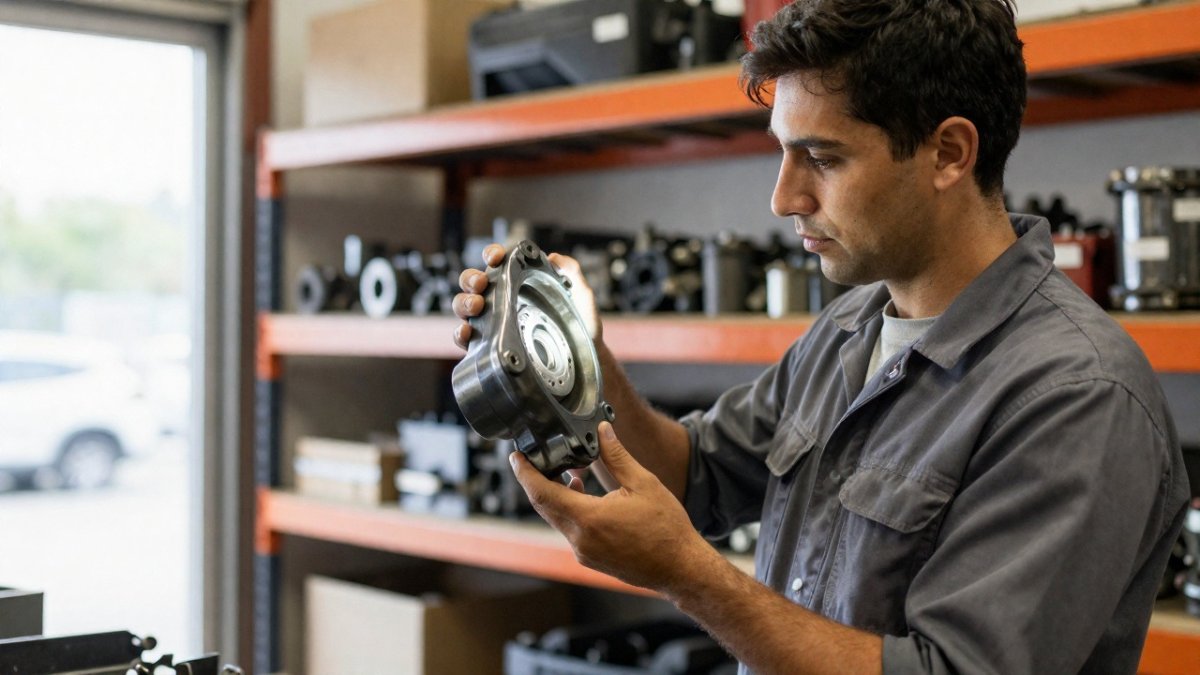
Check these items on the bench:
- Cracks or repairs around mounting holes and castings
- Rust that has eaten into structural metal, not just surface scale
- Worn splines, threads, or bearing surfaces
- Evidence of previous welding or heat damage
- Matching part and casting numbers against your VIN
For electronics, ask the seller to test the part before shipping. A no-test policy on a sensor or module is a red flag.
Truck Parts Warranty and Return Policy: Read Before You Order
A truck parts warranty and return policy decides who eats the cost when a part fails or doesn't fit. Read both before you order, not after.
Look for these terms:
- Warranty length. New OEM parts usually run longer than used or aftermarket.
- Labor coverage. Most warranties cover the part only, not the install.
- Return window. Short windows punish slow installs.
- Restocking fees. Common on special-order and electrical parts.
- Core charges. Remanufactured parts often require the old unit back.
The thing nobody tells you about used parts: most are sold as-is with no warranty at all. If the listing is silent on returns, assume there are none.
Book an Inspection Before Your Replacement Part Goes In
A pre-installation inspection catches the problems that cause comebacks. A new part bolted onto a worn mount or a damaged harness will fail again, and the part warranty won't cover it.
A pre-installation inspection can help catch problems that cause comebacks, since a new part bolted onto a worn mount or damaged harness may fail again.
Our technicians are committed to transparent communication, and we aim to give you a clear explanation of why a repair is needed before any work begins. For ongoing fleet work, our medium duty truck repair service handles scheduled inspections and installs.
Discontinued parts don't have to end a good truck's life. The work is in the details: the VIN, the part number, the seller, and the inspection. Get those right and an older rig keeps earning. Q3 Car & Truck Repair offers honest estimates, skilled technicians, and clear explanations at every step. Get started with Q3 Car & Truck Repair and keep your truck on the road.
Frequently Asked Questions
How do you find parts for a discontinued truck model?
Start with the VIN, which identifies the exact trim, engine, and production run your truck came from. With that number, check dealer parts counters for remaining stock, then specialty salvage yards that catalog by interchange number, then aftermarket manufacturers who still tool for that platform. Confirm fitment against the VIN or a factory parts diagram before paying, and ask each seller about the warranty and return window. Discontinued truck parts often exist in three or four places at once, so calling rather than relying on a website search saves time.
Are aftermarket parts reliable for discontinued trucks?
Many are, but the range is wide. Established aftermarket brands that publish fitment data and offer a written warranty are a reasonable substitute for OEM when factory stock is gone. The risk sits with unbranded sellers who list a part as fitting dozens of models with no documentation. Compare OEM vs. aftermarket truck parts on material, warranty length, and whether the seller lists a specific interchange number, not just a model year range. For safety-critical parts like brake or steering components, lean toward OEM or a known brand.
How do you check whether a used truck part is in good condition?
Ask for photos of the actual part, not a stock image, and look at mounting surfaces, castings, and connectors for cracks, corrosion, or previous repairs. Request the donor vehicle's mileage and VIN so you can confirm it matches your application. On arrival, compare casting numbers and connector shapes against your original before installing anything. Having a technician inspect expensive assemblies like transmissions or differentials can catch problems a photo cannot show.
What should you have ready before ordering a hard-to-find truck part?
Have the VIN, the factory part number if you can find it, photos of the failed component, and the casting or stamping numbers from the old part. Note the engine, transmission, and any mid-year production changes for your model. Confirm the seller's truck parts warranty and return policy in writing, including who pays return shipping. With those details in hand, a parts counter or salvage yard can cross-reference interchange numbers and tell you quickly whether the part will fit or whether you need to keep looking.