 how-to
What to Do If a Mechanic Overcharges: 2026 Guide
Table of Contents
- How to Tell If a Mechanic Overcharges You
- Car Repair Estimate vs Final Bill: What Should Match
- Unauthorized Car Repair Charges: Your Rights and Protections
- How to Dispute a Car Repair Bill: Step-by-Step
- How to Negotiate a Car Repair Bill Before You Pay
- When the Repair Fails: Re-Diagnosis and Warranty Claims
- Escalation Options: Complaints, Small Claims, and Beyond
- Frequently Asked Questions
Last Updated: October 12, 2026
How to Tell If a Mechanic Overcharges You
If you think a mechanic overcharges you, check the math: compare the charge against the job, the parts, and the labor hours.
At Q3 Car & Truck Repair, drivers in Capitol Heights and Waldorf often bring us invoices from other shops asking: is this too high? The answer comes down to the labor rate, the hours billed, and the parts cost.
Calculating Whether a Charge Is Excessive
You can check a repair bill with basic math. Use this formula:
Fair estimate = (labor hours × labor rate) + parts cost + shop fees + tax
Then compare that number to your invoice. How each piece works:
- Labor hours: Ask for the book time, the standard time a job should take, listed in repair guides.
- Labor rate: The hourly charge, which varies by shop and region.
- Parts cost: Ask for the part number and whether it is new, rebuilt, or aftermarket.
If billed hours far exceed book time, ask why. A rusty bolt can add time; a vague answer cannot.
Red Flags in a Repair Estimate
Watch for these red flags:
- No written estimate. A shop that will not put numbers on paper is a problem.
- Bundled charges. "Misc. shop supplies" with no detail is a red flag.
- Pressure to decide now. Urgency is a sales tactic, not a diagnosis.
The Federal Trade Commission's guidance on auto repair explains that shops must give you a written estimate in many cases and cannot charge more than a set amount without your consent. Rules vary by state, so check your state's attorney general site for the details that apply to you.
Car Repair Estimate vs Final Bill: What Should Match
The final bill should match the estimate you approved. If it does not, ask why before you pay.
A repair estimate is the shop's written quote for parts and labor; the final bill is what you owe.
Here is what should line up:
| Item | Estimate | Final Bill | What to Check |
|---|---|---|---|
| Labor hours | Quoted hours | Billed hours | Match book time |
| Labor rate | Hourly rate | Hourly rate | Same rate as quoted |
| Parts | Listed parts | Installed parts | Same brand and number |
| Shop fees | Stated fees | Charged fees | No surprise add-ons |
| Total | Approved total | Amount due | No unauthorized work |
If a line does not match, stop and ask. You may see the repair order and parts before paying.
Unauthorized Car Repair Charges: Your Rights and Protections
Unauthorized car repair charges are for work you never agreed to.
Your protections usually include:
- The right to a written estimate before work begins
- The right to approve any added work
- The right to your old parts back, if you ask
These rules are set at the state level. The USA.gov consumer complaint resource can point you to the right state agency to file a complaint.
If a shop did unapproved work, say so in writing, calm and factual, with the date, work, and amount. That record matters if you escalate.
How to Dispute a Car Repair Bill: Step-by-Step
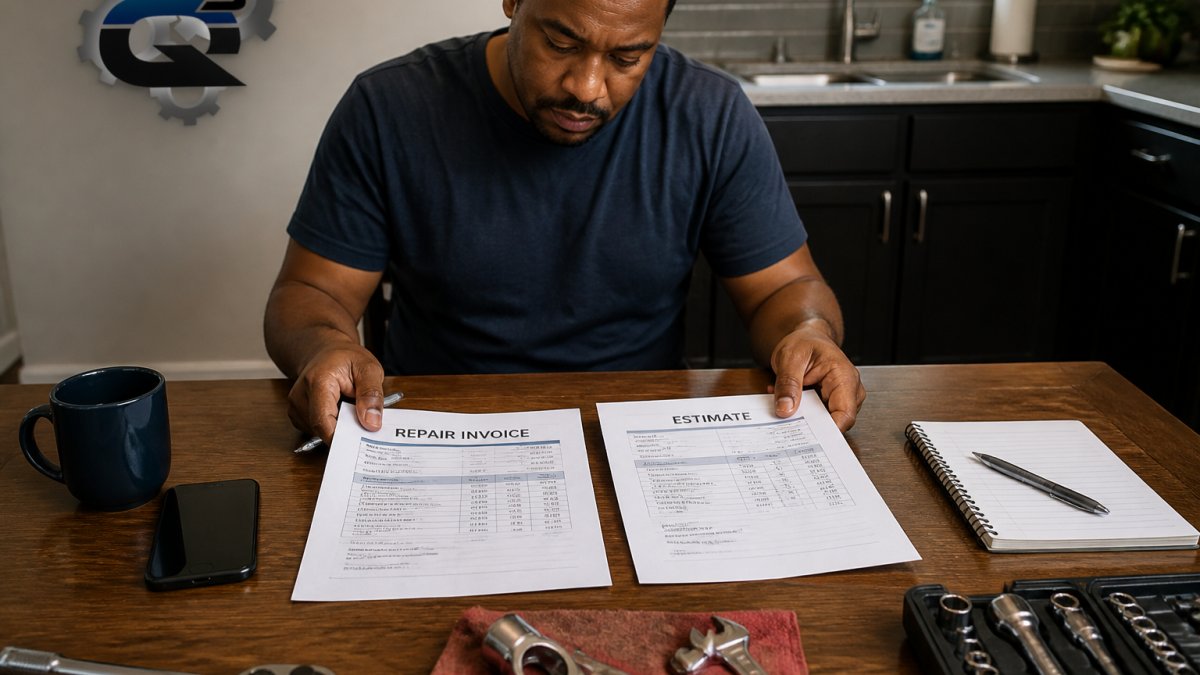
You can usually dispute a car repair bill without a lawyer. Move in order, keep everything in writing, and avoid phone arguments you cannot prove.
The Dispute Sequence
- Ask for the itemized invoice and repair order. You want labor hours, labor rate, parts with numbers, shop fees, and tax broken out line by line, a total alone is not checkable.
- Compare it to the approved estimate. Highlight every difference in writing and note whether added work was authorized verbally, in writing, or not at all.
- Check billed hours against book time. Ask which labor guide and operation code were used. A rusty bolt can legitimately add time; a vague answer cannot.
- Verify parts pricing and type. Ask whether each part is new OEM, aftermarket, rebuilt, or salvaged, and whether a core charge was applied and refunded.
- Put your dispute in writing. Email is best because it timestamps. Keep it factual: dates, amounts, and the specific lines you contest.
- Request a corrected invoice. State the amount you believe is fair and show the math.
- Set a response deadline. Five to ten business days is a common, reasonable window.
- Escalate in order if the shop stalls. Manager, then owner, then the options in the next section.
Documentation Checklist
Before you send anything, assemble a complete file, it moves a dispute from argument to resolution.
- Signed or emailed estimate you approved
- Final invoice and repair order
- All texts, emails, and voicemails (save voicemails as audio files)
Email Template: First Written Dispute
Subject: Dispute of Invoice #[number] dated [date]
Hello [manager name],
I am disputing invoice #[number] for $[amount]. The estimate I approved on [date] was $[amount] for [describe approved work]. The final bill includes [describe added work or charges] that I did not authorize.
Please send me: (1) an itemized breakdown of the added charges, (2) the labor hours billed and the labor guide used, and (3) the part numbers and whether each part is new, rebuilt, or aftermarket.
Based on the approved estimate, I believe a fair total is $[amount].
Phone Script: If You Call First
Keep it short and take notes.
"Hi, this is [name]. I'm calling about invoice #[number]. I have the estimate I approved in front of me. Can you tell me the labor hours billed, the labor rate, and the part numbers on the added lines?
If the person on the phone cannot answer, get the name and title of who can, then follow up by email.
Questions to Ask the Shop
- What labor guide did you use, and what is the book time for this job?
- Was any additional work performed without my prior approval?
- Can I see the old parts?
Payment, Vehicle Release, and Lien Risk
This is where disputes get worse.
- You usually have to pay to get the vehicle back. In most states a shop can hold a vehicle until the bill is paid, and a mechanic's lien may allow the shop to sell it after notice and a waiting period. Do not test this by refusing to pay.
- Pay under protest. Write "paid under protest" on the receipt, the check memo line, or in the email confirming payment, and state that you dispute $[amount] for [reason]. This preserves your position in many states.
- Pay by credit card when you can. A card payment gives you a chargeback path that cash does not.
Templates and Scripts for Disputing a Charge
Use this script when you call or email:
"I'm reviewing invoice #[number] dated [date]. The estimate I approved was $[amount]. The final bill is $[amount]. I was not told about the extra [work/parts]. Please send an itemized breakdown of the added charges and the labor hours billed. I'd like a corrected invoice by [date]."
Keep it short, polite, and in writing.
How to Negotiate a Car Repair Bill Before You Pay
You have more leverage before you pay than after.
A few things work well:
- Ask for the old parts. If they cannot show them, question the charge.
- Ask about the labor rate. Some shops will adjust hours on a simple job.
- Ask about the parts markup. A fair shop will explain it.
Most shops would rather settle a fair dispute than fight it. A calm, specific request often gets a quick fix.
When the Repair Fails: Re-Diagnosis and Warranty Claims
If the repair did not fix the problem, you may have a warranty claim. Most shops back their work for a set period, ask for the terms in writing at pickup.
If the same problem comes back:
- Bring the car back and describe the issue in writing.
- Ask for a re-diagnosis at no charge if the repair failed.
- Request the warranty terms if you do not have them.
A failed repair is not always the shop's fault, but a shop that will not stand behind its work is a warning sign. At Q3 Car & Truck Repair, we explain why a repair is needed before we start.
Escalation Options: Complaints, Small Claims, and Beyond
If the shop will not resolve the dispute, you have options, no lawsuit or lawyer required for most. Escalate in order and log every contact: date, agency, person, outcome.
1. State Consumer Protection Office
Every state has a consumer protection office, usually in the attorney general's office. They mediate complaints, track patterns, and can refer matters to enforcement. They do not represent you individually, but a shop that ignores a state inquiry often changes its tune.
What to send: a one-page summary of the dispute, copies of the estimate and invoice, your written dispute email, and the amount you believe is fair.
2. State Auto Repair Regulator or Licensing Board
Some states license repair shops or have a dedicated automotive repair board. If yours does, this is often the most effective single complaint because the shop's license is on the line. Check your state attorney general site or DMV.
3. Credit Card Chargeback
If you paid by card, you can dispute the charge with your issuer. Under the Fair Credit Billing Act, you generally must send a written dispute within 60 days of the statement date, and the issuer must acknowledge and investigate.
What to send: your written dispute to the shop, the invoice, the estimate, and a short statement of what you authorized versus what was billed.
4. Better Business Bureau and Online Reviews
The BBB is not a government agency and cannot force a refund, but a complaint creates a public record and many shops respond to protect their rating, same for Google and Yelp reviews. Keep reviews factual: dates, amounts, and what was authorized. Defamation risk rises when opinions are stated as facts or the shop is accused of crimes.
5. Small Claims Court
Small claims is designed for disputes like this: file, pay a fee, and present your case to a judge without a lawyer. Key points:
- Dollar limits vary by state and typically range from a few thousand dollars up to around $25,000 in some states. Check your state court's website for the current limit.
- Statutes of limitations apply. Written contracts, oral contracts, and fraud claims can have different deadlines. Do not sit on a dispute for years.
- The filing fee is usually modest and can sometimes be recovered if you win.
6. Arbitration or Mediation
Some repair orders include an arbitration clause, read your paperwork before filing in court, since a clause may require arbitration first. Mediation is voluntary and often faster; many courts offer free or low-cost mediation with a small-claims filing.
7. Attorney General and FTC Complaints
The Federal Trade Commission's complaint assistant collects complaints about deceptive practices. The FTC does not resolve individual disputes, but patterns of complaints drive enforcement. The National Association of Attorneys General lists state attorney general offices, which is the fastest way to find your state's consumer protection contact.
Evidence to Prepare Before You Escalate
- A one-page timeline: dates, people, amounts, and what was authorized
- The approved estimate and the final invoice, side by side
- Your written dispute and the shop's response (or proof of no response)
Frequently Asked Questions
Why do garages charge so much?
Auto repair pricing reflects labor rates, parts costs, overhead, and diagnostic time. Labor rates vary by region and shop type, and parts often carry a markup over retail. Shop fees, taxes, and disposal charges add to the total. When a mechanic overcharges, it is usually because of inflated labor hours, unnecessary repairs, or parts marked up far beyond fair market value. Comparing your itemized invoice against local labor rates and parts prices helps you spot the difference.
Can I sue a mechanic for overcharging?
Yes, you can pursue a claim in small-claims court if the amount falls within your state's limit. Most states set limits between $2,500 and $25,000. Before filing, send a written demand letter, keep all documentation including the repair order, estimate, invoice, and any texts or emails, and consider mediation. Some states also allow claims under consumer protection statutes, which may provide additional remedies like treble damages for willful overcharging.
What should I do if a mechanic performs work I did not authorize?
If unauthorized car repair charges appear on your bill, you are generally not obligated to pay for work you did not approve. Tell the shop in writing that the work was unauthorized and request a corrected invoice. If the shop refuses, pay under protest to get your vehicle back, then dispute the charge with your credit card company or file a complaint with your state's consumer protection agency. Keep copies of every communication.
Can I dispute a mechanic's bill if the repair did not fix my car?
Yes. If a repair fails to fix the problem, the shop may be in breach of its repair warranty. Ask the shop to re-diagnose the issue at no charge and document the failed repair. If they refuse, request a second opinion from an independent shop, then send a written demand for a refund or corrective work. Many states require repair warranties, and small-claims court is an option if the shop will not resolve the issue.
A surprise on a repair bill is stressful, and you should not have to fight for a fair price. At Q3 Car & Truck Repair, we give you a straightforward estimate before we start, explain why each repair is needed, and stand behind our work with skilled technicians who treat your car like their own. If you want a shop that shows you the numbers up front, request an appointment with Q3 Car & Truck Repair and get back on the road with confidence.