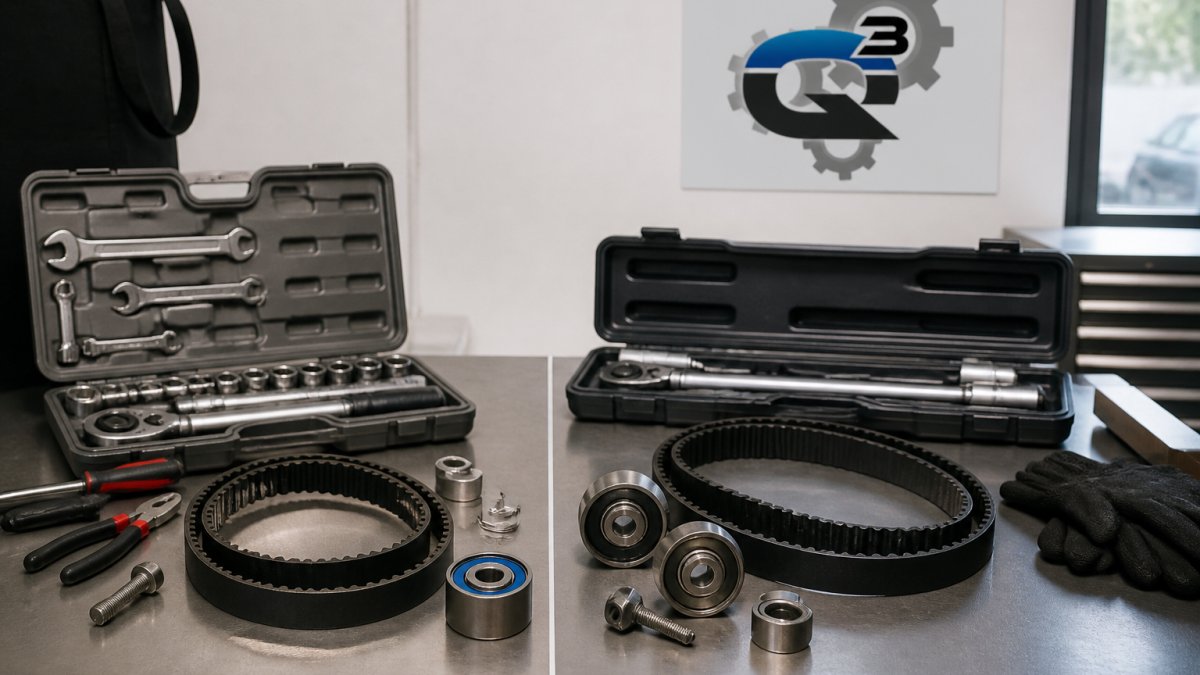
 comparison
DIY vs Professional Timing Belt Replacement
Table of Contents
- What a Timing Belt Does and Why Replacement Matters
- Timing Belt vs Timing Chain: Key Differences
- Timing Belt Replacement Cost: DIY Parts vs Professional Service
- Labor Time and Difficulty: What to Expect
- Tools and Equipment Needed for Timing Belt Replacement
- Common Timing Belt Installation Mistakes and How to Avoid Them
- Making Your Decision: DIY or Professional Replacement
- Frequently Asked Questions
Last Updated: October 18, 2026
What a Timing Belt Does and Why Replacement Matters
A timing belt is a rubber belt with teeth that synchronizes your engine's crankshaft and camshaft, keeping valves and pistons moving in perfect coordination. Without it, your engine can't run. When it fails, the consequences range from a dead engine to catastrophic internal damage costing thousands in repairs.
The timing belt typically lasts between 60,000 and 100,000 miles, depending on your vehicle and maintenance history. Most manufacturers recommend replacement at the interval listed in your service manual, ignoring that timeline is one of the costliest mistakes vehicle owners make.
A belt that snaps at 120,000 miles doesn't just stop your engine. On an interference engine (where pistons and valves occupy the same space), a broken belt lets pistons slam into valves, bending them and cracking the cylinder head. The repair bill jumps from a few hundred dollars to several thousand. That's why understanding your options, DIY or professional replacement, matters before you're stranded on the side of the road.
Timing Belt vs Timing Chain: Key Differences
The core difference comes down to materials and lifespan. A timing chain is metal and can last the life of your vehicle, often 200,000 miles or more. A timing belt is reinforced rubber and wears out predictably, requiring planned replacement.
Timing chains are noisier and heavier, which is why modern engines often use belts instead. But that efficiency comes with a trade-off: you must replace the belt on schedule. Miss that window and you're gambling with your engine.
Here's what you need to know about each:
| Component | Timing Belt | Timing Chain |
|---|---|---|
| Material | Reinforced rubber | Metal links |
| Lifespan | 60,000-100,000 miles | 200,000+ miles |
| Replacement Required | Yes, on schedule | Rarely (if ever) |
| Noise Level | Quiet | Louder |
| Cost to Replace | Lower parts cost | Higher parts cost |
| Common in | Most modern vehicles | Trucks, some luxury cars |
Your vehicle has one or the other, not both. Check your service manual or ask your mechanic which your engine uses. That choice influences whether you're planning a replacement in the next few years or hoping it lasts indefinitely.
Timing Belt Replacement Cost: DIY Parts vs Professional Service
This is where the DIY versus professional decision gets real. The cost gap is significant, but so is the risk gap.
Parts cost for a timing belt replacement kit typically ranges from $100 to $350, depending on your vehicle. The kit usually includes the belt itself, tensioner, idler pulley, and sometimes the water pump. Some vehicles need additional components like seals or gaskets, which add to the parts bill.
Professional labor is where costs escalate. According to AutoZone's timing belt replacement guide, most timing belt jobs require 3 to 5 hours of labor. At shop rates ranging from $75 to $150 per hour, labor alone can run $225 to $750. The total professional replacement cost varies for most vehicles, though luxury or import vehicles often cost more.
The real cost driver is your vehicle's engine design. Others bury the belt deep inside the engine bay, requiring removal of multiple components just to access it. VIP Auto's timing belt cost guide notes that engine type and design are the primary factors determining whether your replacement runs $400 or $1,200.
If you're considering DIY replacement, understand that you're buying the parts at retail cost. You save only the labor portion. That savings disappears fast if you make an installation mistake that requires professional correction.
Labor Time and Difficulty: What to Expect
Timing belt replacement difficulty depends almost entirely on your vehicle's engine layout. Some jobs take a weekend; others take a full week of careful work.
For accessible engines, typically four-cylinder models with the belt on the front, expect 3 to 5 hours of hands-on work. You'll need to remove the serpentine belt, the crankshaft pulley, the timing cover, and various brackets to access the timing belt.
For buried engines, V6 or V8 models with the belt tucked behind other components, you might spend 8 to 15 hours removing parts just to see the belt. Some vehicles require engine mount removal or partial engine lifting. Reassembly is equally time-consuming.
The real challenge isn't the physical removal; it's maintaining proper timing during reinstallation. Timing marks must align exactly. If they're off by even one tooth on the belt, your engine won't run correctly. Valve timing will be wrong, causing misfires, rough starts, and potential engine damage.
CarParts.com's timing belt cost guide emphasizes that labor demands vary dramatically with engine design. A straightforward job might take a weekend. A complex one might consume 40 hours of careful, methodical work.
Be honest about your mechanical skill level. If you've rebuilt an engine before, you have the foundational knowledge. If you've only changed oil and air filters, timing belt replacement is a significant step up.
Tools and Equipment Needed for Timing Belt Replacement
You'll need more than a basic socket set for this job. Timing belt replacement requires specialty tools you might not own.
Essential tools:
- Socket set (metric and standard)
- Wrench set (metric and standard)
- Screwdrivers (Phillips and flathead)
- Timing light (to verify timing after installation)
- Crankshaft pulley removal tool (often specific to your vehicle)
- Torque wrench (critical for proper bolt tension)
- Service manual for your specific vehicle and engine
Specialty tools you may need:
- Camshaft locking tool (vehicle-specific)
- Timing belt tension gauge
- Engine hoist or jack (depending on engine access)
- Serpentine belt tool (for easier removal)
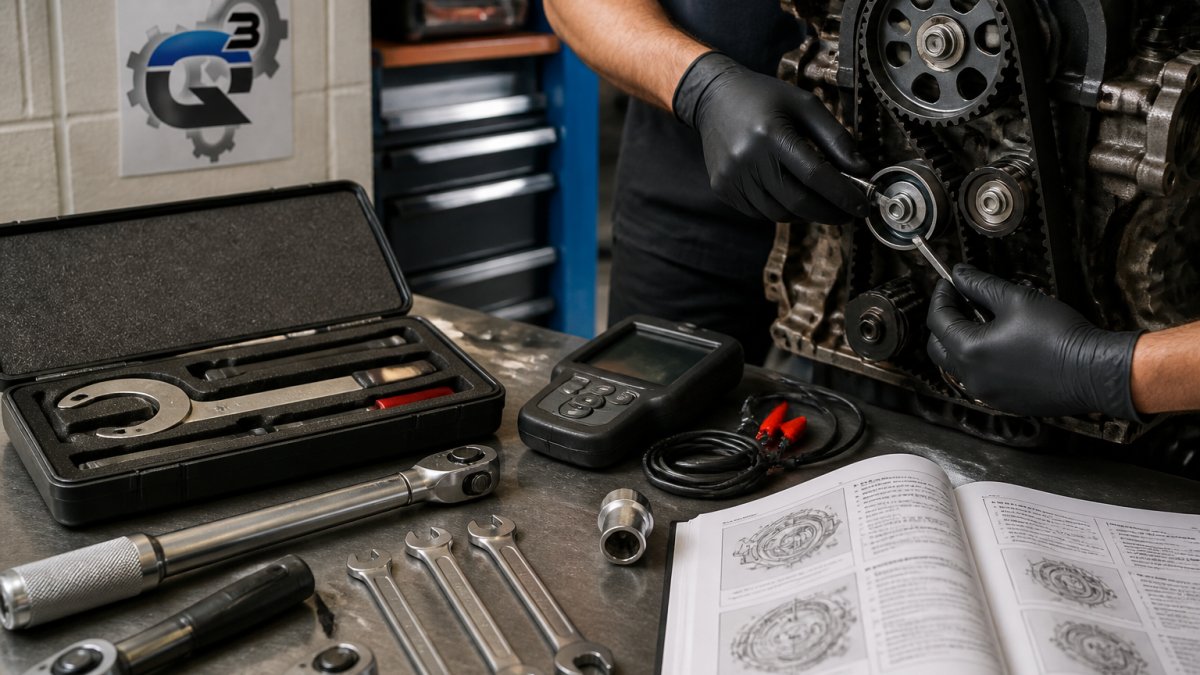
Many of these specialty tools are vehicle-specific. A tool that works for a Honda won't fit a Ford. You'll likely need to rent or purchase tools specific to your make and model, which adds $50 to $200 to your DIY cost.
This is where professional shops have a real advantage. They own every tool for every vehicle. You're buying or renting tools for a single job. If you're only doing this once, the rental cost might push your DIY savings down to nearly nothing.
Common Timing Belt Installation Mistakes and How to Avoid Them
Timing belt replacements can go wrong in predictable ways. Understanding these mistakes helps you avoid them, or recognize when professional help is necessary.
Mistake 1: Misaligned timing marks. This is the most common error. If you don't align the crankshaft and camshaft marks exactly before installing the new belt, your engine's valve timing will be off.
Mistake 2: Incorrect belt tension. Too tight and you'll wear out the new belt prematurely and stress the tensioner. Too loose and the belt will slip, causing timing issues.
Mistake 3: Forgetting to replace the tensioner and idler pulley. These components wear as the belt wears. Replacing the belt without replacing these often means the new belt wears out prematurely.
Mistake 4: Reusing old seals and gaskets. Timing belt covers have seals that dry out and crack over time. Reusing them often leads to oil leaks around the timing cover.
Mistake 5: Skipping the water pump. Many timing belt kits include the water pump because it's already exposed during the job.
Mistake 6: Not following the service manual. Every engine is different. Your manual specifies exact torque specs, timing mark locations, and bolt removal sequences. Guessing leads to mistakes.
These aren't theoretical problems. They're real issues that result in repeat work, wasted time, and frustrated vehicle owners. Professional mechanics avoid them because they follow proven procedures every time.
Making Your Decision: DIY or Professional Replacement
This decision hinges on three factors: cost, skill, and risk tolerance.
Choose DIY if:
- Your vehicle's timing belt is easily accessible (most four-cylinder engines)
- You have mechanical experience beyond basic maintenance
- You own or can rent the specialty tools your vehicle requires
- You have a service manual and understand how to read it
- You can dedicate a full weekend or more to the job
- You're comfortable with the risk that a mistake could cost you thousands
Choose professional replacement if:
- Your vehicle's timing belt is difficult to access
- You've never done major engine work
- You lack a complete tool set
- You value your time and peace of mind
- Your vehicle is an interference engine where belt failure causes catastrophic damage
- You want a warranty on the work
At Q3 Car & Truck Repair, we handle timing belt replacements. We understand the vehicle-specific procedures, own all the specialty tools, and warrant our work. For most vehicle owners, that peace of mind is worth the professional cost.
But we also respect that some owners have the skills and confidence to do this work themselves. If that's you, take your time, follow your manual precisely, and don't rush the timing alignment. A few extra hours now prevent weeks of frustration later.
The timing belt replacement decision isn't just about money, it's about risk, skill, and what you value most. A professional replacement costs more upfront but guarantees the job is done correctly and comes with a warranty if something goes wrong. DIY replacement saves money but requires mechanical skill, specialty tools, and the willingness to accept responsibility if an installation error damages your engine.
At Q3 Car & Truck Repair, we're here to help either way. If you choose professional replacement, we'll handle it with the precision and care your engine deserves. If you choose DIY, we're happy to answer questions about your specific vehicle or perform a pre-replacement inspection to confirm your timing marks and belt condition.
Frequently Asked Questions
Is timing belt replacement a DIY job?
Timing belt replacement is technically possible as a DIY project, but it requires mechanical experience, specialty tools, and careful attention to timing marks and belt tension. Most vehicles require 3-5 hours of labor. If your engine is an interference engine (where pistons can contact valves if timing is off), any installation error can cause severe engine damage. Many DIYers lack the service manual access and experience to do this safely, making professional replacement the safer choice for most owners.
How much does timing belt replacement cost professionally?
Professional timing belt replacement cost varies widely based on your vehicle's engine design and labor demands. Parts typically vary for a timing belt kit. Total costs (parts plus labor) generally vary, though some vehicles with difficult engine access or additional component replacement (like water pump or tensioner) can exceed typical ranges. Contact Q3 Car & Truck Repair for a straightforward estimate specific to your vehicle.
What happens if a timing belt is installed incorrectly?
Incorrect timing belt installation causes the crankshaft and camshaft to fall out of synchronization, leading to engine misfire, starting problems, and loss of power. On interference engines, misalignment can allow pistons to strike open valves, causing catastrophic engine damage that costs thousands to repair. Even small timing errors reduce engine performance and fuel efficiency. Professional installation includes verification of timing marks and proper belt tension, protecting your engine from costly mistakes.
What tools are needed to replace a timing belt?
Timing belt replacement requires specialty tools including a timing light or crankshaft position tool, socket set, wrenches, a belt-tension gauge, and a service manual specific to your vehicle. Many DIYers must rent or purchase these tools, adding to the project cost. You'll also need engine access equipment and possibly a jack and jack stands. Professional shops already own these tools, making labor costs more economical than buying or renting equipment for a one-time job.