 comparison
Best Winter Tires for Icy Roads: 2026 Review
Table of Contents
- How We Rated the Best Winter Tires for Icy Roads
- 1. Bridgestone Blizzak WS80: Best Overall Ice and Snow Traction
- 2. Michelin X-Ice Xi3: Best for Commuters on Mixed Ice and Clear Roads
- 3. Dunlop Winter Maxx WM01: Best for Stop-and-Go Ice Braking
- 4. Yokohama iceGUARD iG52c: Best Value Starting and Stopping Grip
- Winter Tire Ice Traction Ratings: What the Numbers Actually Mean
- Studded vs. Studless Winter Tires: Which Wins on Ice
- When to Install Winter Tires (and What Installation Costs)
- Frequently Asked Questions
Last Updated: October 17, 2026
How We Rated the Best Winter Tires for Icy Roads
Ice is the hardest winter surface to drive on, and the best winter tires for icy roads are the ones built to grip it, not just roll through snow. This guide ranks four studless winter tires by how they perform on ice and packed snow, based on Tire Rack's studless ice and snow tire test and the criteria that actually matter when the road turns to glass.
We scored each tire on four things: ice traction under acceleration and braking, snow traction, starting and stopping composure, and how well the tire suits everyday commuting on cleared roads. We also weighed what the test data does and does not tell you, because a single test summary is not the same as a full laboratory result.
One honest note before the picks: the supplied test results do not include per-tire pricing or size availability, so we cannot quote prices here. What we can do is tell you which tire earned which strength, and let your local shop confirm fitment and cost for your vehicle.
1. Bridgestone Blizzak WS80: Best Overall Ice and Snow Traction
The Bridgestone Blizzak WS80 is our top pick because Tire Rack's test results identify it as providing some of the best overall traction among the studless winter tires tested. That "overall" label matters on icy roads, where you need grip for accelerating, turning, and stopping, not just one of the three.
The WS80 is a studless winter tire, so it relies on its rubber compound and tread pattern rather than metal studs. For drivers who face a mix of packed snow, black ice, and cleared pavement, that combination is the safest all-round bet in this group. What most guides miss is that "overall" traction is the metric that maps to real winter driving, because ice rarely shows up in isolation.
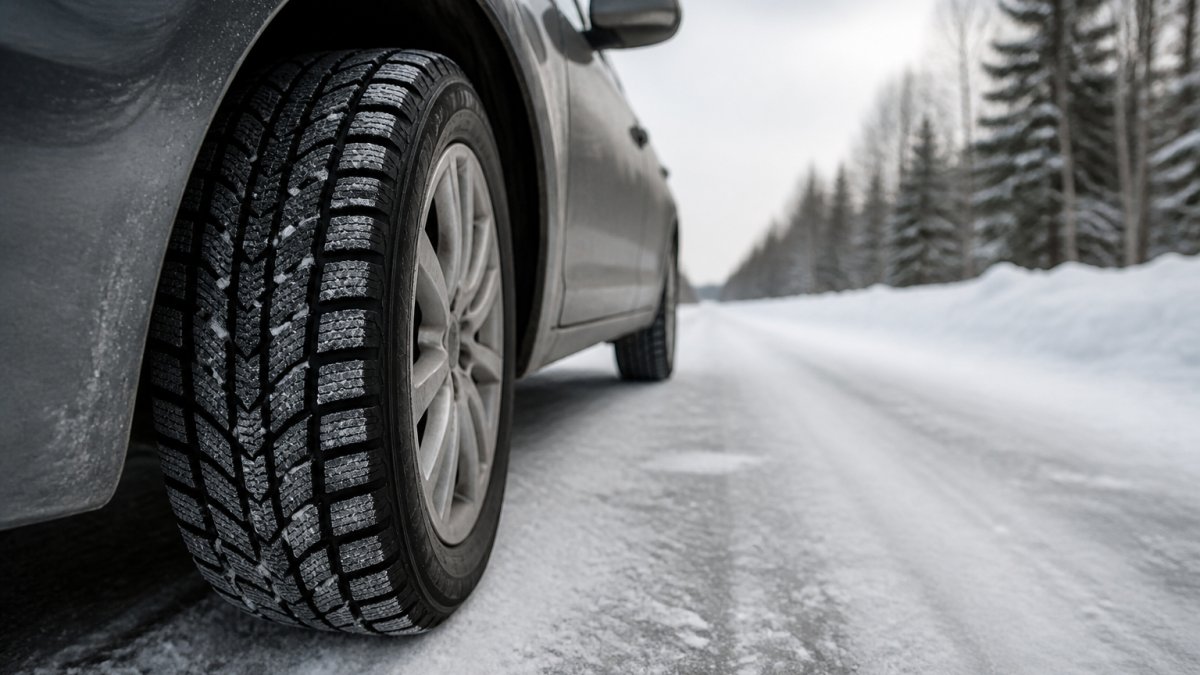
Pros:
- Strong overall traction in the cited studless test
- Studless design, legal where studs are restricted
- Balanced performance across ice and snow
Cons:
- No size-specific pricing in the supplied results
- Test summary does not cover every vehicle or road condition
2. Michelin X-Ice Xi3: Best for Commuters on Mixed Ice and Clear Roads
Commuters who spend most of the week on cleared pavement and only hit ice at intersections and shaded corners should look closely at the Michelin X-Ice Xi3. Tire Rack's test results place it among the studless winter tires providing strong overall traction, which is exactly the balance a daily driver needs.
The X-Ice Xi3 is a studless ice and snow tire. Its appeal for commuters is that it does not force a trade-off between winter grip and the predictable feel you want on dry, cold roads. In practice, that means fewer surprises when the road surface changes from clear to slick and back again within a single trip.
Pros:
- Strong overall traction in the cited test
- Studless, quiet-friendly design for daily driving
- Well suited to mixed ice and clear-road commuting
Cons:
- Supplied results do not show current pricing or sizes
- Test summary lacks condition-by-condition detail
3. Dunlop Winter Maxx WM01: Best for Stop-and-Go Ice Braking
If your winter driving is mostly city stop-and-go, braking grip matters more than anything else. Tire Rack's test summary notes the Dunlop Winter Maxx WM01 did well when starting and stopping in its studless ice and snow test, which is precisely the skill that keeps you out of the car ahead of you at a slick red light.
The WM01 does not claim the top overall-traction spot in the summary, so we would not call it the best all-rounder. What it does offer is reported strength in the two moves that define urban winter driving: pulling away from a stop and coming to a controlled halt on ice.
Pros:
- Reported good starting performance in the cited test
- Reported good stopping performance
- A sensible fit for stop-and-go winter routes
Cons:
- No price or size availability in the supplied results
- Test summary does not rank it as a top overall-traction tire
4. Yokohama iceGUARD iG52c: Best Value Starting and Stopping Grip
Drivers who want dependable winter starting and stopping without chasing the premium tier should consider the Yokohama iceGUARD iG52c. Tire Rack's test summary reports it did well when starting and stopping, the same core strength as the Dunlop, giving shoppers a second option in that lane.
We rank it as the value-oriented pick in spirit, though the supplied results do not include pricing, so confirm cost with your shop before assuming it undercuts the others. Its case rests on reported composure in the two maneuvers that matter most on icy roads: getting moving and getting stopped.
Pros:
- Reported good starting performance
- Reported good stopping performance
- A solid alternative for ice-focused commuting
Cons:
- No price or size data in the supplied results
- Test summary provides no detailed comparative measurements
Winter Tire Ice Traction Ratings: What the Numbers Actually Mean
Winter tire ice traction ratings are shorthand for how a tire performs on ice, but the label on the sidewall and the numbers in a test are two different things. A standardized test measures acceleration, braking, and cornering on a controlled ice surface and compares the tire against a reference. That is the number worth trusting.
Here is the catch most shoppers miss: a single test summary, like the one behind these picks, tells you which tires did well overall but not the exact gap between them. Treat "some of the best overall traction" as a strong signal, not a precise ranking. If you want the full picture, ask your shop for the detailed test data or check the National Highway Traffic Safety Administration guidance on tire labeling and winter tire use.
| Tire | Core Strength | Best For | Data Caveat |
|---|---|---|---|
| Bridgestone Blizzak WS80 | Best overall traction | Mixed ice and snow | No size pricing given |
| Michelin X-Ice Xi3 | Strong overall traction | Commuters, mixed roads | No condition detail |
| Dunlop Winter Maxx WM01 | Starting and stopping | Stop-and-go city ice | Not top overall |
| Yokohama iceGUARD iG52c | Starting and stopping | Value ice commuting | No comparative figures |
Studded vs. Studless Winter Tires: Which Wins on Ice
Studded and studless winter tires attack ice in two different ways, and the right choice depends less on which tire is "better" and more on what the road under your wheels looks like for most of the season.
How each one grips ice. A studded tire carries small metal pins, typically tungsten carbide, embedded in the tread blocks. Those pins physically scratch and bite into hard ice, which is why studs deliver their biggest advantage on glare ice, frozen rain, and packed snow that has polished into a slick surface.
Where studs actually help. On continuous hard ice, studs can shorten braking and improve acceleration compared with studless rubber, and they are the traditional choice for rural routes, mountain passes, and driveways that stay ice-covered for weeks.
Where studless wins. For the mixed conditions most drivers face, cleared pavement punctuated by black ice, shaded corners, bridge decks, and packed snow, studless tires are usually the smarter, quieter, and more versatile choice. All four picks in this guide are studless for that reason.
Check the rules before you buy studs. Studded-tire use is regulated at the state level, and the rules vary widely. Many states permit studs only during a defined winter window, some require them to be removed by a spring date, and a handful restrict or prohibit them outright.
A practical decision rule. If your winter driving is mostly ice-covered rural or mountain roads and your state allows studs, they are worth considering. If you drive a mix of cleared roads and icy patches, or you live somewhere studs are restricted, a studless winter tire is the better all-around bet.
When to Install Winter Tires (and What Installation Costs)
When to swap. The trigger is temperature, not the calendar. Summer and all-season rubber compounds are formulated to stay flexible in warm weather; as temperatures fall toward freezing, that rubber hardens and loses grip, which is why a dedicated winter tire outperforms an all-season even on dry cold pavement.
What installation actually involves. A seasonal changeover means removing the current wheels, mounting and balancing the winter set, torquing the lug nuts to spec, and setting inflation pressure.
What it costs. Pricing varies by vehicle, wheel size, and whether you need a second set of wheels, so treat any single figure as a starting point rather than a quote.
Tread life and when to replace. Winter tires wear faster than all-season tires because the soft compound that grips ice also wears more quickly on dry pavement. A common guideline is to replace winter tires when tread depth reaches about 6/32 inch for winter use, well before the 2/32-inch legal minimum, because ice and snow traction drops off sharply as the tread wears.
Storage between seasons. Store off-season tires inflated to the vehicle's recommended pressure, clean, and out of direct sunlight, ideally in a cool, dry space. Tires left flat, stacked under load, or baking in sun age faster and can lose their cold-weather edge before the next season. Label each tire's position so you can rotate front-to-back next year and even out wear.
Pressure and inspection in cold weather. Tire pressure drops roughly 1 psi for every 10°F drop in ambient temperature, so a set that was correctly inflated in fall can be noticeably low by the first hard freeze. Check pressure monthly in winter and before long trips, and inspect tread and sidewalls at the same time.
Frequently Asked Questions
Are studded tires better than studless tires on ice?
Studded tires bite into hard, glare ice and can shorten braking on frozen surfaces, which is why they remain popular in rural areas with steep grades and long stretches of packed ice. Studless winter tires use softer rubber compounds and dense siping to grip ice without metal, and they run quieter and are legal year-round in most states. Studded tires are restricted or banned in some states and damage pavement when driven on dry roads, so check your state rules before buying.
When should I install winter tires?
Install winter tires once daytime temperatures stay consistently below about 45°F. Below that threshold, all-season rubber hardens and loses grip, even on dry pavement. Waiting for the first snowfall usually means a long wait at the shop. Schedule the swap in October or early November, before the rush, and book a second appointment in spring to switch back. Storing a second set of wheels makes the change faster and cheaper each season.
How much does winter tire installation cost?
Mounting and balancing a set of four winter tires varies by shop, wheel size, and whether you need TPMS sensors reset. If the tires are already mounted on separate wheels, a seasonal changeover often costs less. Ask for an out-the-door quote before you book so there are no surprises.
Are winter tires worth it for icy roads?
Yes, if you regularly drive on ice, slush, or packed snow. Tire Rack's studless ice and snow test found clear traction differences between winter tires, and all-season tires cannot match that grip in freezing temperatures because their rubber compound stiffens. The trade-off is cost and storage for a second set. If you face only occasional light frost and mostly clear roads, a good all-weather tire may be enough, but for repeated icy mornings, dedicated winter tires are the safer choice.
How long do winter tires last?
Most winter tires last four to six seasons, or roughly 30,000 to 40,000 miles, depending on how much you drive and how early you install them. Heat is the enemy: running winter tires through a warm spring wears the soft compound quickly. Check tread depth before each season, and replace the set once tread reaches about 6/32 inch, well before the legal minimum, because ice grip drops sharply as the tread wears down.