 ultimate-guide
How to Prepare Your Vehicle for Winter Driving
Table of Contents
- What You'll Need Before You Start
- Step 1: Check Your Battery and Charging System
- Step 2: Inspect Tires and Know When to Switch to Winter Tires
- Step 3: Top Off Fluids and Check for Leaks
- Step 4: Test Lights, Wipers, and Defroster
- Step 5: Build a Winter Car Emergency Kit Essentials Checklist
- Winter Driving Prep for EVs and Older Vehicles
- DIY vs. Professional Winter Prep: When to Call a Shop
- Frequently Asked Questions
Last Updated: September 16, 2026
What You'll Need Before You Start
Preparing a vehicle for winter driving means checking the systems that fail when temperatures drop.
Gather these before you begin:
- Owner's manual (for fluid specs and tire pressures)
- Tire pressure gauge
- Tread depth gauge or a quarter
- Flashlight or headlamp
- Ice scraper and snow brush
- Jumper cables or a portable jump starter
- Basic socket set and work gloves
Set aside about an hour for the full inspection. Most of it is checking, not fixing.
Step 1: Check Your Battery and Charging System
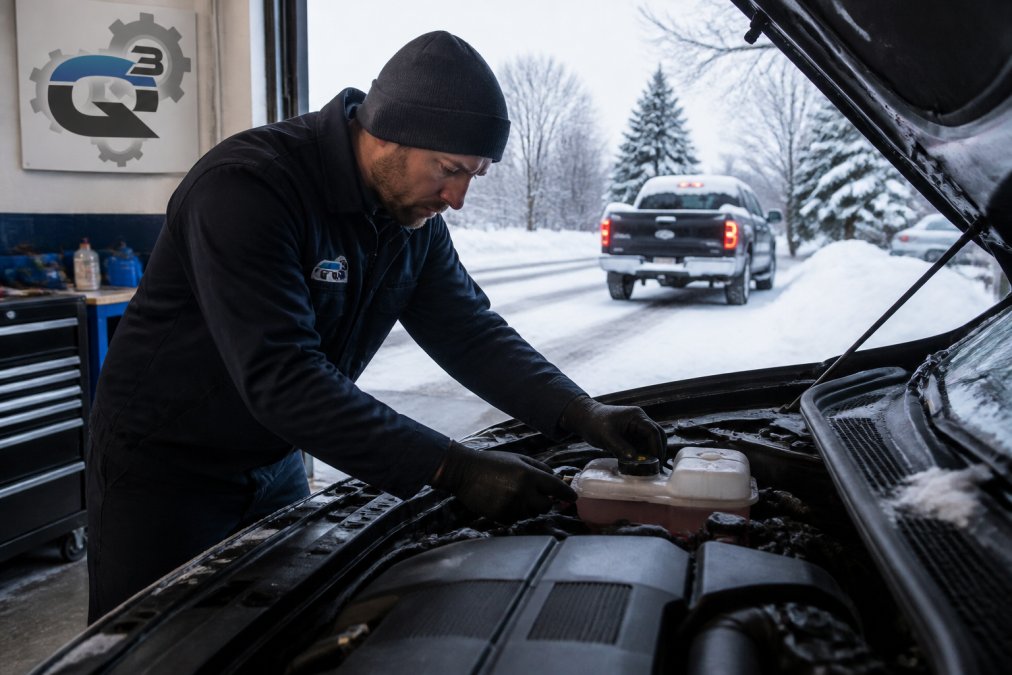
Cold weather is the single biggest killer of car batteries. A battery that cranks fine at 70°F can fail completely at 10°F: cold slows the chemical reaction inside the battery while the engine needs more current to turn over, and the oil it pushes through is thicker. That double squeeze is why weak batteries quit on the coldest morning of the year.
The Diagnostic Sequence (Do It In This Order)
Test the whole charging system, because a battery that keeps dying is often a symptom, not the cause.
- Resting voltage. Turn the engine off and let the battery sit at least an hour. A healthy, fully charged battery reads around 12.6 volts. 12.4 volts is roughly 75% charged, 12.2 is about 50%, and 12.0 or below means it's deeply discharged and likely sulfated.
- Cranking voltage. While a helper turns the key, watch the meter. A healthy battery should stay above roughly 9.6 volts during the crank; below that, the battery is weak or the starter is drawing too much.
- Charging voltage. With the engine running, the alternator should push roughly 13.5-14.5 volts at the battery terminals. Below 13.2 volts at idle with accessories on points to a weak alternator, slipping belt, or corroded cables, not a bad battery.
- Load test. A load or conductance tester applies a real load and reports cold cranking amps (CCA). Compare the result to the rating on the battery label. A battery rated at 600 CCA that delivers only 400 is near the end, even if it still starts the car on a warm day.
Why a Battery That Tests "Fine" Still Dies in the Cold
A battery can pass a warm-weather test and still strand you, because capacity and cold-cranking ability degrade independently. Rule out two other culprits:
- Parasitic draw. Something staying awake after the key is off, a glovebox light, a failing module, a dash cam wired to constant power, drains the battery overnight. A clamp meter on the negative cable measures the draw; a healthy vehicle settles to a fraction of an amp once modules sleep.
- Corroded or loose cables. Corrosion at terminals and grounds adds resistance that mimics a weak battery. Clean it with a wire brush and baking soda solution, reconnect tightly, and apply dielectric grease to slow its return.
Signs of a Failing Car Battery in Cold Weather
Watch for these signs before the first hard freeze:
- Slow, labored cranking, especially on the first start of the day
- Headlights that dim noticeably when you turn the key
- A clicking sound instead of a full crank
- The battery warning light flickering on
- A battery that's more than three to four years old
- Repeatedly needing a jump after short trips (short trips don't give the alternator enough time to recharge)
The EV Angle Most Guides Skip
If you drive an electric vehicle, the 12-volt accessory battery still exists and still fails in the cold, it runs the computers, lights, and contactors that let the high-voltage pack power up. A weak 12-volt battery on an EV can leave you unable to "start" even with a full traction battery. Many EVs also let you schedule cabin preconditioning while plugged in, warming the pack and cabin on grid power instead of draining range. Check your owner's manual for the schedule before the first freeze.
NHTSA battery and vehicle safety guidance
Step 2: Inspect Tires and Know When to Switch to Winter Tires
Tires are where winter prep pays off most. All-season tires stiffen in cold weather and lose grip, while winter tires use a softer compound that stays flexible below freezing. A stiff tread block can't conform to the road, so it slides instead of biting.
Tread Depth, Pressure, and the Tests That Actually Matter
Check tread depth with a gauge: under 4/32 inch is marginal for winter, and under 2/32 inch is legally worn out.
Winter Tires vs. All-Weather vs. All-Season: How to Choose
- All-season tires. The default on most new vehicles. They handle light cold and flurries, but their compound hardens below roughly 45°F and their tread packs with snow. Fine for mild winters; a compromise in real snow.
- All-weather tires. A newer category carrying the three-peak mountain snowflake (3PMSF) symbol, the industry designation for tires meeting a defined snow-traction standard, but designed to run year-round. A good middle ground if you see regular snow but don't want two sets of wheels.
- Dedicated winter tires. The best cold-weather grip, with compounds and sipes built for ice and snow. The trade-off is faster wear in warm weather, so they should come off in spring.
When to Switch, and the Rules Around Studs and Chains
Two legal and practical notes that vary by state:
- Studded tires are restricted in many states to a defined winter window (often roughly November through March or April) and are banned outright in some. Check your state's rules, running them out of season can mean a fine and accelerated road wear.
- Chains and traction devices are often required by signage in mountain passes during storms, and some states restrict which vehicles may use them. Carry a set if you travel into mountain terrain, and practice installing them once in your driveway before you need them on a shoulder in the dark.
The Regional Reality Check
"Winter" means different things depending on where you drive.
NHTSA tire safety and tread depth guidance
Step 3: Top Off Fluids and Check for Leaks
Winter stresses every fluid in your vehicle.
Oil Viscosity and Winter-Grade Oil
Oil thickens as temperatures drop, and oil too thick for the cold makes your engine work harder to turn over.
Step 4: Test Lights, Wipers, and Defroster
Visibility failures cause more winter crashes than mechanical ones.
Step 5: Build a Winter Car Emergency Kit Essentials Checklist
Keep this in your trunk from November through March:
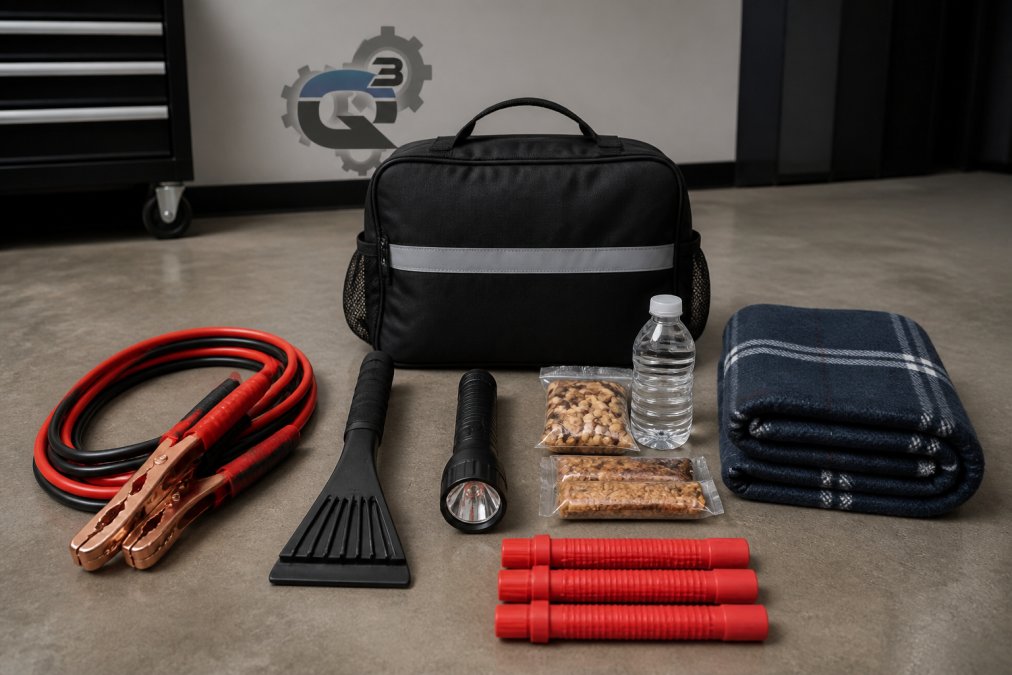
- Jumper cables or a portable jump starter
- Ice scraper and snow brush
- Flashlight with spare batteries
- Blanket or sleeping bag
- Nonperishable snacks and bottled water
- Extra gloves, hat, and socks
- First aid kit
- Emergency flares or reflective triangles
- Small shovel and bag of sand or kitty litter for traction
- Phone charger and a backup battery pack
- De-icer spray for frozen locks
FEMA winter weather preparedness guidance
Winter Driving Prep for EVs and Older Vehicles
Electric vehicles need a different winter routine.
DIY vs. Professional Winter Prep: When to Call a Shop
Most of this checklist is genuinely doable in your driveway with basic tools.
| Situation | DIY or Shop? | Why |
|---|---|---|
| Battery reads under 12.4V | Shop | Needs load testing and likely replacement |
| Tread depth under 4/32 inch | Shop | Tire mounting and balancing required |
| Coolant leak or discolored fluid | Shop | System flush and pressure test needed |
| Defroster or heater not working | Shop | Often a blend door, fuse, or core issue |
| Check engine light on | Shop | Requires diagnostic scan |
Frequently Asked Questions
What are the 3 P's of winter driving?
The 3 P's of winter driving are preparation, patience, and prevention. Preparation means servicing your vehicle before cold weather hits, including battery checks and winter tires. Patience involves slowing down and allowing extra travel time on icy roads. Prevention covers keeping your gas tank at least half full, maintaining traction, and avoiding sudden maneuvers. Following these principles reduces the chance of breakdowns and crashes when sub-zero temperatures and snow arrive.
What emergency supplies should I keep in my car during winter?
A winter car emergency kit should include jumper cables, an ice scraper, a flashlight with extra batteries, nonperishable snacks, bottled water, a blanket, extra gloves and hats, a first-aid kit, emergency flares or reflective triangles, a bag of sand or kitty litter for traction, and a fully charged phone charger. Keep these items in your trunk throughout the season so you are ready if you get stranded.
How does cold weather affect tire pressure?
Tire pressure drops about 1 PSI for every 10°F decrease in ambient temperature. If you filled your tires to the recommended pressure on a 70°F day, they could be significantly underinflated by the time temperatures hit 20°F. Underinflation reduces traction, increases rolling resistance, and wears out tires faster. Check your tire pressure weekly during winter and inflate to the vehicle manufacturer's recommended cold-weather specification.
What is the 7-degree rule for winter tires?
The 7-degree rule states that you should switch to winter tires when the average daily temperature consistently falls below 45°F (roughly 7°C). Below that threshold, all-season tire rubber hardens and loses grip, especially on ice and packed snow. Winter tires use a softer compound that stays flexible in cold weather, improving traction and braking. Once temperatures stay below 45°F, schedule your winter tire installation.
Winter doesn't negotiate, and the vehicles that struggle most are the ones whose owners waited until the first storm to think about preparation. Q3 Car & Truck Repair offers honest, reliable winter prep for cars and trucks, with skilled technicians, transparent estimates, and weekend availability for drivers who can't make it in during the week. Request an appointment today and head into the cold season with a vehicle you can trust.