 Ultimate guide
How to Estimate the Cost of Major Engine Repairs for High Mileage Trucks
Quick Summary
The cost of major engine repairs for high mileage trucks depends mainly on the scope of work, not the truck brand. Repairs range from a targeted component fix to an in-frame overhaul or full replacement, and each step up adds labor. High mileage often means several related repairs are needed at once, so a thorough diagnosis matters.
- Major engine work falls into three tiers: targeted repair, in-frame overhaul, and full overhaul or replacement.
- Ask shops to separate parts, labor, and machine shop charges on the written estimate.
- Get a written authorization limit so additional work is not approved without your consent.
- Request a warranty covering both parts and labor, not parts alone.
- Compare quotes only after matching truck class, engine family, and repair scope.
Table of Contents
- What Major Engine Repairs Typically Cost for High Mileage Trucks
- Truck Engine Rebuild Cost: Scope, Parts, and Labor
- Truck Engine Replacement Cost and Remanufactured Options
- Engine Rebuild vs. Replacement: How to Decide
- Signs of Engine Failure in a Truck to Watch For
- How Mileage, Engine Type, and Duty Cycle Change the Price
- Getting a Diagnosis and Estimate Before You Approve Major Engine Work
- Frequently Asked Questions
What Major Engine Repairs Typically Cost for High Mileage Trucks
Last Updated: November 13, 2026
If your truck has crossed 250,000 miles, a major engine repair is a budgeting question, not a remote possibility.
We cannot give you a single price, and we will not invent one. Estimates depend on the engine family, failed parts, labor rate, and whether the work is a partial repair or full rebuild.
Major engine work generally falls into three tiers. A targeted repair replaces a single failed component, such as a water pump, turbocharger, injector set, or fuel pump, and is typically the least expensive path. An in-frame overhaul addresses bearings, rings, and the cylinder head without removing the block. A full overhaul or replacement takes the engine out entirely.
High mileage changes the math. Wear is cumulative, so an engine at 300,000 miles often needs several related repairs at once.
Mileage alone does not determine the outcome; maintenance history matters as much. A truck with a documented oil change schedule, regular coolant service, and a repair log usually produces a more accurate estimate. If you have records, bring them.
Expect the first estimate to include a diagnostic fee. That charge pays for finding the actual cause, which protects you from approving work that does not solve the problem.
Truck Engine Rebuild Cost: Scope, Parts, and Labor
An engine rebuild restores worn internal components to specification rather than replacing the whole assembly. Scope usually includes pistons, rings, bearings, gaskets, and sometimes crankshaft machining.
Rebuilds are generally quoted in three tiers, and the tier matters more than the truck badge. A top-end or head-only job (head gasket, valve job, injector cups) is the smallest. An in-frame overhaul (bearings, rings, cylinder liners where applicable, head work with the block left in the frame) is the middle. A full out-of-frame rebuild or replacement is the largest.
Parts and labor split the bill, and the split is not 50/50. Ask the shop to separate parts and labor categories on the estimate.
Machine shop work is often a separate line item. Cylinder head resurfacing, block boring, crankshaft grinding, and line boring may be sent to an outside shop, and that cost should appear on your estimate.
Labor hours generally scale with engine family and cab configuration. Ask for the quoted labor hours and hourly rate, then multiply them out to compare quotes on the same basis.
Rebuild quality depends on precision and parts. A rebuild with cheap components and minimal machining can fail sooner than expected.
Itemized Estimate Components to Check
A written, itemized estimate is your strongest tool for comparing repair quotes. Before approving major engine work, look for these components:
- Diagnostic time: the labor charge for identifying the fault, and whether it is credited toward the repair if you proceed.
- Parts list: each component by name and part number, with whether it is new, rebuilt, or remanufactured.
- Labor hours: the number of hours quoted and the shop's hourly rate, so you can check the total.
- Machine shop charges: any outside work on the head, block, or crankshaft.
- Fluids and consumables: oil, coolant, filters, gaskets, and sealants.
- Related repairs: worn components the shop recommends replacing during the same teardown, with the reason for each.
- Warranty terms: the duration and coverage for both parts and labor.
Watch out: the most common surprise on a high-mileage engine is an additional repair discovered after teardown. Ask the shop to call you before exceeding the estimate and to explain any added work. A written authorization limit protects you from open-ended charges.
What Drives the Quote Up or Down
Four levers move a rebuild quote more than anything else. First, engine family and parts availability: a common engine with a deep aftermarket rebuild-kit supply is cheaper than a low-production engine where every component is dealer-only. Second, how much machining the block and head need. Third, whether the turbo, injectors, oil cooler, and aftertreatment components are replaced at the same time; skipping them saves money now but often means paying the same teardown labor again later. Fourth, the shop's labor rate and whether it sublets machine work or does it in-house.
Ask the shop to state in writing what is included and what is excluded. Exclusions are where budgets break. If the quote excludes the turbo, injectors, oil cooler, or aftertreatment system, price those separately before comparing it against another quote that includes them.
Truck Engine Replacement Cost and Remanufactured Options
Replacement means installing a different engine in place of the failed one. The options are a used engine from a salvage source, a remanufactured engine rebuilt to factory specification, or a new engine from the manufacturer or a dealer.
Remanufactured engines are usually the most practical middle path. A reputable remanufacturer disassembles the engine, replaces wear components, machines critical surfaces, and tests the result.
Used engines carry the most uncertainty. Service history, mileage, and condition are often unknown, and a failed used engine can cost you the replacement labor twice. If you choose this route, ask for the engine's mileage, a compression test or equivalent verification, and a written warranty.
Replacement labor is substantial regardless of engine source. Removing the old engine, transferring accessories, installing the new unit, and refilling fluids takes many hours. Ask whether the estimate includes transmission, clutch, or driveline work that sometimes must be disturbed during the swap.
Engine Rebuild vs. Replacement: How to Decide
The decision between rebuilding and replacing comes down to four factors: the truck's remaining value, the engine's condition, the availability of quality parts, and your downtime tolerance.
Use this decision matrix as a starting point:
| Factor | Favors Rebuild | Favors Replacement |
|---|---|---|
| Truck value | Vehicle is worth keeping long-term | Truck value is low relative to repair cost |
| Engine condition | Damage is localized (bearings, rings, head) | Block is cracked or damage is widespread |
| Parts availability | Quality rebuild kits are available | Remanufactured units are readily available |
| Downtime | You can tolerate a longer shop time | You need the truck back quickly |
| Maintenance history | Well-documented, consistent service | Unknown or neglected history |
A rebuild often makes sense when the truck is mechanically sound apart from the engine and you plan to keep it for years. Replacement often makes sense when the block is compromised or a remanufactured unit with a solid warranty is available at a reasonable price.
Some owners also consider selling the vehicle as-is. A truck with a failed engine typically sells for less, and the buyer may discount heavily for the repair. Compare the repair cost against the sale price and the cost of a replacement vehicle before deciding.
Signs of Engine Failure in a Truck to Watch For
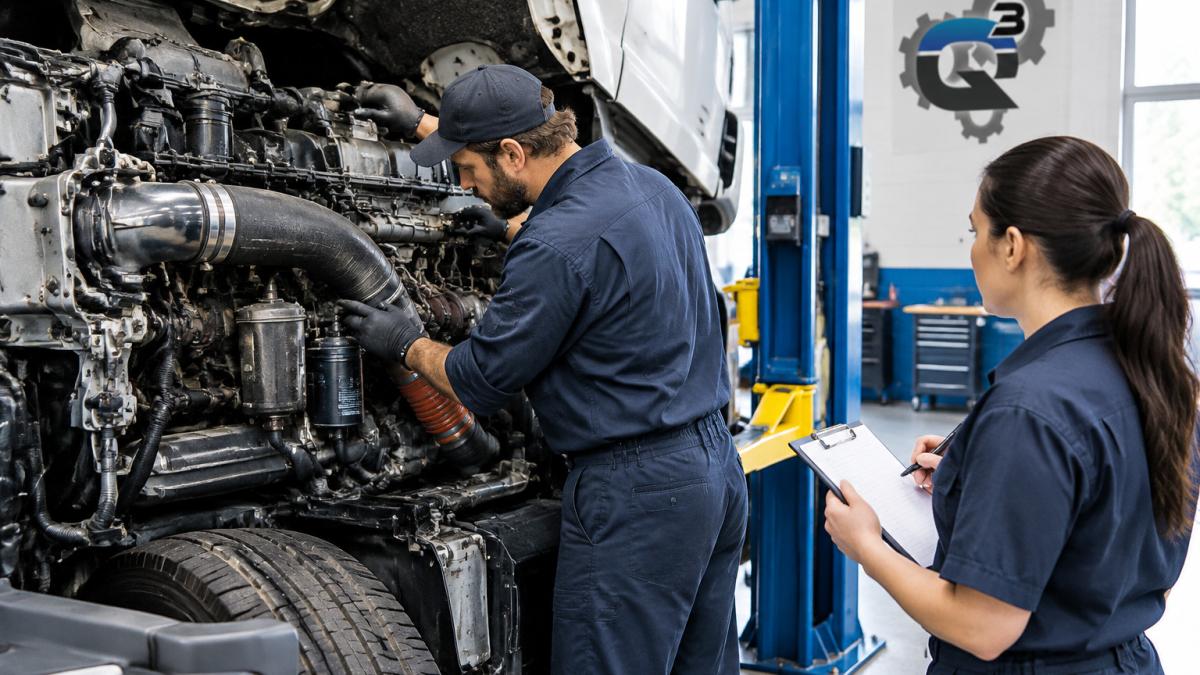
Catching a problem early can keep a repair from becoming a catastrophe. Pay attention to these warning signs:
- Knocking or ticking sounds that change with engine speed
- Blue, white, or black exhaust smoke
- Oil pressure warnings or unexplained oil consumption
- Coolant loss without a visible leak, or milky oil
- Overheating, especially under load
- Loss of power or rough idle
- Metal particles in the oil during a change
A common mistake is continuing to drive after a warning light appears. Each additional mile under stress can turn a bearing or head repair into a full replacement. If you notice these symptoms, have the truck inspected before it is driven further.
How Mileage, Engine Type, and Duty Cycle Change the Price
Three variables shape the cost more than any others. Most published repair-cost ranges blur light-duty pickups, medium-duty trucks, and Class 8 tractors together, which makes them hard to apply. Separating the three classes and the mileage band is the fastest way to turn a headline range into a number you can budget against.
Mileage bands. Think in bands rather than a single odometer reading, because the type of work changes as miles accumulate.
Truck class. A light-duty pickup with a gasoline V8 and a Class 8 tractor with a 15-liter diesel are not comparable repairs. Light-duty engine work is usually measured in a few thousand dollars for a head job and more for a full rebuild or replacement. Medium-duty trucks sit in the middle. Heavy-duty diesel overhauls and replacements are the largest category, driven by component weight, tighter tolerances, and the cost of aftertreatment and high-pressure fuel systems. Check which class a published range describes before you apply it to your truck.
Duty cycle. A truck that hauls heavy loads, idles for long periods, or runs in stop-and-go conditions accumulates wear faster than one used for highway driving.
Cost per mile as a budgeting tool. Add up annual maintenance and repair costs and divide by annual miles. Tracking this figure over time shows when a truck has crossed from economical to expensive to run.
Downtime belongs in the math. Repair price is only part of the cost.
Watch out: comparing a light-duty quote against a heavy-duty quote, or a targeted repair against a full overhaul, will make one shop look far cheaper than another when the scope is not the same.
Getting a Diagnosis and Estimate Before You Approve Major Engine Work
Do not approve a rebuild or replacement based on a verbal guess.
At Q3 Car & Truck Repair, we are committed to honest communication and straightforward estimates, so you understand why a component needs attention before work begins.
Bring your maintenance records, describe the symptoms in detail, and note when they started. Those details help the diagnosis move faster and reduce the chance of paying for the same testing twice.
If the estimate is more than you expected, ask for a breakdown, compare the scope of work, and consider whether a targeted repair or remanufactured unit fits your budget.
Major engine repair is a significant decision, but it is one you can make with clear information. Request an appointment with Q3 Car & Truck Repair to discuss your truck's needs and get an estimate.
Frequently Asked Questions
How much does it cost to rebuild a truck engine?
Rebuild costs depend on engine size, how much of the engine needs machining or replacement, and the parts used. Pricing varies by engine and shop, so Q3 Car & Truck Repair does not publish a fixed figure here. Ask for an itemized estimate that separates parts, labor, machine shop work, and any related components such as the cooling system or aftertreatment parts. Compare the scope of each quote rather than just the total, since a low number may cover a partial job.
Is it cheaper to rebuild or replace a truck engine?
It depends on the condition of the block, the mileage, and how much of the engine has failed. A rebuild can be less expensive when the core is sound and the failure is limited to a few components. A replacement, often a remanufactured unit, can make more sense when the block is cracked or the engine has high mileage with widespread wear. Ask for both options in writing and weigh the warranty, expected remaining life, and downtime for each.
How can I tell if a high-mileage truck needs a major engine repair?
Common warning signs include oil consumption between changes, blue or white exhaust smoke, coolant loss without a visible leak, knocking or ticking that worsens under load, and oil pressure that drops at idle. Warning lights and a sudden loss of power also warrant an inspection. A diagnostic test can confirm the cause before you approve any major work, which helps avoid paying for repairs that do not address the real problem.
Is 100,000 miles a lot for a truck?
Many trucks reach 100,000 miles with routine maintenance, but mileage alone does not decide whether an engine is near the end of its life. Maintenance history, operating conditions, and how the truck was driven matter as much as the odometer reading. Heavy towing or long idling can wear an engine faster than highway miles. Request a maintenance record and a compression or oil analysis when you are unsure of its condition.