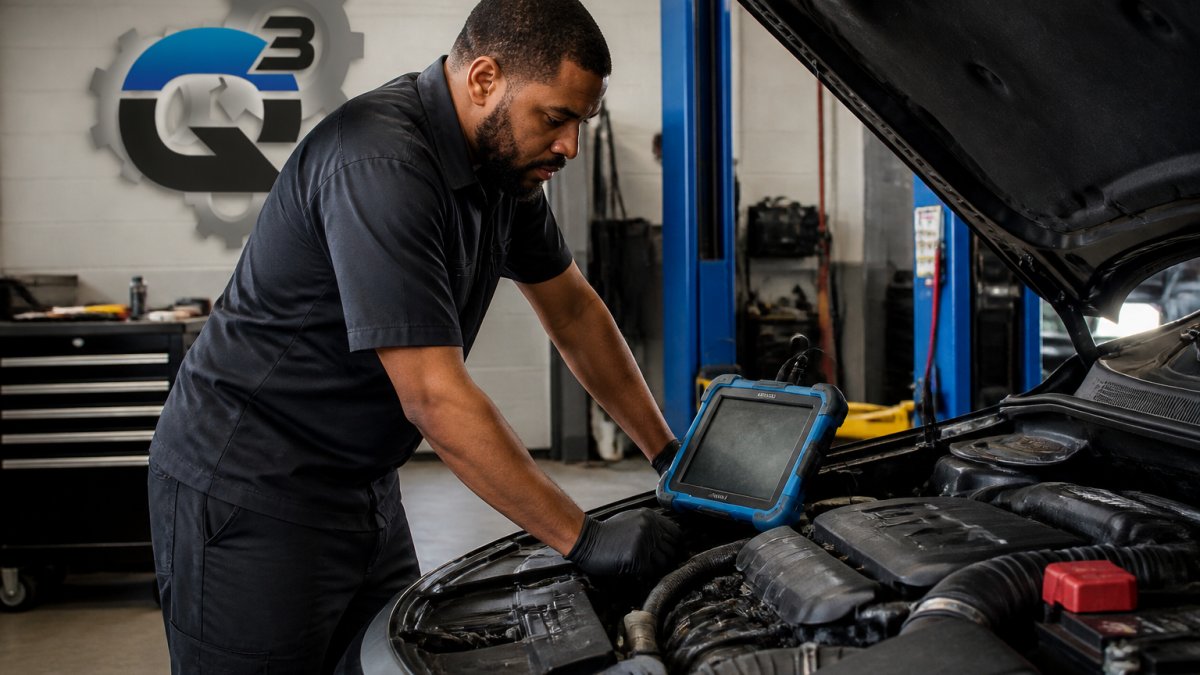
 ultimate-guide
Benefits of Professional Engine Diagnostic Services
Table of Contents
- Why Professional Engine Diagnostic Services Matter
- Understanding the Engine Diagnostic Process
- How a Car Diagnostic Test Identifies Hidden Problems
- Check Engine Light Diagnosis: What It Really Means
- Engine Diagnostic Cost and What Affects Pricing
- Preventing Costly Repairs Through Early Detection
- The Real Value: Avoiding Unnecessary Repairs and Guiding Smart Decisions
- Conclusion
- Frequently Asked Questions
Last Updated: October 15, 2026
Why Professional Engine Diagnostic Services Matter
When your check engine light comes on, you can ignore it, guess, or get a professional diagnosis. Professional engine diagnostic services don't just identify what's broken, they prevent unnecessary parts replacement and catch problems before they cascade into expensive failures.
At Q3 Car & Truck Repair, customers leave understanding exactly what their vehicle needs and why. That's the real value of engine diagnostic services: replacing guesswork with facts.
Understanding the Engine Diagnostic Process
Professional engine diagnostic services go far beyond plugging in a code reader.
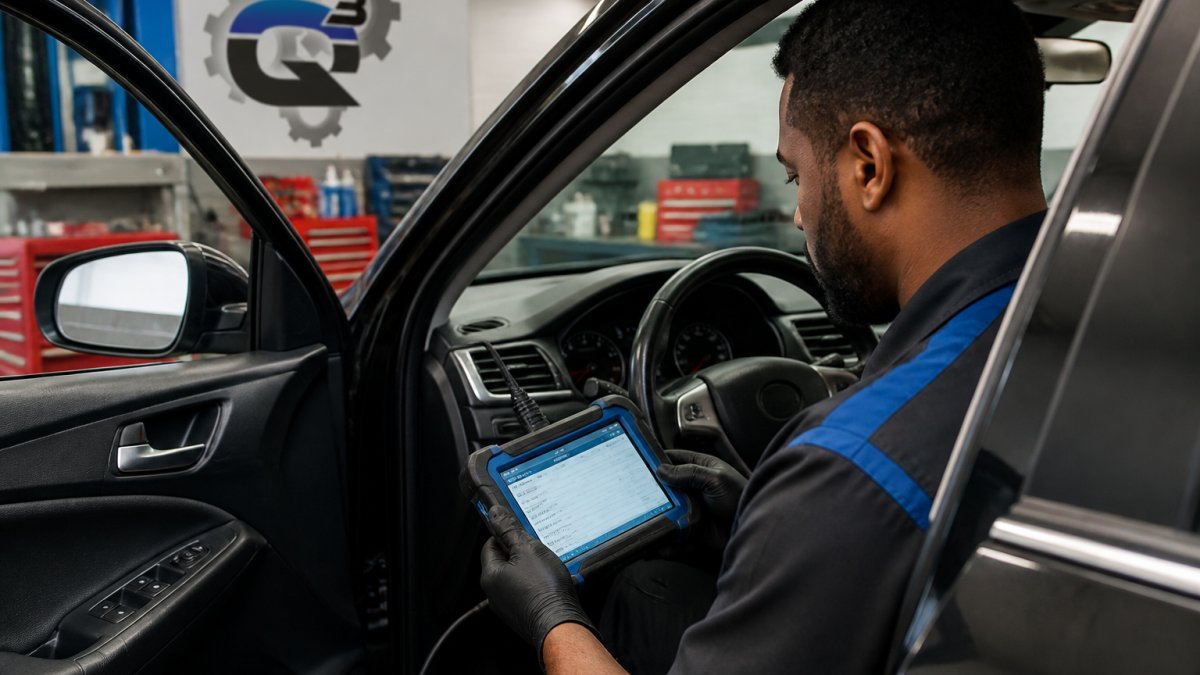
Next comes the scan. A certified technician connects specialized equipment to your vehicle's OBD-II port.
What separates professional diagnostics from a quick scan is interpretation. Fault codes rarely tell the whole story, an oxygen sensor code could stem from a vacuum leak, exhaust restriction, or fuel pressure issue.
How a Car Diagnostic Test Identifies Hidden Problems
A diagnostic test reads what your vehicle's engine control module monitors and records. Modern vehicles contain dozens of sensors measuring oxygen levels, coolant temperature, fuel pressure, and emissions. When a measurement falls outside its expected range, the vehicle logs a fault code.
The scan retrieves these codes, but the technician treats them as a starting point. A single code can have multiple causes, an "oxygen sensor circuit malfunction" might point to a failing sensor, a vacuum leak, a fuel pressure regulator problem, or an exhaust leak.
What Diagnostic Tools Read from Your Vehicle Computer
Your vehicle's computer, the engine control module (ECM) or powertrain control module (PCM), monitors sensor data and adjusts engine operation. Diagnostic tools retrieve several types of information through the OBD-II port:
- Live sensor data: Real-time readings from oxygen sensors, mass airflow sensors, throttle position sensors, coolant temperature sensors, and dozens of others
- Fault codes: Stored trouble codes indicating detected problems, with frequency and severity
- Freeze frame data: A snapshot of engine conditions at the moment a fault was detected
Professional equipment accesses this data more comprehensively than basic code readers, revealing intermittent faults that would otherwise stay hidden.
Trouble Codes and What They Tell You
Trouble codes are alphanumeric designations following a standardized format established by the Society of Automotive Engineers (SAE). P0420 means catalyst system efficiency below threshold; P0101 indicates a mass airflow sensor circuit performance problem.
Technicians don't just replace the part a code suggests, they test the component, check related systems, and verify the suspected part is actually the problem, avoiding the expense of replacing a good oxygen sensor when a vacuum leak is causing false readings.
Check Engine Light Diagnosis: What It Really Means
Your check engine light, formally the malfunction indicator light, or MIL, signals that the on-board diagnostic system has detected a problem. Treating a flashing light like a steady one can turn a manageable repair into a destroyed catalytic converter.
Steady Versus Flashing: The Urgency Difference
A steady check engine light means a fault is stored but not currently causing active damage. You have days, not weeks, to schedule a diagnostic.
A flashing check engine light means the engine is misfiring badly enough that unburned fuel is reaching the catalytic converter, which can overheat and destroy it within minutes. Pull over safely, shut off the engine, and arrange a tow.
Other Symptoms That Raise the Urgency
Certain symptoms should push you toward immediate service regardless of whether the light is steady or flashing:
- Overheating. A temperature gauge climbing into the red or steam from under the hood indicates a cooling system failure that can warp a cylinder head or seize an engine within minutes.
- Loss of power or severe hesitation. A sudden drop in acceleration or "limp mode" signals a fault the computer considers serious.
- Unusual noises. Knocking, ticking, or rattling from the engine bay can indicate mechanical failure that diagnostics may confirm but cannot reverse.
Intermittent Faults: When the Light Comes and Goes
A check engine light that appears, disappears, and reappears is an intermittent fault, one of the clearest examples of why professional diagnosis matters more than a quick scan.
An intermittent fault may appear only as a pending code, or may have cleared itself after several drive cycles, so a technician who reads only stored codes may find nothing. A professional approach accounts for this by:
- Reviewing freeze frame data, which captures engine conditions at the moment the fault was first detected, engine speed, load, temperature, and vehicle speed, so the technician can reproduce those conditions.
- Checking pending codes and monitor readiness status, which can reveal a fault not yet matured into a stored code.
- Performing a road test under the conditions that trigger the symptom, with live data streaming, to catch the fault in the act.
Why Modern Vehicles Change the Diagnostic Equation
Today's vehicles are networks of modules, powertrain, transmission, body, and increasingly high-voltage systems in hybrids and EVs, sharing data across communication buses.
Hybrid and electric vehicles add another layer: high-voltage battery management systems, inverters, and regenerative braking components require equipment and training general shops may lack.
This is why vehicle-specific diagnostics matter.
When you bring in a vehicle with an illuminated check engine light, the goal isn't simply to turn the light off.
Engine Diagnostic Cost and What Affects Pricing
Diagnostic pricing is one of the least transparent parts of auto repair. Understanding what drives the fee, and what a fair fee includes, turns hesitation into an informed decision.
What a Diagnostic Fee Typically Covers
A diagnostic fee is not a scan fee. A scan covers connecting a tool to the OBD-II port and pulling stored codes, a five-minute task.
As a general market pattern, a basic scan at a chain parts store is often free, a standalone scan at a general repair shop commonly runs $50 to $150, and a full diagnostic at a dealership or specialist shop frequently runs $100 to $250 or more.
What Drives the Cost Up or Down
Several factors move a diagnostic fee up or down:
- Vehicle complexity. A 2005 pickup with one engine computer is faster to diagnose than a late-model vehicle with powertrain, body, and transmission control modules. More modules mean more data to sift and more places for a fault to hide.
- Number of fault codes. One code pointing to one system is a shorter job than five codes across three systems, which may share a root cause like a wiring or ground problem.
- Intermittent faults. A problem appearing only under certain conditions, cold starts, highway speeds, hot weather, may require a road test or extended monitoring.
- Hybrid and electric systems. High-voltage systems, battery management modules, and regenerative braking components require specialized equipment and training, and shops that invest in that capability price accordingly.
How to Evaluate Whether a Diagnostic Charge Is Fair
When scheduling a diagnostic, ask these questions directly:
- What does the fee include? Look for code retrieval, live-data review, and component testing, not just a scan.
- Is the fee applied toward the repair? Many shops credit the diagnostic fee toward the repair if you proceed with the work there.
- Will I receive a written estimate before any repair begins? A reputable shop itemizes parts and labor in writing before touching the vehicle.
- What happens if the diagnosis is inconclusive? Intermittent faults sometimes require a second visit. Ask how the shop handles that and whether you'll be charged again.
- Are there separate charges for additional systems? A check engine light diagnosis may cover engine and emissions, but a transmission or ABS warning may fall under a different diagnostic category with its own fee.
Why the Cheapest Diagnostic Is Rarely the Best Value
A free scan that pulls codes and hands you a printout is not a diagnosis, it's a starting point. Buy the component the code names and you may replace a perfectly good part and still have the warning light on.
The value of a professional diagnostic is measured against what it prevents: unnecessary parts, repeat visits, and the fee itself when credited toward a correct repair. Compare what the fee includes, not just the invoice number.
Understanding OBD-II diagnostic standards and consumer guidance
Preventing Costly Repairs Through Early Detection
One of the most overlooked benefits of professional engine diagnostic services is prevention. Catching problems early stops small issues from becoming catastrophic failures.
Early detection works through several mechanisms. Addressing warning lights immediately prevents system damage, since on-board diagnostics alert you before problems become severe.
For owners of older vehicles or those managing fleets, periodic diagnostic scans reveal vehicle health and help prioritize maintenance spending, so you make informed decisions about repair timing and budget.
The Real Value: Avoiding Unnecessary Repairs and Guiding Smart Decisions
What separates a professional diagnostic service from a basic code-reading session is confidence: you're not guessing or wondering if you're being sold unnecessary repairs.
This clarity is invaluable, especially if you've been burned before.
The diagnostic process also prevents the cycle of repeat repairs. When a diagnosis is incomplete, customers replace the wrong part, the warning light returns, and they're back at the shop out of money.
For fleet owners who depend on reliable transportation, professional engine diagnostic services provide the clarity to make smart maintenance decisions: which vehicles need immediate attention, how to budget accurately, and how to prioritize spending based on condition rather than guesswork.
Conclusion
Professional engine diagnostic services transform vehicle maintenance from guesswork into informed decision-making. They identify hidden problems before they become expensive failures, prevent unnecessary parts replacement, and give you confidence that repairs are based on facts.
At Q3 Car & Truck Repair, our highly skilled technicians use professional-grade diagnostic equipment to identify exactly what your vehicle needs. Request an appointment and experience the difference professional engine diagnostic services make.
Frequently Asked Questions
What is the difference between a diagnostic scan and a complete professional diagnosis?
A diagnostic scan reads trouble codes stored in your vehicle's computer through an OBD-II scanner. A complete professional diagnosis goes further: a technician interprets those codes, performs physical inspections, tests components, and identifies the root cause of the problem. A scan might show a misfire code, but diagnosis determines whether it's a faulty spark plug, fuel injector, or ignition coil. Professional diagnosis prevents you from replacing parts unnecessarily and ensures repairs address the actual underlying issue.
How much does a car diagnostic test typically cost?
Diagnostic costs vary based on your vehicle's complexity and the extent of testing needed. Some shops charge a flat fee for basic diagnostics, while others charge hourly labor rates. Many shops apply the diagnostic fee toward repairs if you authorize work with them. For current pricing on a car diagnostic test for your specific vehicle, contact a qualified repair shop directly for an estimate.
Can an engine diagnostic prevent costly repairs?
Yes. Early detection of engine issues through professional diagnostics allows you to address problems before they worsen. A faulty oxygen sensor caught early costs far less to replace than waiting until it damages your catalytic converter. Regular diagnostic checks identify developing fuel efficiency problems, sensor failures, and system faults before they cascade into expensive repairs. By catching issues at their source, you avoid repeat repairs and the compounding costs of neglecting warning signs.
What should I do if my check engine light comes on?
Schedule a professional check engine light diagnosis as soon as possible. While the light doesn't always signal an emergency, it indicates your vehicle's computer detected a fault. A certified technician will read the trouble codes and determine whether the problem requires immediate attention or can wait for your next service appointment. Ignoring a check engine light can lead to reduced fuel efficiency, engine damage, or failed emissions tests. Professional diagnosis ensures you understand what's wrong and make informed repair decisions.