 ultimate-guide
Intermittent Engine Stalling: Causes & Fixes
Table of Contents
- Why Your Engine Stalls Intermittently (And What To Do First)
- Intermittent vs. Constant Stalling: What The Pattern Tells You
- The 7 Most Common Causes of Intermittent Engine Stalling
- Car Stalls at Idle But Starts Back Up: What's Different?
- How to Diagnose Engine Stalling: A Step-by-Step Guide
- Step 1: Correlate the Stall Pattern with OBD-II Codes
- Step 2: Reproduce the Stall Under Controlled Conditions
- Step 3: Check the Battery and Grounds First
- Step 4: Use Live Data to Catch the Moment of Failure
- Step 5: Perform a Targeted Fuel Pressure Test
- Step 6: Inspect for Environmental Triggers
- When to Stop and Call a Professional
- When to See a Pro and the Cost of Engine Diagnostic Service
- Safety First: What To Do If Your Engine Stalls While Driving
- Conclusion: Don't Let Intermittent Stalling Leave You Stranded
- Frequently Asked Questions
Last Updated: September 5, 2026
Why Your Engine Stalls Intermittently (And What To Do First)
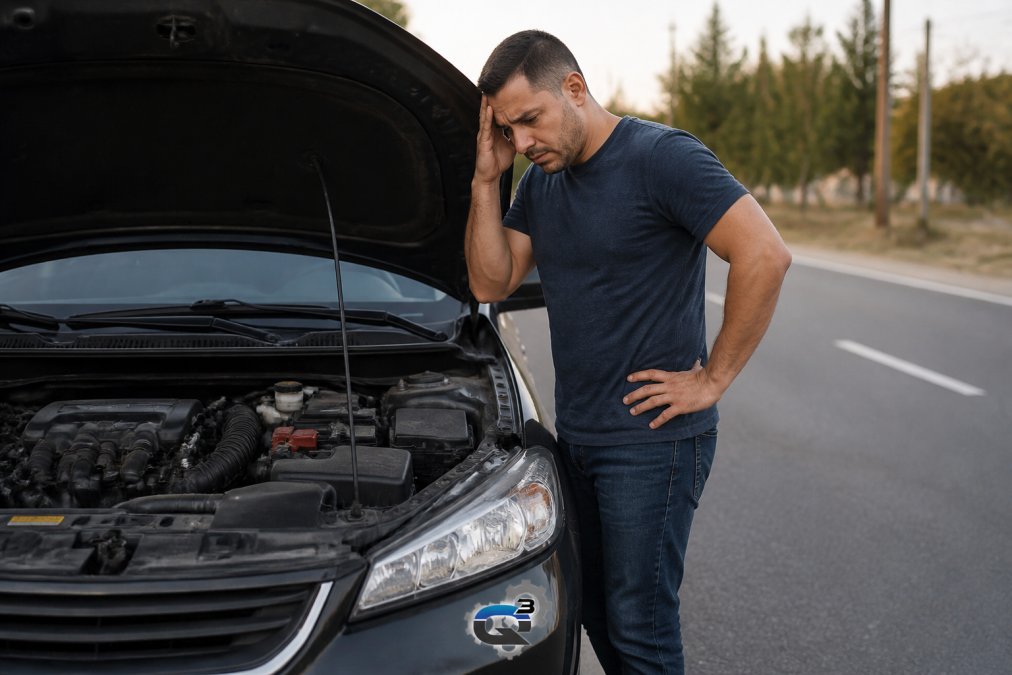
Intermittent engine stalling is one of the most frustrating and potentially hazardous issues a driver can face. Unlike a dead battery or a flat tire, an engine that cuts out without warning and then restarts leaves you guessing.
Intermittent stalling is almost always a symptom of a system failing under specific conditions, not a random electrical gremlin. Before replacing parts, gather data: note the engine temperature, speed, and whether accessories like the A/C are running.
Intermittent vs. Constant Stalling: What The Pattern Tells You
A constant stall usually points to a hard failure like a completely clogged fuel filter or a broken electrical ground. Intermittent failures typically involve components that degrade as they heat up or vibrate loose.
For example, a failing crankshaft position sensor often works fine when cold but fails once the engine bay heats up, cutting the signal to the engine control unit. If the engine stalls only after driving for 30 minutes, focus on heat-related failures. If it stalls when you hit a pothole, suspect a loose connection or a failing relay.
The 7 Most Common Causes of Intermittent Engine Stalling
Several systems can cause an engine to stall intermittently. Here are the most common culprits, grouped by the system they affect.
1. Fuel Delivery System Failures
A failing fuel pump can overheat and shut down, or a clogged fuel filter can restrict flow under heavy load. You might notice the car stalls after a long highway drive and then refuses to start for 20 minutes until the pump cools down.
2. Airflow and Vacuum Leak Problems
A vacuum leak introduces unmetered air, leaning out the mixture and causing stalling at idle. Cracked vacuum hoses, a faulty positive crankcase ventilation valve, or a dirty throttle body can all disrupt idle air control.
3. Ignition System Failures
Worn spark plugs or failing ignition coils can cause a misfire severe enough to stall the engine. These components often fail intermittently, especially under load or when hot.
4. Sensor Failures and Electrical Faults
A failing mass airflow sensor or crankshaft position sensor can send incorrect signals to the engine computer, causing stalling. Poor electrical ground connections, low battery voltage, or corroded battery terminals can also cause erratic behavior in the ECU.
Car Stalls at Idle But Starts Back Up: What's Different?
When a car stalls at idle but restarts immediately, the problem is almost always in the idle air control system or the engine's ability to maintain a stable idle speed.
The Idle Air Control System: The Prime Suspect
At idle, the throttle plate is nearly closed (energy.gov). The ECU uses the idle air control (IAC) valve to bypass air around the closed plate to keep the engine running at the target RPM (typically 650-800 RPM). Over time, carbon deposits build up on the IAC valve's pintle and throttle body bore, restricting airflow so the ECU cannot compensate fast enough when you stop, causing the RPM to drop below the stall threshold.
The fix: Remove the throttle body and IAC valve and clean them with a throttle body cleaner and a soft brush. Do not use a wire brush, as it will damage the anti-friction coating on the throttle plate. This is a DIY fix that resolves a large percentage of idle-only stalls.
The EGR Valve: The Hidden Choker
The exhaust gas recirculation (EGR) valve opens at steady highway speeds to lower combustion temperatures. If it sticks open due to carbon buildup, it dumps inert exhaust gas into the intake manifold at idle, choking out the flame. The engine will stall but restart because the valve may close when the engine stops.
The telltale sign: If the engine stalls at idle but runs fine at speed, with a rough, stumbling idle just before the stall, suspect the EGR valve. Test it by applying vacuum with a hand pump; if it does not hold vacuum or moves freely without returning, it is stuck. Cleaning the passages or replacing the valve is the standard fix.
The Throttle Position Sensor and Idle Switch
On older vehicles with a mechanical throttle cable, the throttle position sensor (TPS) tells the ECU when the throttle is closed. If the TPS has a dead spot at the closed position, the ECU does not engage the idle control strategy, causing a stall the moment you take your foot off the accelerator. A digital multimeter can test for a smooth voltage sweep from 0.5V (closed) to 4.5V (wide open); dropouts or spikes indicate a worn sensor.
Vacuum Leaks: The Unmetered Air Problem
A vacuum leak at idle introduces unmetered air, leaning out the air-fuel mixture. The most common leak points are the PCV hose, the brake booster hose, and the intake manifold gaskets. A simple test: with the engine idling, spray carburetor cleaner around the suspected hoses; if the RPM changes, you have found the leak.
Environmental Triggers for Idle Stalls
Idle stalls are often temperature-sensitive. On a cold morning, a faulty engine coolant temperature sensor can prevent the cold-start enrichment cycle, causing stalls until the engine warms up. On a hot day, fuel can vaporize in the fuel rail, causing a vapor lock that starves the engine at idle, more common in older vehicles with steel fuel lines near the exhaust manifold.
A Quick Diagnostic Flow for Idle-Only Stalls
- Scan for codes: Look for P0505 (Idle Control), P0171 (Lean), or P0300 (Random Misfire).
- Clean the throttle body and IAC valve: This is the highest-probability fix and the cheapest first step.
- Check the EGR valve: Apply vacuum and see if it holds.
- Test the TPS: Check for a smooth voltage sweep.
- Inspect vacuum hoses: Look for cracks, especially at the PCV and brake booster connections.
If you have cleaned the throttle body and IAC valve, checked the EGR and TPS, and found no vacuum leaks, the problem may lie in the ECU's idle control strategy. A professional scan tool can perform an idle relearn procedure to reset the ECU's learned idle trim values, a common final step after cleaning the throttle body.
How to Diagnose Engine Stalling: A Step-by-Step Guide
Diagnosing an intermittent stall requires a methodical approach that pairs the failure pattern with the data your car's computer stores. Use this sequence to isolate the root cause before spending money on parts.
Step 1: Correlate the Stall Pattern with OBD-II Codes
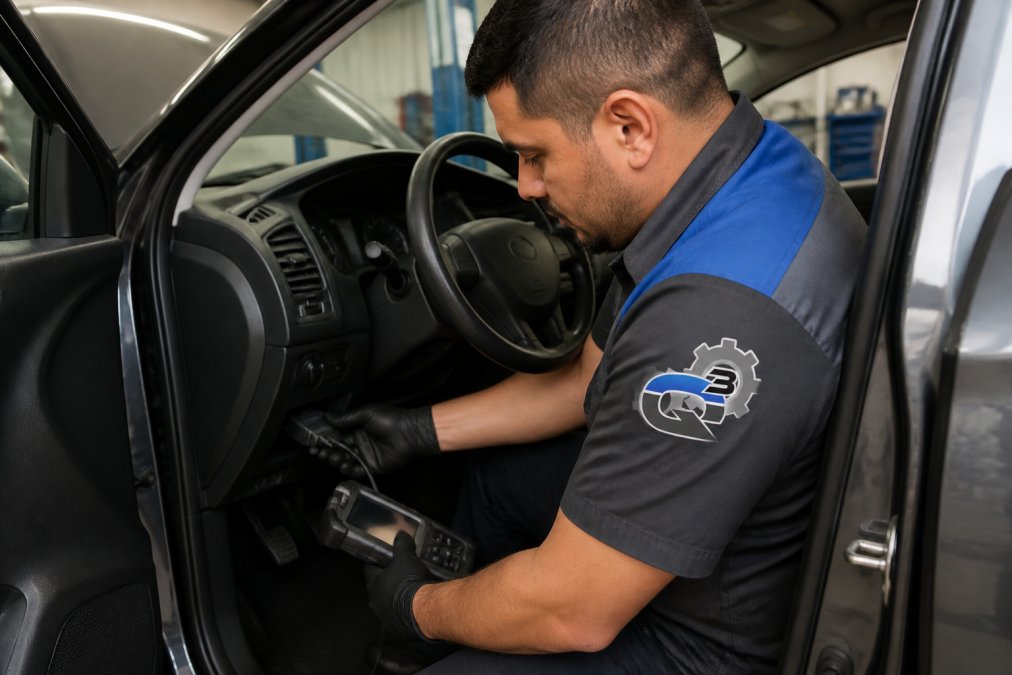
Before you pop the hood, write down the exact conditions of the stall: engine temperature, vehicle speed, and whether the A/C or headlights were on. Then use an OBD-II scanner to pull both confirmed and pending codes, pending codes are critical for intermittent faults because they record a failure that hasn't happened often enough to trigger the check engine light.
Map your pattern to the most likely codes:
| Stall Pattern | Likely OBD-II Code | What It Means |
|---|---|---|
| Stalls when hot, restarts after 30 min | P0335 (Crankshaft Position Sensor) | The sensor's internal resistance rises with heat, cutting the signal to the ECU. |
| Stalls at idle, rough idle | P0505 (Idle Control System) or P0171 (System Too Lean) | Carbon buildup on the idle air control valve or an unmetered vacuum leak. |
| Stalls under hard acceleration | P0087 (Fuel Rail Pressure Too Low) | A failing fuel pump or a clogged fuel filter cannot maintain pressure under load. |
| Stalls on damp or rainy days | P0300 (Random Misfire) | Moisture intrusion into the distributor cap, spark plug boots, or coil-on-plug connectors. |
Step 2: Reproduce the Stall Under Controlled Conditions
If the stall happens only when the engine is hot, park in a safe area and let it idle until the cooling fan cycles on twice to bring the engine bay to operating temperature. If it stalls, you have reproduced the fault safely. If the stall happens on rough roads, drive slowly over speed bumps in an empty parking lot while watching the tachometer; a sudden RPM drop points to a loose ground strap or chafed wiring harness.
Step 3: Check the Battery and Grounds First
A weak battery or corroded ground connection is the single most common cause of phantom electrical faults. Check battery voltage with the engine off (should be 12.6 volts) and while cranking (should not drop below 9.6 volts). Then trace the main ground strap from the battery negative terminal to the engine block and chassis; remove, clean, and re-torque these connections.
Step 4: Use Live Data to Catch the Moment of Failure
A basic code reader is not enough; you need a scanner with live data streaming (many affordable Bluetooth adapters provide this). Monitor engine RPM, calculated load, and short-term fuel trim under the conditions that trigger the stall. When the engine stutters, check the freeze frame data. A sudden RPM drop with a simultaneous fuel trim spike points to a vacuum leak; a drop with no change in fuel trim suggests an ignition or crank sensor issue.
Step 5: Perform a Targeted Fuel Pressure Test
Intermittent fuel pump failure is heat-related, so a standard test at idle will not catch it. Attach a fuel pressure gauge, tape it to the windshield, and drive until the stall occurs. If pressure drops below specification (typically 40-60 psi) right before the stall, the pump or relay is the culprit; if it holds steady, the fuel system is not the problem (the EPA).
Step 6: Inspect for Environmental Triggers
Many intermittent stalls are weather-dependent. If the stall occurs only on damp mornings, pull the spark plug boots and look for white corrosion or moisture tracks on the ceramic insulator. If it stalls during a heat wave, suspect vapor lock or a fuel pump on the edge of failure. Cold-start stalls in winter often trace to a failing engine coolant temperature sensor.
When to Stop and Call a Professional
If you still cannot reproduce the stall or find a definitive cause, stop. Intermittent electrical faults can take hours to trace. A professional shop with a lab scope can capture waveforms from the crank and cam sensors to see exactly where the signal drops out, a fraction of the cost of replacing parts on a hunch.
When to See a Pro and the Cost of Engine Diagnostic Service
If your initial checks don't reveal the problem, or if you are uncomfortable working on your vehicle's fuel or ignition systems, it is time to call a professional. The cost of engine diagnostic service varies, but it is a worthwhile investment compared to replacing parts blindly. A professional technician has advanced scan tools that can pinpoint intermittent failures invisible to a basic code reader.
When you bring your car to a shop, ask them to explain what they found and why a particular repair is necessary. A reputable shop should walk you through the diagnostic process and provide a clear estimate before any work begins.
Safety First: What To Do If Your Engine Stalls While Driving
Your immediate priority when the engine stalls is safety, not diagnosis. If you lose power steering and brake assist, staying calm and in control is critical.
- Stay calm and signal: Turn on your hazard lights immediately to alert other drivers.
- Steer to safety: Do not slam on the brakes. Use your remaining power steering to guide the vehicle smoothly to the shoulder or side of the road.
- Try to restart: Once you are safely stopped, attempt to restart the engine. If it cranks but won't start, do not keep cranking, as this can drain the battery or flood the engine.
- Call for help: If the car will not restart, or if it restarts but you are unsure of the cause, call for roadside assistance. Do not attempt to drive a car that has stalled once, as the condition will likely repeat.
Conclusion: Don't Let Intermittent Stalling Leave You Stranded
Intermittent engine stalling will not fix itself, and ignoring it puts you and your passengers at risk. Approach the issue systematically, using the pattern of the stall to guide your diagnosis. Addressing the root cause is the only way to restore your confidence in the vehicle.
At Q3 Car & Truck Repair, our technicians are experienced in diagnosing complex, intermittent issues on both cars and trucks. We focus on transparent communication and straightforward estimates, so you understand exactly what is wrong and why the repair is needed. Our goal is to build long-lasting relationships with drivers in Capitol Heights and Waldorf by providing honest, reliable service. If you are dealing with engine stalling or any other performance issue, request an appointment with our team and get your vehicle back to a safe, dependable state.
Frequently Asked Questions
What sensors can cause intermittent engine stalling?
The crankshaft position sensor is the most common culprit, as it tells the engine computer where the pistons are. If it fails intermittently, the computer loses engine timing and kills the spark or fuel. The mass airflow (MAF) sensor and throttle position sensor can also cause stalling by misreporting the air-fuel mixture. A failing O2 sensor can similarly disrupt the mixture. A shop with an OBD-II scanner can check for fault codes from these sensors to confirm which one is failing.
Can a bad fuel pump cause intermittent stalling?
Yes. A failing fuel pump often works fine until it overheats, then it stops sending fuel to the engine, causing a stall. After a few minutes of cooling down, it may work again, which is why the car starts back up. A clogged fuel filter can cause the same issue by starving the engine of fuel under load. Listen for a whining noise from the fuel tank area, and have your fuel pressure tested to confirm the pump is the problem.
Is it safe to drive a car that stalls intermittently?
No. An intermittent stall is unpredictable and can happen in traffic, at highway speeds, or when you need to accelerate to avoid a hazard. If the stall happens while driving, you lose power steering and brake assist, which makes the car much harder to control. The safest choice is to have the car diagnosed and repaired before driving it again. If you must drive it, stay on surface streets and avoid highways until a mechanic finds the cause.
Why does my car stall at idle but starts back up?
This is a classic symptom of a faulty idle air control valve or a dirty throttle body. At idle, the engine needs a specific amount of air to maintain RPM. If the idle air control valve sticks closed or the throttle body is carboned up, the engine stalls when you stop. A vacuum leak can also cause this, as unmetered air leans out the air-fuel mixture. Cleaning the throttle body or replacing the idle air control valve often resolves it.
This article was written using GrandRanker
Frequently Asked Questions
Q: What sensors can cause intermittent engine stalling?
A: The crankshaft position sensor is the most common culprit, as it tells the engine computer where the pistons are. If it fails intermittently, the computer loses engine timing and kills the spark or fuel. The mass airflow (MAF) sensor and throttle position sensor can also cause stalling by misreporting the air-fuel mixture. A failing O2 sensor can similarly disrupt the mixture. A shop with an OBD-II scanner can check for fault codes from these sensors to confirm which one is failing.
Q: Can a bad fuel pump cause intermittent stalling?
A: Yes. A failing fuel pump often works fine until it overheats, then it stops sending fuel to the engine, causing a stall. After a few minutes of cooling down, it may work again, which is why the car starts back up. A clogged fuel filter can cause the same issue by starving the engine of fuel under load. Listen for a whining noise from the fuel tank area, and have your fuel pressure tested to confirm the pump is the problem.
Q: Is it safe to drive a car that stalls intermittently?
A: No. An intermittent stall is unpredictable and can happen in traffic, at highway speeds, or when you need to accelerate to avoid a hazard. If the stall happens while driving, you lose power steering and brake assist, which makes the car much harder to control. The safest choice is to have the car diagnosed and repaired before driving it again. If you must drive it, stay on surface streets and avoid highways until a mechanic finds the cause.
Q: Why does my car stall at idle but starts back up?
A: This is a classic symptom of a faulty idle air control valve or a dirty throttle body. At idle, the engine needs a specific amount of air to maintain RPM. If the idle air control valve sticks closed or the throttle body is carboned up, the engine stalls when you stop. A vacuum leak can also cause this, as unmetered air leans out the air-fuel mixture. Cleaning the throttle body or replacing the idle air control valve often resolves it.