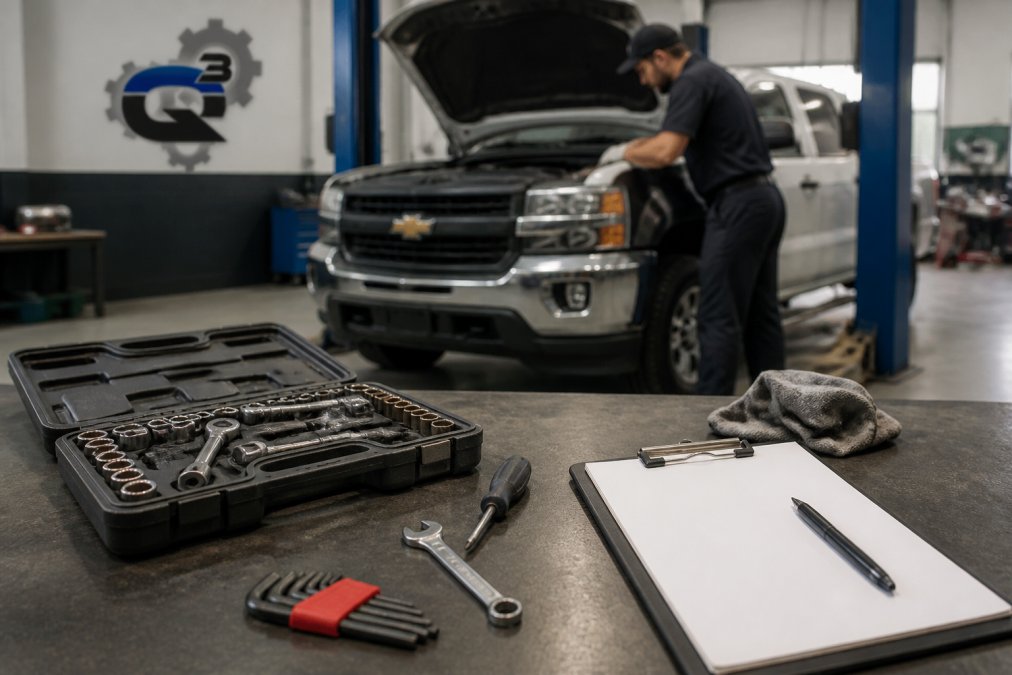
 comparison
DIY vs. Professional Repair: When to Choose Each
Table of Contents
- DIY vs. Professional Repair: The Core Decision
- Cost Analysis: Labor, Materials, and Hidden Expenses
- Common DIY Car Repair Mistakes and How They Cost You
- Essential Tools for Basic Car Maintenance
- When to Hire a Mechanic for Car Repairs
- Warranty, Liability, and Long-Term Value
- Making Your Decision: A Practical Framework
- Frequently Asked Questions
Last Updated: September 25, 2026
DIY vs. Professional Repair: The Core Decision
When something breaks on your car, you face an immediate choice that defines the diy versus professional repair decision: fix it yourself or take it to a professional. DIY work saves money upfront, but professional repair protects your investment and safety. The trick is knowing which situations demand which approach.
The difference between success and costly mistakes comes down to understanding what's at stake: not just repair cost, but liability, warranty implications, and long-term vehicle value.
This guide helps you evaluate when DIY makes sense and when professional intervention is non-negotiable, so you can make decisions that protect both your vehicle and your wallet.
Cost Analysis: Labor, Materials, and Hidden Expenses
Professional repair costs more upfront because you're paying for expertise, liability insurance, and equipment. DIY costs less in parts but requires tools you may not own and time away from other priorities.
Hidden expenses reveal the true picture. A DIY oil change costs less, but spilling oil creates environmental liability, and over-tightening the drain plug can crack it, turning a simple task into an expensive engine repair.
Material costs vary dramatically by repair type. Basic maintenance like air filter replacement costs almost nothing. Transmission work, electrical diagnostics, or structural repairs demand specialized tools and knowledge that most homeowners lack.
The Opportunity Cost Framework: Your Time Has Value
Labor represents the biggest cost difference, but most DIY analyses ignore your time's true cost. Professional shops charge $75 to $150 per hour, reflecting overhead, training, and liability coverage. Calculate your own hourly value to compare fairly.
If you earn $75 per hour, a four-hour repair saves $300 to $600 in labor but costs $300 in lost income. If you earn $150 per hour or more, DIY likely costs you money overall.
Learning curve complicates the calculation. A repair you've done before takes three hours; attempted for the first time, it often takes six to eight hours. A professional completes it in two to three hours from experience.
Calculate: (Estimated DIY time × Your hourly rate) + Parts cost = True DIY cost. Compare to the professional quote; many owners find professional service costs less when accounting for time value.
Professional repairs include a warranty, typically 12 months or 12,000 miles. If something fails, they fix it at no cost. DIY work offers no protection; if your repair fails, you're paying again and lose the original time savings.
Common DIY Car Repair Mistakes and How They Cost You
Misdiagnosis is common because symptoms point to multiple causes. A check engine light might indicate a loose gas cap or failing catalytic converter. Professionals use diagnostic equipment to pinpoint the issue; DIY approaches often involve replacing parts until the problem stops.
Improper technique damages components. Over-tightening bolts strips threads; forcing parts damages seals. These mistakes compound, a small error becomes a major problem.
Using the wrong parts happens frequently. Aftermarket parts vary in quality, and the cheapest option often fails sooner. One wrong specification can make an entire repair fail.
Essential Tools for Basic Car Maintenance
Basic car maintenance, oil changes, filter replacements, fluid top-ups, requires minimal tools: a socket set, wrenches, oil drain pan, and jack with jack stands.
A quality socket set and basic hand tools cost a few hundred dollars. That investment makes sense for multiple vehicles or long-term ownership. For a single repair, renting tools often costs less than buying.
Specialized repairs demand specialized tools, transmission jacks, brake bleeding kits, diagnostic equipment, costing hundreds to thousands of dollars. Rental costs add up quickly on complex jobs.
Professional shops have invested in equipment for efficiency and safety: lifts, diagnostic computers, and specialized tools. That infrastructure home garages cannot replicate.
| Tool Category | DIY Investment | Best For | Limitations |
|---|---|---|---|
| Basic hand tools | $100-300 | Oil changes, filter replacement, fluid checks | Limited to simple maintenance |
| Specialized tools | $200-1,000+ | Brakes, suspension, electrical work | High cost, storage needs |
| Diagnostic equipment | $500-5,000+ | Identifying problems accurately | Steep learning curve |
| Professional shop access | Hourly labor rate | Any repair requiring lifts or specialized tools | No ownership of tools |
When to Hire a Mechanic for Car Repairs
Certain repairs demand professional intervention: transmission work, engine diagnostics, structural repairs, and electrical systems. These require equipment and knowledge most home garages lack.
Safety-Critical Systems
Safety-critical systems are the clearest line. Brake, steering, and suspension work affect your ability to stop, control, and handle the vehicle. Mistakes put you and others at risk. Professional mechanics train extensively on these systems and carry liability insurance.
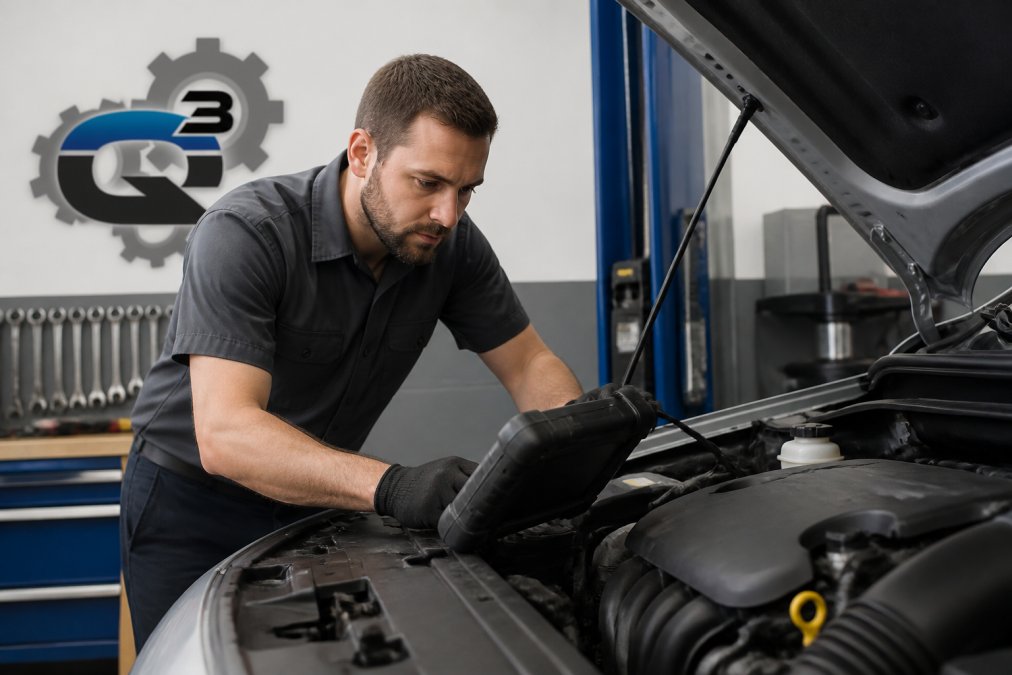
Electrical diagnostics require specialized equipment and software. A professional connects to your vehicle's diagnostic port and reads fault codes, saving hours of guessing and preventing unnecessary part replacement.
Permitting and Legal Compliance: The Hidden Liability
One of the most overlooked factors in the DIY decision is permitting and legal compliance. Many vehicle repairs, particularly those involving emissions systems, structural modifications, or safety equipment, may require documentation or inspection depending on your state's regulations.
Emissions system work is the most common compliance issue. If you replace or modify your vehicle's catalytic converter, oxygen sensors, or emissions control components, you may be required to have the work certified by a licensed technician and documented with your state's emissions authority. Performing this work yourself and failing to obtain proper documentation can result in your vehicle failing emissions inspection, which prevents registration renewal. Some states impose fines for unpermitted emissions work.
Structural repairs, frame straightening, welding, or collision damage repair, often require certification in states that regulate auto body work. A few states require that frame or structural work be performed only by licensed technicians and documented accordingly. DIY structural work on a vehicle you plan to sell creates liability exposure; if the vehicle is later involved in an accident and it's discovered that structural work was performed without proper certification, you could face legal claims from the subsequent owner.
Brake system modifications, including brake line replacement or ABS system work, may require inspection or certification in some jurisdictions. While routine brake pad replacement is generally unregulated, more complex brake work sometimes falls under state automotive repair licensing requirements.
Insurance implications compound the legal risk.
Warranty Considerations
Warranty, Liability, and Long-Term Value
Your vehicle's warranty is a valuable asset. Manufacturer warranties typically cover parts and labor for specific timeframes. Performing unauthorized repairs can void that coverage. Even if the repair itself is unrelated to the problem that later develops, some manufacturers interpret DIY work as grounds for denying warranty claims.
Making Your Decision: A Practical Framework
Start with three questions: Do I have the right tools? Do I have the right knowledge? Is this repair safety-critical?
Create a decision matrix for your specific situation:
| Repair Type | DIY Suitable? | Key Consideration | Recommended Action |
|---|---|---|---|
| Oil and filter change | Yes | Proper disposal of old oil | DIY if you have basic tools |
| Air filter replacement | Yes | Correct filter specification | DIY or professional |
| Brake pads | Conditional | Brake system knowledge required | Professional if uncertain |
| Transmission work | No | Requires specialized equipment | Always professional |
| Electrical diagnostics | No | Requires diagnostic equipment | Always professional |
| Suspension repairs | No | Safety-critical system | Always professional |
| Fluid top-ups | Yes | Correct fluid type | DIY |
Frequently Asked Questions
Can DIY car repairs void my manufacturer's warranty?
DIY repairs can void warranty coverage on specific components if the work is faulty or causes damage. Most warranties protect against defects in materials and workmanship, not damage from improper DIY maintenance. If you perform routine maintenance like oil changes or filter replacements using proper procedures, warranty coverage typically remains intact. However, complex repairs, especially those involving the engine, transmission, or electrical systems, carry real risk of voiding coverage if something goes wrong. Always check your warranty documentation or contact your manufacturer before attempting repairs yourself.
What's the biggest risk of attempting complex automotive repairs yourself?
Safety is the primary risk. Improper work on brakes, steering, suspension, or electrical systems can cause sudden failure while driving, endangering you and others. Beyond safety, diagnostic mistakes lead to expensive repairs, you might replace the wrong part, compounding the original problem. Structural integrity issues, like incorrect torque specs on critical fasteners, can cause catastrophic failures. Additionally, without proper diagnostic equipment, you may miss underlying problems that the initial symptom masks. Professional mechanics have training, experience, and specialized tools to identify root causes and ensure repairs meet safety standards.
How do I know if a repair requires specialized diagnostic equipment?
Modern vehicles rely on onboard computer systems that require specialized scanners to read diagnostic trouble codes. If your check engine light is on, you need diagnostic equipment to understand what triggered it, guessing can lead to expensive mistakes. Transmission issues, electrical faults, emissions problems, and sensor failures all require computer diagnostics. Older vehicles with mechanical systems may allow some DIY troubleshooting, but anything involving electronic controls, fuel injection, or safety systems demands professional-grade equipment. If you're unsure whether a repair needs diagnostics, that uncertainty itself is a signal to consult a professional.
Does professional repair impact my vehicle's resale value?
Yes, positively. A well-documented service history from a reputable professional shop increases resale value and buyer confidence. Buyers view professional maintenance records as proof of proper care and reduced hidden problems. Conversely, DIY repairs, especially if done poorly, can reduce resale value because future owners worry about workmanship quality and hidden issues. A transmission that was professionally serviced with a warranty carries more value than one that was DIY-repaired. Professional work also protects structural integrity and safety ratings, both critical to buyers evaluating long-term reliability and insurance costs.