 listicle
Car Repairs Requiring Specialized Training
Table of Contents
- Why Some Car Repairs Require Specialized Training
- Engine Troubleshooting and Fuel Injection Systems
- Brake System Maintenance and Electrical Diagnostics
- Suspension, Steering, and ADAS Calibration
- Transmission Repair: Why DIY Attempts Backfire
- High-Voltage Systems and EV Battery Diagnostics
- ASE Certification Requirements for Mechanics
- Automotive Diagnostic Tools for Professionals
- Frequently Asked Questions
Last Updated: September 23, 2026
Why Some Car Repairs Require Specialized Training
Modern vehicles are packed with computer systems, sensors, and software that control everything from engine performance to safety features. This is why specialized training repairs have become increasingly essential for vehicle owners to understand.
Some repairs demand more than basic mechanical knowledge. They require diagnostic equipment, technical proficiency, and hands-on training that goes beyond what a typical DIY approach can handle.
The stakes are real: a misdiagnosed electrical issue can damage multiple systems, a botched transmission repair can cost thousands more to fix, and incorrect brake work puts lives at risk. Understanding which repairs require specialists helps vehicle owners make informed decisions.
Engine Troubleshooting and Fuel Injection Systems
Modern engines use fuel injection systems controlled by computer modules. When problems occur, visual inspection rarely reveals the cause.
Fuel injection systems operate at high pressure and require precise sensor calibration. Technicians need specialized training to read diagnostic trouble codes and trace electrical signals to their source.
Common engine problems that require specialized training include:
- Misfires caused by faulty ignition coils or fuel injectors
- Rough idle traced to vacuum leaks or sensor failures
- Poor fuel economy linked to oxygen sensor malfunction
- Hard starting related to fuel pump or injector issues
Technicians use advanced scanners and oscilloscopes to visualize electrical signals and confirm failures. Without this equipment and training, repairs waste time and money.
Brake System Maintenance and Electrical Diagnostics
Brake systems are safety-critical and demand specialized training. Failure puts lives at risk.
Modern brake systems combine mechanical and electronic components: Anti-lock braking systems (ABS) use sensors to prevent wheel lockup, brake pressure distribution systems adjust force between wheels, and electronic parking brakes replace mechanical cables.
Brake system work requires understanding:
- Hydraulic pressure principles and brake fluid specifications
- Sensor function and electrical circuit diagnostics
- Brake pad wear indicators and rotor condition assessment
- ABS module programming and calibration
Brake technicians need hands-on training to safely bleed lines, replace components without introducing air, and test performance. Improper work is dangerous.
Electrical diagnostics go beyond visual checks. A brake light that stays on might indicate a sensor failure, corroded connector, or module malfunction. Technicians use specialized equipment to trace faults and identify the exact failure point.
Suspension, Steering, and ADAS Calibration
Suspension and steering systems determine handling and safety. The most significant specialization is Advanced Driver Assistance Systems (ADAS) calibration, a high-demand repair area most general shops cannot perform.
Suspension and Steering Fundamentals
Suspension and steering repairs requiring specialized training include wheel alignment on ADAS-equipped vehicles, suspension component replacement affecting sensor positioning, electric power steering work, and shock/strut replacement with ride height sensors. Technicians must recognize when ADAS recalibration is necessary, a critical step many shops overlook.
ADAS Technology and Calibration Demand
Advanced Driver Assistance Systems use cameras, radar, and lidar to monitor surroundings and manage adaptive cruise control, lane-keeping assistance, automatic emergency braking, blind-spot monitoring, and parking assistance.
When suspension or steering work is performed, ADAS sensors must be recalibrated. This requires specialized training, equipment, target systems, precise measurement, and knowledge of manufacturer procedures.
ADAS calibration is increasingly common because collision repairs affect sensor alignment, suspension component replacement shifts sensor positions by millimeters, and windshield replacement on vehicles with forward-facing cameras requires recalibration.
ADAS Calibration Equipment and Training
ADAS calibration equipment costs $15,000-$25,000 total investment. Technicians need formal training through manufacturer certification programs (20-40 hours) or ASE continuing education. Without proper training, misaligned systems can cause automatic emergency braking to activate incorrectly or fail when needed.
Market Opportunity and Service Pricing
ADAS calibration commands premium labor rates ($400-$800 per vehicle vs. $100-$200 for standard alignment) because few shops have equipment and training, procedures are proprietary, and liability is high. Equipment investment pays for itself within 12-24 months. Technicians with ADAS certification earn 15-25% wage premiums.
Transmission Repair: Why DIY Attempts Backfire
Transmissions contain hundreds of precision-machined parts. A single grain of debris or misaligned component can cause total failure.
Transmission work demands specialized training. Diagnostics require understanding how transmissions convert power through gear ratios. Electronic transmissions use solenoids, pressure sensors, and control modules to shift gears automatically.
Common transmission problems that require professional repair include:
- Slipping gears caused by worn clutches or bands
- Hard shifts traced to sensor failures or transmission fluid issues
- Delayed engagement indicating internal seal leaks
- Torque converter problems affecting fuel economy
Attempting transmission repair without proper training results in expensive mistakes. Rebuilding requires specialized tools, clean environment, and deep design knowledge. One reassembly mistake can cost thousands in additional damage.
Transmission shops exist because this work is so specialized. Even general repair shops often decline transmission work and refer customers to specialists.
High-Voltage Systems and EV Battery Diagnostics
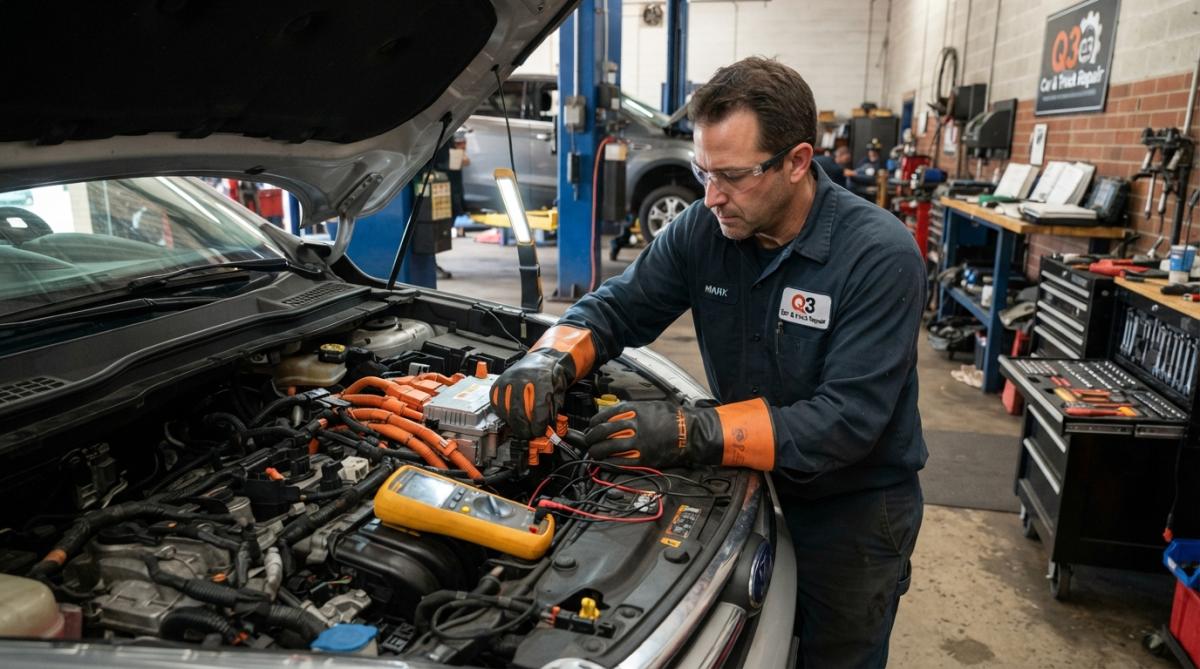
Electric and hybrid vehicles require high-voltage system expertise. These systems operate at voltages that can cause serious injury or death if handled improperly. Shops investing in this specialization gain competitive advantage and higher-margin repair work.
Safety Training and Certification
High-voltage battery work requires specific safety training and equipment. Technicians must safely disconnect systems, use insulated tools, and follow lockout procedures. ASE offers EV-specific certification tests, and manufacturers offer 40-80 hours of formal training covering high-voltage safety, battery management systems, and diagnostic procedures.
Diagnostic and Repair Scope
Hybrid and EV battery diagnostics involve:
- High-voltage battery state-of-charge assessment and capacity testing
- Individual cell voltage testing, balancing, and thermal monitoring
- Battery management system (BMS) diagnostics and software updates
- High-voltage connector inspection, testing, and replacement
- Thermal management system diagnosis (cooling loops, fans, heat pumps)
- Onboard charger and DC fast-charger circuit diagnostics
- High-voltage wiring harness continuity and insulation testing
EV battery diagnostics require understanding battery chemistry and thermal dynamics. Technicians must interpret cell voltage data, temperature profiles, and charge cycles to determine whether batteries need balancing, thermal repair, or replacement.
Equipment Investment and ROI
EV battery diagnostic equipment costs $12,000-$35,000 total investment. ROI is compelling: EV battery work commands labor rates 20-40% higher than conventional engine work, and as the EV fleet ages, warranty work transitions to out-of-warranty diagnostics and repairs.
Market Demand and Career Trajectory
EV-specific technician roles are growing faster than the overall market. Technicians with EV specialization earn $5,000-$15,000 annual wage premiums. A 60-hour manufacturer training investment ($1,500-$3,000) pays for itself within 3-6 months through higher billable rates.
ASE Certification Requirements for Mechanics
The National Institute for Automotive Service Excellence (ASE) maintains the industry standard for technician certification. ASE certification validates that a technician has demonstrated knowledge and hands-on experience in specific repair areas.
ASE certification requirements for mechanics include passing exams and maintaining documented work experience. The ASE offers over 50 different certification tests covering various vehicle systems. Each test focuses on specific technical areas: engine performance, brake systems, electrical systems, suspension and steering, transmission, and many others.
To qualify for an ASE exam, technicians must have at least two years of relevant work experience in that specialty.
Why ASE matters:
- Employers recognize ASE as the gold standard for technician competency
- Certified technicians earn higher wages and have better job security
- Customers can verify that a technician has validated expertise
- Shops with ASE-certified staff attract customers seeking quality work
Automotive Diagnostic Tools for Professionals
The equipment that separates professional repair shops from DIY attempts is substantial. Modern diagnostic tools cost thousands of dollars and require training to use effectively.
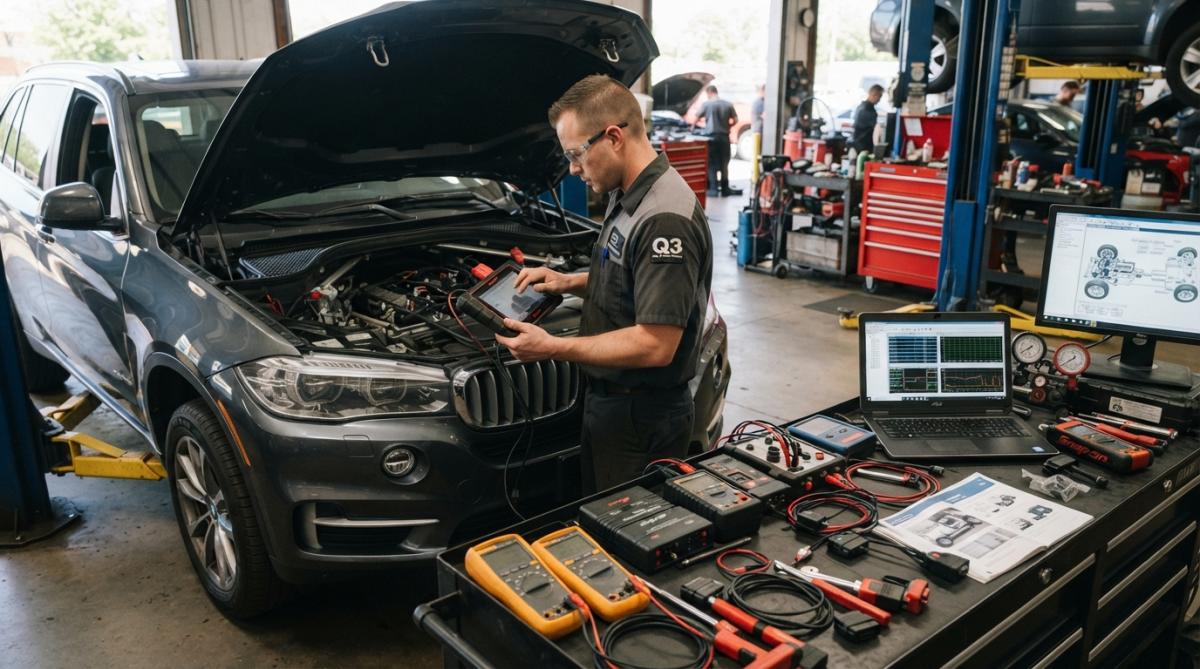
Essential diagnostic tools for specialized repairs include:
- Advanced diagnostic scanners for code reading and module programming
- ADAS calibration equipment for camera and radar alignment
- Oscilloscopes for visualizing electrical signals and sensor output
- Alignment systems for suspension geometry and wheel alignment
- High-voltage testing equipment for EV and hybrid systems
- Repair information software like Mitchell 1 ProDemand or AllData for OEM procedures
Frequently Asked Questions
What car repairs are dangerous to do yourself?
Brake system work, high-voltage EV battery repairs, transmission overhauls, and ADAS calibration are among the most dangerous DIY repairs. Brake failures can cause accidents. High-voltage systems carry electrocution risk. Transmission mistakes can leave you stranded. ADAS misalignment compromises vehicle safety features. These repairs require specialized training, diagnostic equipment, and industry standards compliance that protect both you and your vehicle.
Why is ASE certification important for car repairs?
ASE certification validates that a technician has passed rigorous exams and accumulated hands-on experience in specific repair areas like engine performance, electrical systems, or brake diagnostics. The certification requires recertification every five years, ensuring technicians stay current with evolving vehicle technology. When you work with ASE-certified mechanics, you're choosing professionals who meet industry standards and possess documented expertise in complex repairs.
Which automotive systems require specialized diagnostic tools?
Modern vehicles demand advanced diagnostic equipment for engine control modules, transmission programming, ADAS calibration, and high-voltage battery systems. Tools like oscilloscopes detect electrical faults, while ADAS calibration equipment ensures safety sensors align correctly after suspension or collision work. Diagnostic software accesses manufacturer-specific repair procedures and trouble codes. Without these automotive diagnostic tools for professionals, technicians cannot accurately identify problems or safely perform repairs on today's software-heavy vehicles.
Can I damage my car by attempting complex repairs without training?
Yes. Transmission fluid contamination, improper sensor reconnection, and misaligned suspension components are common results of untrained attempts. These mistakes often cost more to fix than the original repair would have. Engine timing errors can cause internal damage. Electrical work without proper grounding can fry modules costing thousands. Even small errors compound, a misaligned ADAS sensor won't trigger warnings during a collision, eliminating safety features your vehicle depends on.