 listicle
Essential Tools for Basic DIY Car Maintenance
Table of Contents
- Why the Right Tools Make DIY Car Maintenance Easier
- 1. Socket and Ratchet Sets: The Backbone of Any DIY Car Maintenance Kit
- 2. Wrenches, Screwdrivers, and Pliers for Everyday Repairs
- 3. Jacks, Jack Stands, and Safety Equipment for Safe Lifting
- 5. How to Choose the Best Beginner Mechanic Tool Set
- 6. Your Car Maintenance Schedule Checklist and When to Take Your Car to a Professional Mechanic
- Frequently Asked Questions
Last Updated: October 16, 2026
Why the Right Tools Make DIY Car Maintenance Easier
The right set of essential tools for basic DIY car maintenance turns a frustrating afternoon into a manageable job. A complete starter kit does three things: it lets you handle routine maintenance safely, it helps you spot small repairs before they become expensive ones, and it gives you the confidence to know when a job is genuinely beyond a driveway fix.
Below, we break down the tools that earn their place in a beginner's garage, what each one does, and how to buy without overspending. Every item on this list is something a home mechanic can actually use on a commuter car or a work truck.
1. Socket and Ratchet Sets: The Backbone of Any DIY Car Maintenance Kit
A socket and ratchet set is the single most important purchase for DIY car maintenance. Sockets grip bolt heads and nuts from every angle, and the ratchet lets you tighten or loosen them in tight spaces without repositioning the tool.
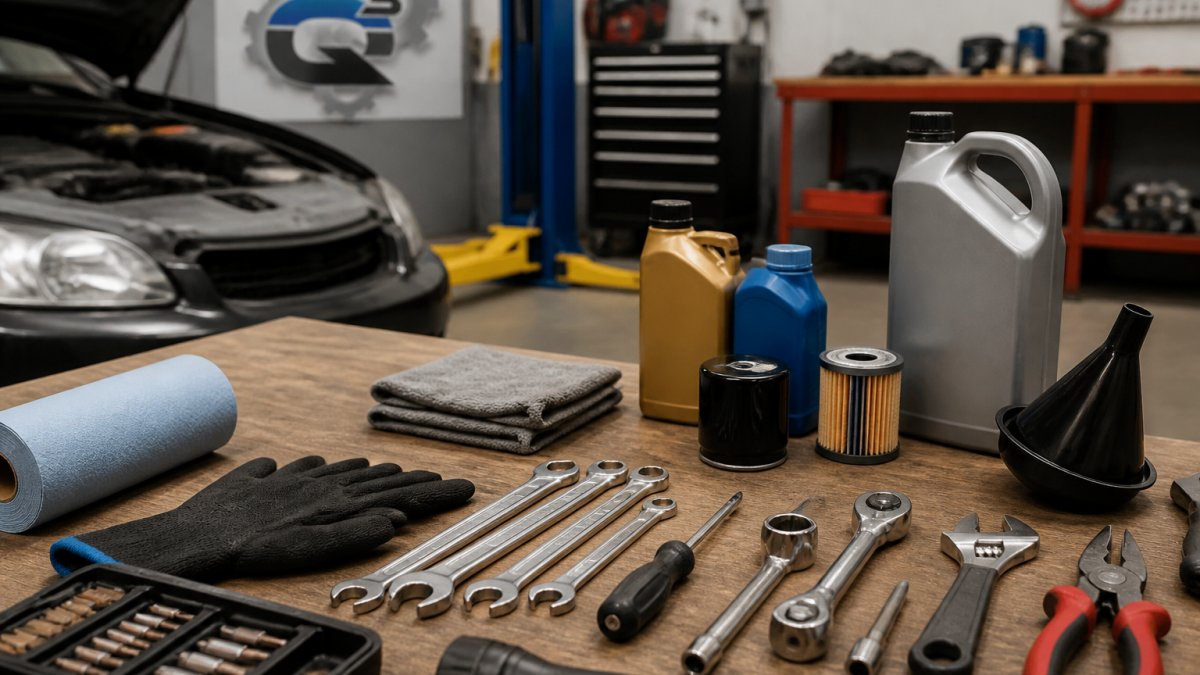
A good starter set includes both standard (SAE) and metric sizes, because modern vehicles mix the two. The Husky Mechanics Tool Set, for example, bundles 1/4-inch, 3/8-inch, and 1/2-inch drive ratchets with many sockets in a molded case.
Drive Sizes and Sizing Compatibility
Drive size refers to the square fitting where the socket attaches to the ratchet. The 1/4-inch drive handles small fasteners and interior trim. The 3/8-inch drive is the everyday workhorse for most engine and body bolts. The 1/2-inch drive takes on lug nuts and heavier suspension hardware. Match the socket to the bolt, and never use a 3/8-inch ratchet with a cheater bar to break loose a stubborn fastener, because you will snap the drive.
2. Wrenches, Screwdrivers, and Pliers for Everyday Repairs
Wrenches, screwdrivers, and pliers handle the small repairs that come up constantly: hose clamps, battery terminals, trim panels, and light covers. These three tool types fill the gaps a socket set cannot reach.
Wrenches and Adjustable Wrenches
A set of combination wrenches (open end on one side, box end on the other) covers most nuts and bolts. An adjustable wrench adds flexibility for odd sizes, though it can slip on tight fasteners. Keep both in metric and standard.
Screwdrivers and Pliers
A Craftsman screwdriver set with Phillips and flathead tips in several sizes handles trim panels and battery terminals; expect around $25. Add a pair of tongue and groove pliers like the Channellock model (roughly $20) for gripping hoses and stubborn clamps. These pliers adjust to many positions and hold irregular shapes far better than a standard wrench.
3. Jacks, Jack Stands, and Safety Equipment for Safe Lifting
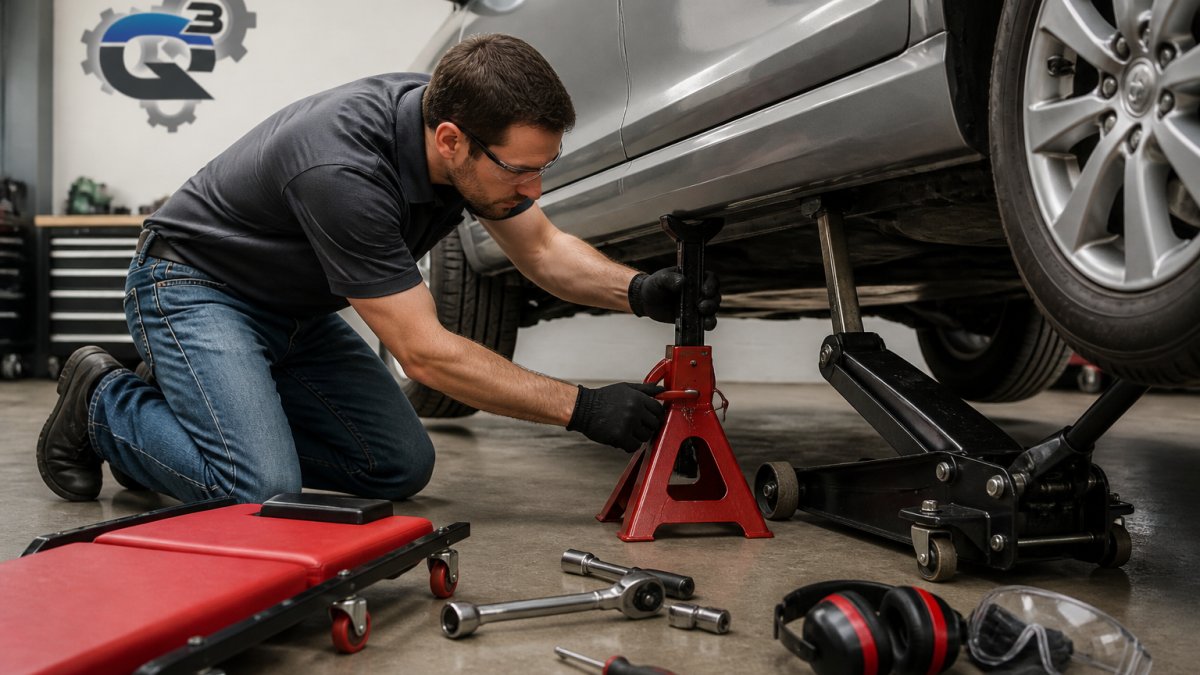
Safe lifting is non-negotiable in DIY car maintenance. A floor jack raises the vehicle, and jack stands hold it up while you work.
| Tool | Approx. Price | What It Does | Best For |
|---|---|---|---|
| Socket and ratchet set | $99 | Loosens and tightens bolts | Core repairs |
| Torque wrench | $55 | Tightens to spec | Lug nuts, engine bolts |
| Floor jack | $130 | Lifts the vehicle | Tire and under-car work |
| Jack stands | $45/pair | Holds the car up | Safe under-car access |
| OBD2 scanner | $60 | Reads error codes | Warning lights |
| Tire pressure gauge | $12 | Checks inflation | Routine tire care |
5. How to Choose the Best Beginner Mechanic Tool Set
The best beginner mechanic tool set balances coverage, quality, and price rather than chasing the largest piece count. A 200-piece set sounds impressive until half the sockets never fit anything on your car. The smarter approach is to build a kit around the jobs you will actually do, then add tools as new jobs come up.
Map Tools to Jobs
Start with the four routine jobs most beginners tackle, and buy only the tools each one requires:
- Changing a tire: floor jack, jack stands, wheel chocks, 1/2-inch drive breaker bar, lug-nut socket in your vehicle's size, torque wrench, tire pressure gauge.
- Replacing a battery: combination wrenches in the terminal size (commonly 10mm or 13mm), a battery terminal brush, safety glasses, and gloves.
- Checking fluids: funnel set, drain pan, shop towels, and a flashlight or work light.
A beginner who buys for these four jobs ends up with a focused kit that covers most routine maintenance without paying for sockets that never leave the case.
Sizing and Drive Compatibility
Check your vehicle owner's manual and the fasteners under the hood before you buy. Most modern vehicles use metric fasteners, but older vehicles and some domestic trucks mix in SAE sizes. A set that includes both metric and SAE sockets in 1/4-inch, 3/8-inch, and 1/2-inch drive covers the widest range. Choose six-point sockets for rusty or tight fasteners because they grip the flats of the bolt head and resist rounding; twelve-point sockets are fine for clean, accessible bolts but slip more easily on worn heads.
Good-Better-Best Budget Tiers
- Good (about $150-$250 total): a 1/4-inch and 3/8-inch socket set, a basic combination wrench set, screwdrivers, pliers, a 2-ton floor jack, a pair of 2-ton jack stands, wheel chocks, and a tire pressure gauge. This covers tire changes, battery work, and fluid checks.
- Better (about $300-$450 total): add a 1/2-inch drive set, a breaker bar, a click-type torque wrench, an oil filter wrench, and a drain pan. This tier covers oil changes and most routine maintenance.
- Best (about $500-$700 total): add an OBD-II scanner, a digital multimeter, a battery charger or maintainer, and a brighter LED work light. This tier lets you diagnose warning lights and handle small electrical jobs.
6. Your Car Maintenance Schedule Checklist and When to Take Your Car to a Professional Mechanic
A car maintenance schedule checklist keeps small tasks from turning into big bills. Follow your owner's manual intervals, and use this checklist to stay ahead of problems.
- Check tire pressure and tread depth monthly
- Inspect fluid levels (oil, coolant, brake, washer) every few weeks
- Rotate tires at the interval your manual specifies
- Test the battery and clean terminals twice a year
So when should you take your car to a professional mechanic? Bring it in for transmission work, complex electrical faults, brake system repairs, or any job that needs a lift and specialized diagnostic equipment.
Frequently Asked Questions
What tools do I need for basic car maintenance?
A practical DIY car maintenance kit starts with a socket and ratchet set in 1/4-inch, 3/8-inch, and 1/2-inch drives, a set of combination and adjustable wrenches, Phillips and flathead screwdrivers, and tongue-and-groove pliers. Add a floor jack, a pair of jack stands rated for your vehicle's weight, wheel chocks, and a torque wrench for lug nuts. A digital tire pressure gauge, a multimeter, and an OBD-II code reader round out the basics for tire, battery, and warning-light checks.
How do I organize my DIY automotive tool kit?
Keep the tools you use most in one portable case or a rolling chest, grouped by job: sockets and ratchets together, wrenches on a rack, and screwdrivers in a holder. Store the torque wrench at its lowest setting so it stays calibrated, and keep the jack and jack stands on a shelf rather than buried under clutter. A small roadside bag with gloves, a tire pressure gauge, a work light, and basic wrenches lets you handle simple fixes away from home.
Are expensive brand-name tools necessary for basic car maintenance?
Not for most routine jobs. A mid-priced socket set with a lifetime warranty, like the Husky Mechanics Tool Set, covers oil changes, tire rotations, and battery work without the cost of professional-grade brands. Spend more on the tools where precision or safety matters, such as a torque wrench calibrated to plus or minus 4% and jack stands that meet ASME standards. Budget hand tools are fine for occasional use if the fit is tight and the warranty is solid.
When should I take my car to a professional mechanic instead of doing it myself?
Bring the vehicle in for anything involving transmission internals, timing components, airbag systems, or complex electrical faults that a basic OBD-II reader cannot pinpoint. Also see a professional if a repair requires lifting the car for long periods, if you lack the specific torque specifications in your owner's manual, or if a job risks safety like brake line replacement. A shop with trained technicians and proper equipment handles those jobs faster and with less risk than a home garage.
What is the $3,000 rule for car repairs?
The $3,000 rule is a rough guideline some drivers use when a repair estimate approaches or exceeds the vehicle's value or a set threshold like $3,000. The idea is to weigh the repair cost against the car's market value and remaining useful life before committing. It is not an official standard, so treat it as a conversation starter with your mechanic. Ask for a written estimate and compare it to what the vehicle is worth before deciding to repair or replace.
Routine maintenance keeps a vehicle reliable, but some jobs demand a trained eye and the right equipment. When a repair is beyond the driveway, Q3 Car & Truck Repair is here with skilled technicians, transparent estimates, and honest guidance you can trust. Request an appointment and get expert care for your car or truck without the stress.