 listicle
Mobile Fleet Oil Changes: Benefits for Local Businesses
Table of Contents
- Why Mobile Fleet Oil Changes Matter for Your Business
- Preventative Maintenance for Commercial Trucks
- Reducing Fleet Downtime with On-Site Service
- Commercial Vehicle Oil Change Frequency and Schedules
- Cost-Benefit Analysis: Mobile Service vs. Traditional Shop Visits
- What to Expect from Professional Mobile Fleet Maintenance
- Getting Started with Mobile Oil Change Service
- Frequently Asked Questions
Last Updated: September 30, 2026
Why Mobile Fleet Oil Changes Matter for Your Business
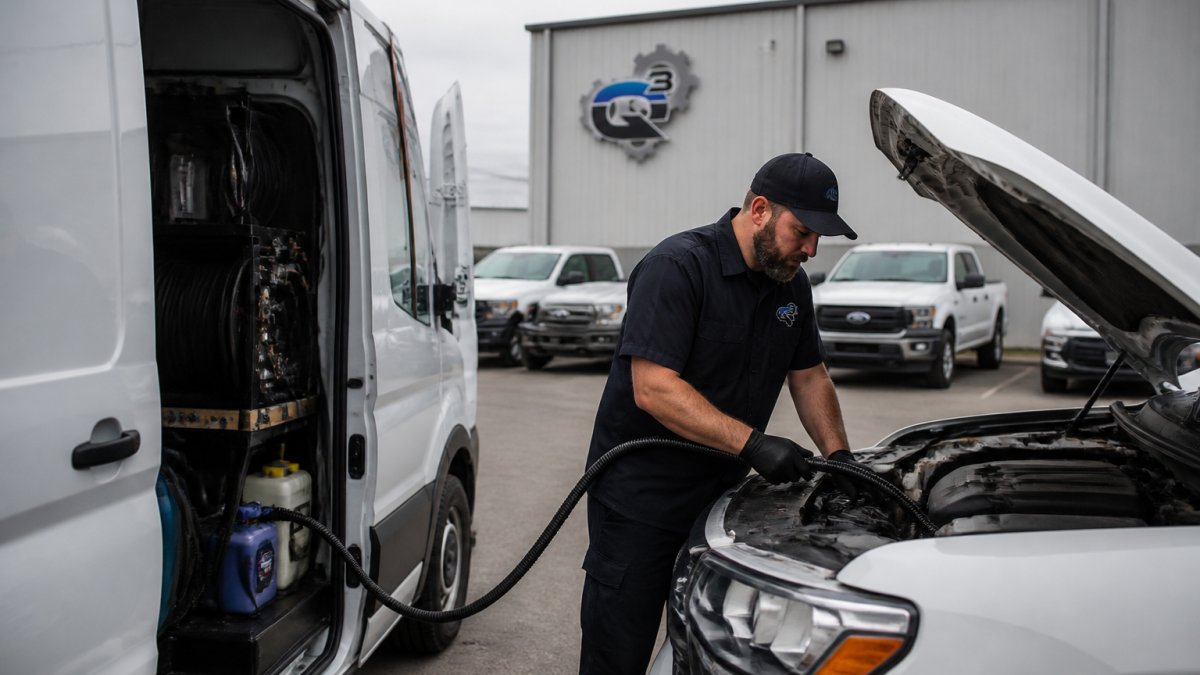
Mobile fleet oil changes are transforming how local businesses manage vehicle maintenance. Instead of losing productivity while waiting at a traditional service shop, your trucks stay operational while technicians come to you. This shift addresses one of the most pressing challenges fleet managers face: balancing maintenance requirements with operational efficiency.
The convenience is obvious, but the financial impact surprises most managers.
When vehicles are on the road generating revenue, every idle hour costs money. Mobile fleet oil changes eliminate that friction: a technician arrives, performs service while your team works, and leaves, no scheduling conflicts, no transportation logistics, no downtime.
Preventative Maintenance for Commercial Trucks
Preventative maintenance for commercial trucks is essential: the difference between a reliable fleet and unpredictable failures. Regular oil changes form the foundation. Engine oil degrades over time, losing its ability to protect against friction and heat, and skipped maintenance compounds damage with every mile.
Commercial trucks face harsher conditions: longer hours, heavier loads, varied climates. A preventative maintenance schedule spaces oil changes at intervals that protect engine longevity without unnecessary frequency.
Oil Change Intervals for Commercial Fleets
Most commercial trucks require oil changes at intervals that protect engine longevity without unnecessary frequency. Synthetic oils can extend these intervals compared to conventional options.
A mobile service provider reviews your fleet composition, recommends tailored schedules, and handles logistics so your team focuses on operations.
Environmental Compliance and Hazardous Waste Handling
A critical advantage of professional mobile service: proper disposal of used engine oil and filters. Used oil is classified as hazardous waste under EPA regulations. Improper disposal violates federal law and can result in fines up to $37,500 per violation under the Resource Conservation and Recovery Act (RCRA).
Mobile service providers are equipped to handle hazardous waste properly:
- Containment: Sealed, leak-proof containers prevent spills and environmental contamination.
- Documentation: Chain-of-custody records show used oil was collected, transported, and delivered to a licensed facility, protecting your business from liability.
- Recycling: Used motor oil is recyclable; one quart can contaminate 250,000 gallons of drinking water. Mobile providers deliver used oil to certified recycling centers.
- Filter disposal: Oil filters are drained and recycled separately on-site according to EPA standards.
If your fleet handles oil changes in-house or uses a shop without proper documentation, your business carries environmental and legal liability. The EPA holds fleet owners responsible for hazardous waste generated by their vehicles. Mobile providers transfer that liability through proper handling and documentation.
Regulatory Compliance for Fleet Operations
Fleets operating under Department of Transportation (DOT) regulations or in regulated industries (hazmat transport, passenger service) must maintain detailed maintenance records. Professional mobile service providers understand these requirements and maintain records that satisfy regulatory audits.
Consistent scheduling also creates accountability. When maintenance follows a documented plan, you have clear records of what was serviced, when, and by whom. This matters for warranty compliance, regulatory requirements, and resale value if you eventually turn over vehicles.
Mobile service providers arrive with the right equipment, appropriate oil specifications, expertise to spot other issues, and systems to handle hazardous waste responsibly. On-site technicians catch worn belts or low coolant in seconds, preventing larger problems while ensuring full compliance with environmental regulations.
Reducing Fleet Downtime with On-Site Service
Mobile service delivers measurable downtime reduction. Traditional shop visits require coordination: driving to the facility, waiting in queue, service, retrieval, typically 2-4 hours minimum, often longer during busy periods.
On-site service compresses this to 30-60 minutes while your team manages other operations. For a fleet of 5-10 vehicles, this difference compounds significantly across the year.
A business with three commercial trucks losing four hours per service visit to traditional shop downtime loses 12 hours annually per truck. Mobile service cuts that to 2 hours total across the fleet, time savings that justify the service cost for most operations.
Commercial Vehicle Oil Change Frequency and Schedules
Commercial vehicle oil change frequency depends on vehicle type, engine specifications, driving conditions, and oil quality. Commercial vehicle oil change frequency depends on vehicle type, engine specifications, driving conditions, and oil quality. A mobile service provider reviews your fleet composition and recommends tailored schedules, eliminating the need to juggle appointments across multiple shops.
Cost-Benefit Analysis: Mobile Service vs. Traditional Shop Visits
Comparing mobile service to traditional shop visits requires looking beyond the per-service cost to calculate true operational impact and return on investment. Fleet managers need concrete numbers to justify the decision to their leadership.
Downtime Cost Calculation
Traditional shop visits create measurable lost revenue. A commercial truck generating $150-$250 per operating hour (typical for delivery, service, or hauling operations) loses significant income during service windows. Consider a fleet of five trucks requiring quarterly oil changes:
- Traditional shop model: Each vehicle requires 2-4 hours away from operations (drive time, wait time, return). Five trucks × four services annually × 3 hours average = 60 hours of lost productivity annually.
- At $200/hour operational value: 60 hours × $200 = $12,000 in lost revenue annually from downtime alone.
- Mobile service model: Same five trucks, 45-60 minute on-site visits. Five trucks × four services × 0.75 hours = 15 hours total annual downtime.
- At $200/hour operational value: 15 hours × $200 = $3,000 in lost revenue annually.
Net savings from downtime reduction: $9,000 annually before factoring in administrative overhead, fuel costs for shop trips, or vehicle wear from extra miles.
Administrative and Logistics Costs
Beyond direct downtime, traditional shop visits create hidden costs:
- Coordination overhead: Scheduling appointments across multiple shops, managing multiple service relationships, tracking separate invoices and warranty documentation.
- Transportation logistics: Fuel and wear on vehicles driving to and from service locations. A 20-mile round trip to a service facility costs approximately $6-$8 per trip in fuel and vehicle depreciation (using federal mileage rates). Five trucks × four services × $7 = $140 annually per truck, or $700 for the fleet.
- Scheduling friction: Rescheduling when appointments conflict with operational needs, or paying premium rates for expedited service during busy seasons.
Mobile service consolidates these costs. One provider handles all five vehicles on a predictable schedule at your location. Administrative time drops significantly, no coordinating with multiple shops, no managing transportation logistics, no rescheduling conflicts.
Service Cost Comparison
Per-visit pricing may appear higher for mobile service in some markets, but the total cost of ownership typically favors mobile options:
| Factor | Traditional Shop | Mobile Service | Annual Impact (5 trucks) |
|---|---|---|---|
| Downtime cost | $2,400/truck | $600/truck | $9,000 savings |
| Transportation/fuel | $140/truck | $0 | $700 savings |
| Administrative overhead | High (multiple vendors) | Low (single provider) | $500-$1,000 savings |
| Service fee variance | Competitive but fragmented | Transparent, bundled | Depends on contract |
Break-Even Analysis
For most fleets, mobile service can offer significant value due to downtime elimination. While per-service costs may vary, the overall operational savings often make it a beneficial choice.
Fleets of various sizes can see positive returns from mobile service, though the benefits may vary.
Compliance and Warranty Documentation
An often-overlooked cost factor: professional mobile providers maintain detailed service records that protect warranty claims and regulatory compliance. Disorganized maintenance records can result in denied warranty claims (costing thousands) or compliance violations in regulated industries. Mobile providers typically include documentation as part of their service, reducing the administrative cost of maintaining compliant records in-house.
What to Expect from Professional Mobile Fleet Maintenance
Professional mobile fleet maintenance means trained technicians arriving with equipment, materials, and expertise to perform complete service at your location. They assess your fleet's specific needs, perform oil and filter changes using appropriate specifications, inspect related systems, and document everything.
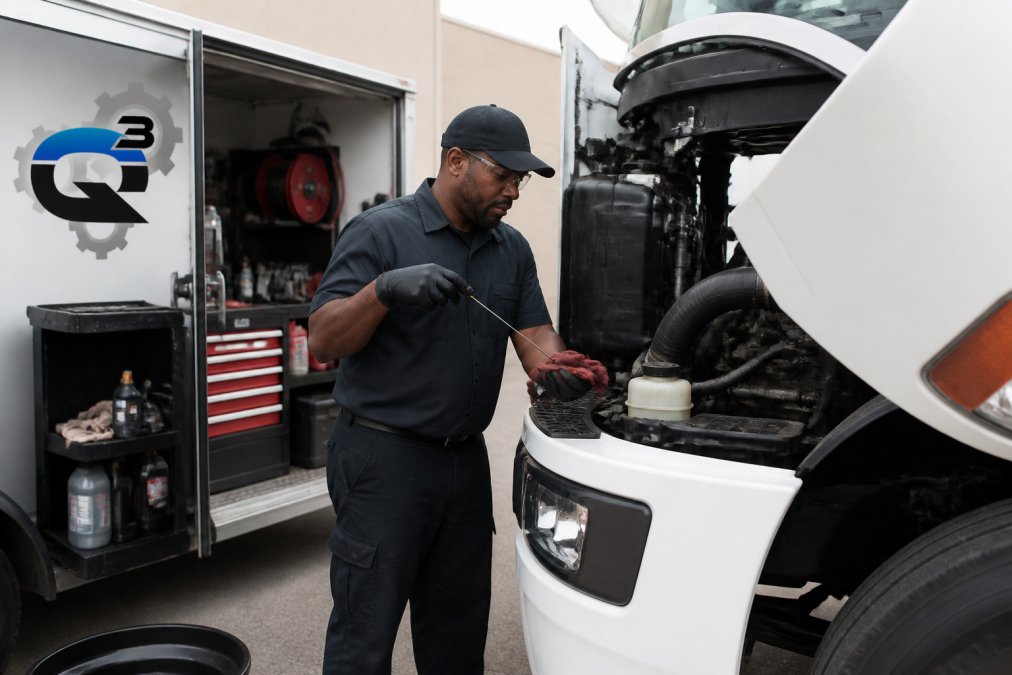
The process typically begins with a consultation. The provider discusses your fleet composition, current maintenance history, and operational patterns.
Getting Started with Mobile Oil Change Service
Starting with mobile oil change service requires identifying a qualified provider, discussing your fleet's specific needs, and establishing a service schedule. Q3 Car & Truck Repair specializes in exactly this scenario: local businesses managing commercial vehicles who need reliable, convenient maintenance without the traditional shop hassles.
Frequently Asked Questions
How does mobile fleet maintenance improve vehicle uptime?
Mobile fleet oil changes eliminate the need to drive vehicles to a service center, reducing operational downtime significantly. Your vehicles stay on-site and ready for use while technicians complete the service at your location. This is especially valuable for businesses that depend on consistent vehicle availability. Instead of losing hours to travel time and wait times at a shop, you maintain your fleet's operational schedule while maintenance happens in parallel.
What is the recommended commercial vehicle oil change frequency?
Commercial vehicle oil change frequency depends on your truck's make, model, and operating conditions. Commercial vehicle oil change frequency depends on your truck's make, model, and operating conditions. Heavy-duty diesel trucks may have different intervals. A professional mobile service provider will review your manufacturer's specifications and help you establish a preventative maintenance schedule tailored to your fleet's needs and usage patterns.
Is mobile fleet service suitable for heavy-duty trucks?
Yes, mobile fleet oil changes work well for heavy-duty trucks and commercial vehicles. Professional mobile technicians bring the same equipment and expertise to your location as a traditional shop. They can handle full oil and filter changes, fluid top-offs, and multi-point inspections on trucks of all sizes. The main advantage is that your heavy equipment stays parked at your facility while the work happens, avoiding unnecessary wear on the drivetrain and keeping vehicles ready for dispatch.
How do I schedule mobile fleet maintenance for my business?
Contact a mobile service provider directly to discuss your fleet's needs, vehicle count, and preferred maintenance schedule. Most providers offer flexible scheduling to fit your business operations, including early morning, evening, or weekend appointments. You'll typically provide your location, vehicle details, and preferred service intervals.