 how-to
When to Replace Timing Belt on Car 2026: Mileage Guide
Table of Contents
- What a Timing Belt Does and Why It Fails
- Recommended Timing Belt Replacement Intervals for 2026
- Symptoms of a Failing Timing Belt You Should Not Ignore
- Timing Belt vs Timing Chain Maintenance: What Is the Difference?
- Average Cost of Timing Belt Replacement and What Affects It
- Why You Should Replace the Water Pump and Tensioner at the Same Time
- How Driving Conditions and Severe Service Affect Your Interval
- How to Find Your Vehicle's Specific Timing Belt Interval
- Frequently Asked Questions
Last Updated: September 16, 2026
What a Timing Belt Does and Why It Fails
A timing belt is a reinforced rubber belt that keeps the crankshaft and camshaft in sync so the engine's valves open and close at the right moment. When it fails, that synchronization disappears instantly, and the result can be catastrophic engine failure.
Here is the detail most drivers miss: timing belts are consumable parts, not lifetime components. Rubber degrades from heat cycles, age, and contamination long before the odometer shows anything wrong, the belt can look fine while the internal cords are already weakening.
Recommended Timing Belt Replacement Intervals for 2026
Most manufacturers publish a replacement interval between 60,000 and 100,000 miles, or every 6 to 10 years, whichever comes first. The exact figure lives in your owner's manual, treat it as the ceiling, not the target.
Mileage-Based Intervals
The mileage interval is the one drivers remember. Common ranges include:
- 60,000 miles on many older or performance-oriented engines
- 90,000 miles on a large share of modern four-cylinder and V6 engines
- 100,000 to 105,000 miles on some newer designs
- 120,000 miles on a smaller group of engines with upgraded belt materials
Time-Based Intervals
Mileage is only half the equation. A belt on a low-mileage vehicle still ages: heat cycles, ozone exposure, and sitting parked all break down rubber over time.
Symptoms of a Failing Timing Belt You Should Not Ignore
A failing timing belt often gives no warning at all, which is why the replacement schedule matters more than symptoms. When symptoms do appear, they show up late.
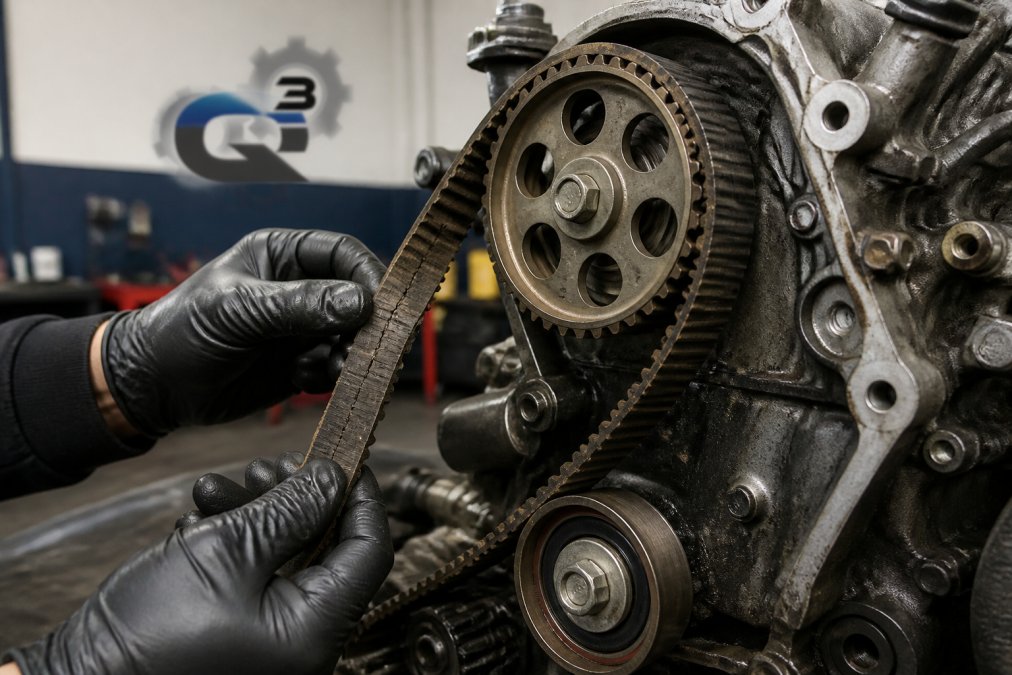
Watch for these signs:
- Ticking or chirping noise from the front of the engine
- Rough idle or an engine misfire that comes and goes
- Visible cracks, glazing, or fraying on the belt surface
- Oil or coolant streaks near the belt, which accelerate degradation
- A check engine light tied to camshaft or crankshaft position codes
Timing Belt vs Timing Chain Maintenance: What Is the Difference?
This is the most common source of confusion at the service counter, and it changes your entire maintenance budget. A timing belt is a reinforced rubber belt; a timing chain is a metal link chain. Both keep the crankshaft and camshaft synchronized, but they age, fail, and get serviced differently.
Why Chains Are Not Truly Maintenance-Free
"Maintenance-free" is mostly true, but not absolute. A timing chain rides on guides and is held tight by a hydraulic tensioner, and those components wear. Over a long service life, a stretched chain or worn guide can produce a cold-start rattle, a check engine light for camshaft/crankshaft correlation, or rarely a jump in timing. Most timing chains routinely outlast 200,000 miles, but a high-mileage engine with a cold-start rattle deserves an inspection rather than a shrug.
Trade-Offs Between the Two Designs
- Noise. Chains are typically louder, especially on cold start. Belts run quieter.
- Weight and cost to manufacture. Chains are heavier and more expensive to build, which is one reason some automakers moved to belts for packaging and cost.
- Service cost when it is due. A belt job is a known, scheduled expense. A chain job, when it is finally needed, is usually more labor-intensive because the chain sits deeper in the engine.
- Failure mode. A belt tends to degrade gradually and then snap. A chain tends to stretch and rattle before it causes a timing problem, which gives more warning.
How to Confirm Which One Your Engine Has
Do not guess based on model year or brand. Both designs are still in production, and some manufacturers have used both across different engines in the same year. Use these steps:
- Open the maintenance schedule in your owner's manual and look for a timing belt line item. If it is listed with a mileage or year interval, you have a belt.
- If the manual is missing, look up your vehicle's factory maintenance schedule through the manufacturer's owner portal using your VIN.
- Ask a qualified technician to confirm by inspection, on many engines the belt or chain cover is visible enough to identify the design.
- Note the answer in your records. It determines whether you have a scheduled expense ahead or a component you simply monitor.
National Highway Traffic Safety Administration vehicle lookup by VIN
Average Cost of Timing Belt Replacement and What Affects It
A single national average for this job is misleading, because the spread between the cheapest and most expensive vehicles is enormous. What is useful is understanding the range and what moves you within it.
What Drives the Price Up or Down
- Labor time. Some engines allow access in a few hours; others require removing significant components, which multiplies labor hours.
- Engine layout. Transverse four-cylinders are usually simpler than longitudinal V6 or V8 configurations.
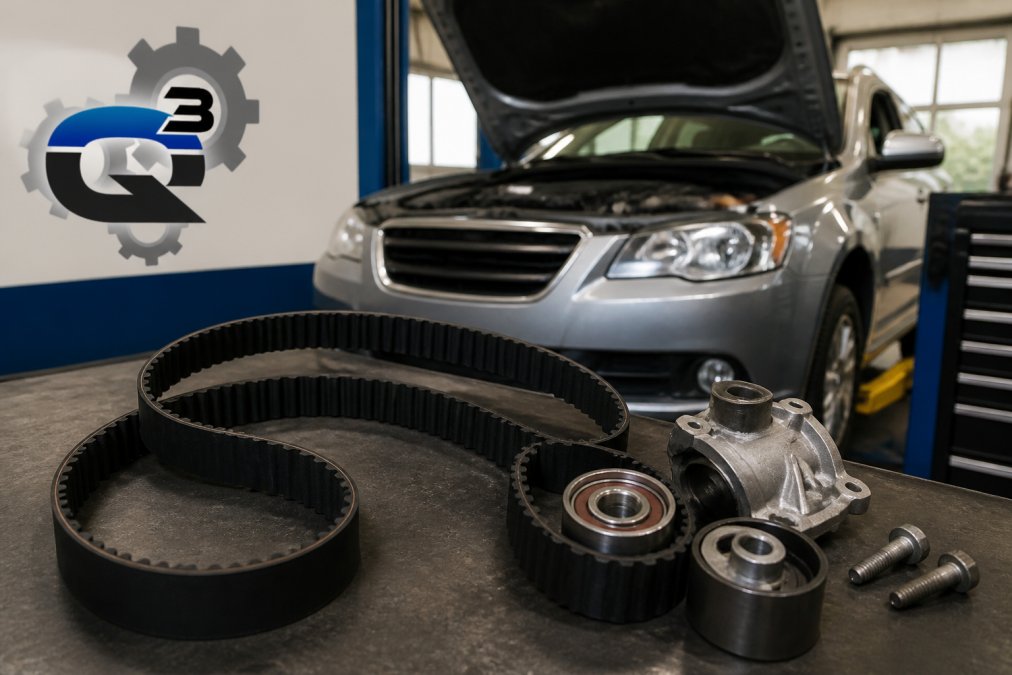
- Parts included. A timing belt kit with tensioner, idler pulley, and water pump costs more in parts than a bare belt, but less in total labor over the life of the vehicle.
- OEM versus aftermarket components. OEM parts cost more but match factory tolerances.
- While-you're-in-there work. Cam and crank seals, water pump, and tensioner add cost now but save labor later because the engine is already opened up.
The Interference-Engine Stakes
Before you shop on price, find out whether your engine is interference or non-interference. In an interference engine, the pistons and valves occupy the same space at different points in the cycle; if the timing belt snaps, the pistons can strike the valves, resulting in bent valves, damaged pistons, and in severe cases a replacement engine. In a non-interference engine, a broken belt usually just stops the engine without internal contact.
DIY Versus Professional Installation: The Real Risk
- Timing alignment. If the belt is installed even one tooth off, the engine can run poorly, set cam/crank correlation codes, or in an interference engine contact valves on the first start.
- Tensioner setting. Incorrect tension lets the belt walk or slip, which can fail within a few thousand miles.
- Component reuse. Reusing a worn tensioner or water pump on a new belt is a common DIY shortcut that leads to a repeat failure and repeat labor.
- Tooling. Some engines require specific holding tools or a scan tool procedure to set timing correctly.
Q3 Car & Truck Repair provides straightforward written estimates before any work begins, so you know the number and the scope, including whether the water pump and tensioner are included, before you approve anything.
Why You Should Replace the Water Pump and Tensioner at the Same Time
Replacing the water pump and tensioner alongside the belt is the smartest money you will spend on this job: most of the cost is labor to reach the belt, and the water pump and tensioner sit right there.
How Driving Conditions and Severe Service Affect Your Interval
Severe service conditions shorten your interval, and many drivers qualify without realizing it: stop-and-go commuting, extreme heat or cold, dusty environments, and frequent short trips all count.
How to Find Your Vehicle's Specific Timing Belt Interval
- Check the maintenance booklet or glovebox documentation for a service schedule.
- Look up your vehicle's factory service schedule through the manufacturer's owner portal.
- Ask a qualified automotive technician to confirm whether your engine uses a belt or a chain.
- Note both the mileage interval and the time-based interval, then use whichever comes first.
- Set a reminder at 80% of the interval so you book the job before you are at the limit.
For drivers managing multiple vehicles, a simple spreadsheet with each vehicle's interval and last replacement date prevents the kind of oversight that ends in a tow truck. Q3 Car & Truck Repair works with local business owners managing small fleets, and consistent scheduling is the difference between planned maintenance and emergency repairs.
Frequently Asked Questions
What are the common signs that a timing belt needs replacement?
Watch for a ticking noise from the engine, rough idling, engine misfire, or a sudden loss of power. You might also see oil leaking near the front of the engine or find cracks and fraying on the belt itself. These symptoms of a failing timing belt mean you should have a technician inspect it immediately. Catching these signs early can prevent catastrophic engine failure.
How much does timing belt replacement typically cost?
The cost of timing belt replacement depends on your vehicle's make and model, engine layout, and labor rates. Most jobs include the belt, tensioner, and water pump as a kit. Front-wheel-drive four-cylinder engines may cost less to service than V6 or V8 engines with tight engine bays. For a precise quote on your car or truck, contact a trusted local shop.
Does every car have a timing belt or a timing chain?
No. Some engines use a timing chain instead of a belt. Chains are metal and often last longer, but they still require regular oil changes and can stretch over time. Check your owner's manual or ask a mechanic to confirm which system your vehicle uses. The maintenance schedule for a timing belt vs timing chain maintenance differs significantly.
What happens if a timing belt breaks while driving?
If your engine is an interference design, a broken timing belt can cause the pistons to strike the valves, leading to bent valves, damaged pistons, and a cracked cylinder head. This is catastrophic engine failure and often costs thousands to repair or replace the engine. On non-interference engines, the engine will simply stall and may restart after a new belt is installed.