 How-to
How to Inspect Tires for Road Damage Before It Strands You
Last Updated: November 13, 2026
Quick Summary
To inspect tires for road damage, pull fully off the road, set the parking brake and hazard lights, then work through shape, sidewall, tread and pressure using a flashlight, pressure gauge and penny. Check for bulges, cuts, exposed cords and embedded objects, and compare cold pressure to the door-jamb sticker. Any sidewall bulge or exposed cord means stop driving and call for a tow.
- Run a gloved hand around the sidewall to feel for bulges, bumps, cuts and rough spots.
- Insert a penny upside down in a tread groove; seeing all of Lincoln's head means worn tread.
- Spray soapy water along tread and sidewall, since bubbles mark the leak source.
- Do not pull out an embedded nail or screw because it may be plugging the hole.
- Replace, do not repair, any sidewall bulge, cut to the cords, or sidewall puncture.
Table of Contents
- What Road Damage Does to a Tire and Why It Hides
- Pull Over Safely and Set Up Before You Inspect Tires
- Your Tire Inspection Checklist: Shape, Sidewall, Tread, Pressure
- Tire Sidewall Damage: Bulges, Cuts, and Exposed Cords
- How to Check for a Tire Leak After an Impact
- Damage You Cannot See: Hidden Impact Damage and Pothole Hits
- When to Replace a Damaged Tire Instead of Repairing It
- Book a Professional Inspection at Q3 Car & Truck Repair
- Frequently Asked Questions
What Road Damage Does to a Tire and Why It Hides
A pothole hit can damage a tire in ways you cannot see from the driver's seat.
A sharp edge, a curb, or a pothole edge pinches the tire against the wheel.
The damage hides for three reasons:
- The outer sidewall flexes back into shape after impact
- A slow leak can take days to drop pressure enough to notice
- Internal belt damage shows no mark until the tire fails
A tire can pass a quick glance and still be unsafe at highway speed.
Below, we walk through a full inspection you can do yourself, plus the warning signs that mean stop driving and get help.
Pull Over Safely and Set Up Before You Inspect Tires
Safety comes before any inspection. Get off the road first, then look.
Step 1: Find a safe location. Pull fully off the roadway into a parking lot, wide shoulder, or flat side street.
Step 2: Secure the vehicle. Set the parking brake. Turn on your hazard lights.
Step 3: Wait for traffic to clear. Give passing cars a wide berth.
Step 4: Gather your tools. You need a flashlight, a pressure gauge, and a penny.
Choosing a Safe Location After a Pothole or Curb Impact
After an impact, do not stop in the first open spot you see. Drive slowly to the nearest safe pull-off, even if that means a short distance on a suspect tire. A flat, well-lit parking lot beats a narrow shoulder every time.
If the tire is losing air fast or you feel heavy vibration, stop as soon as you can do so safely. Do not push on to a destination.
Your Tire Inspection Checklist: Shape, Sidewall, Tread, Pressure
A tire inspection checklist keeps you from missing steps.
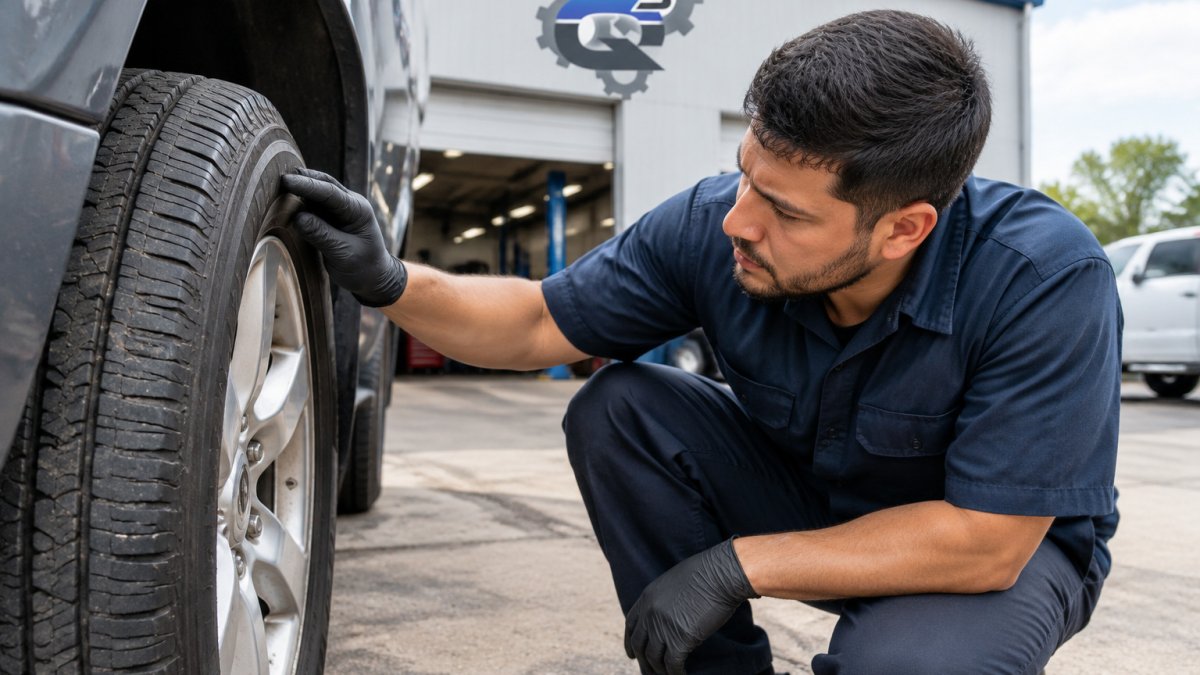
Check the shape first. Stand back and look at each tire head-on.
Then check the sidewall. Run your gloved hand slowly around the sidewall, feeling for bulges, bumps, and rough spots.
Next, check the tread. Look across the tread blocks and shoulder for uneven wear, embedded objects, and exposed cords.
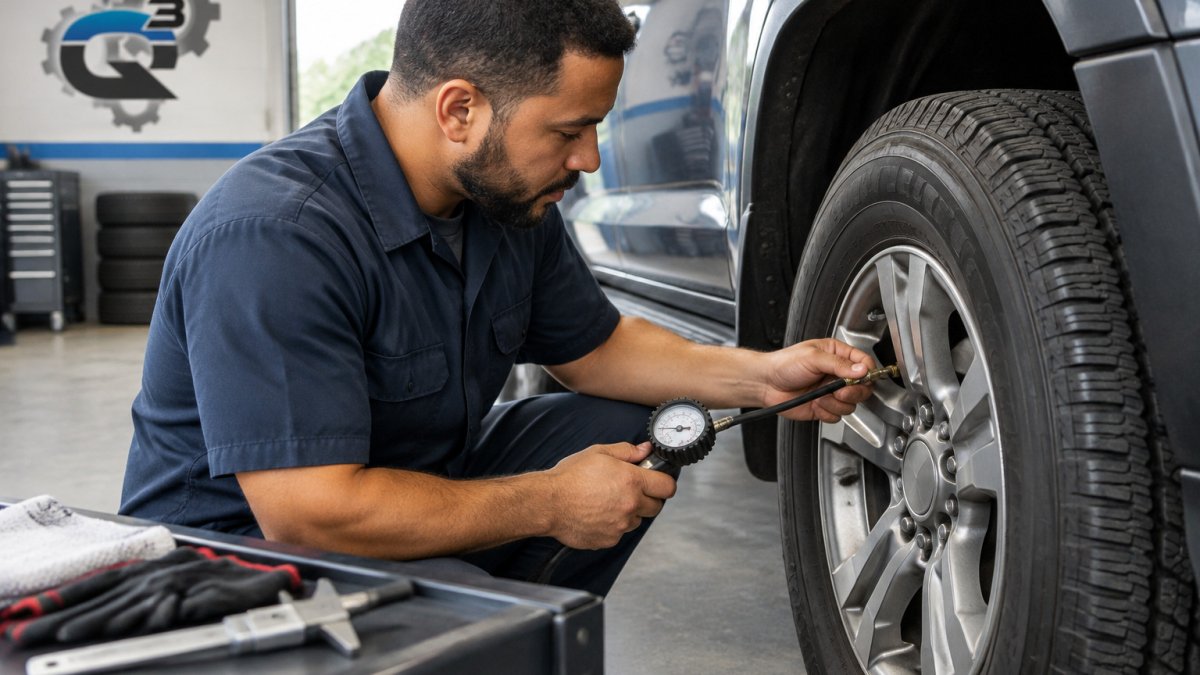
Finally, check pressure. Use a quality pressure gauge on a cold tire.
Checking Tread Depth and the Penny Test
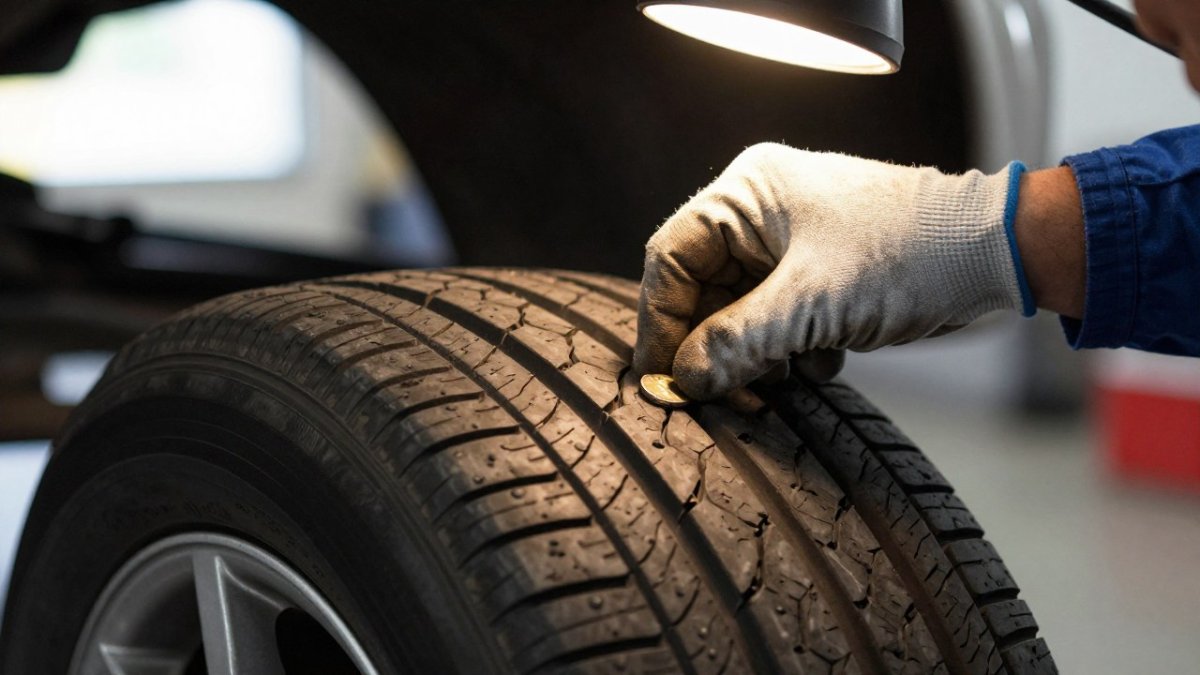
Tread depth tells you how much grip is left. Use the penny test as a quick field check.
Insert a penny into a tread groove with Lincoln's head upside down. If you can see all of Lincoln's head, the tread is worn low and the tire needs attention.
For a more precise reading, use a tread depth gauge. Also look for the tread wear indicators, the small raised bars built into the grooves.
Watch out: low pressure is easy to ignore until it ruins a tire. If your gauge reads under the recommended PSI, air it up and recheck, and read more on the impact of driving with low tire pressure. A short video on the tire pressure sensor also explains how the warning light ties into your valve stem readings.
Tire Sidewall Damage: Bulges, Cuts, and Exposed Cords
Tire sidewall damage is the most urgent finding in any inspection. A bulge means the internal structure has failed, and that tire can blow out without warning.
Run your hand around the whole sidewall. Feel for:
- Bulges and bubbles: a raised spot means separated belts. Stop driving on it.
- Cuts and gouges: deep cuts that reach the cords cannot be patched.
- Exposed cords: visible fabric or wire means the tire is done.
A bulge is not a maybe. It is a replace-now finding. The same goes for any cut deep enough to show cords.
How to Check for a Tire Leak After an Impact
A slow leak often follows a hard hit.
Start with the pressure gauge. Note the reading, then check the same tire again after a few hours or the next morning.
Next, inspect the valve stem. A cracked or loose valve stem leaks air and is easy to overlook.
Then look for the source:
- Spray soapy water along the tread and sidewall; bubbles mark the leak
- Check the bead area where the tire meets the rim
- Look for a nail or screw still lodged in the tread
If you find an embedded object, do not pull it out. It may be plugging the hole.
Damage You Cannot See: Hidden Impact Damage and Pothole Hits
Hidden damage is the reason a tire that looks fine can fail a week later. Pothole hits and curb impacts send force through the tire and into the wheel, and the injury often sits inside the tire, not on the surface. Belt separation, inner-liner cracks, and a bent wheel can all hide behind a clean-looking sidewall.
Different road hazards leave different fingerprints. Knowing the pattern helps you know what to check.
- Potholes: The tire is pinched between the pothole's sharp edge and the wheel. The most common results are a sidewall bulge, a bent wheel flange, and a slow leak at the bead. A hard hit can also crack the inner liner without leaving any outer mark.
- Curbs: Scuffing a curb at low speed usually damages the sidewall and shoulder. A harder strike can tear rubber, expose cords, and knock the wheel out of alignment. A curb hit is also a common cause of a bent rim that shows up later as vibration or a persistent leak.
- Road debris: Nails, screws, glass, and metal fragments usually cause punctures in the tread. Debris can also cut a sidewall or lodge between the tire and rim. A puncture that seals around the object may not leak until the object works loose.
Signs that hidden damage may be present:
- New vibration at speed after an impact
- A wheel that looks slightly bent at the rim
- A tire that keeps losing pressure with no visible cause
When to Stop Driving and When You Can Assess Cautiously
Some findings are urgent. Others can be checked at a safe pull-off. Use this decision guide.
Do not drive another mile if you find any of these:
- A sidewall bulge or bubble
- Exposed cords or wire anywhere on the tire
- A cut deep enough to see fabric or steel
You can drive slowly to a safe inspection spot if:
- The tire holds pressure and looks normal
- You feel only a mild new vibration
- There is a small nail or screw in the tread and the tire is not losing air quickly
Even then, keep speed low, avoid highways, and stop at the first safe place.
Our guide to fleet tire management best practices covers how to log damage and schedule checks across a whole fleet.
When to Replace a Damaged Tire Instead of Repairing It
Replace, do not repair, when the damage sits in the sidewall or shoulder, or when cords are exposed. Those areas flex constantly and a patch will not hold. Puncture size, the angle of the injury, how much tread is left, and the tire's age all matter too.
Use this rule of thumb:
| Damage Type | Location | Action |
|---|---|---|
| Nail or screw | Center tread | May be repairable |
| Puncture | Sidewall or shoulder | Replace |
| Bulge or bubble | Anywhere | Replace |
| Cut to the cords | Anywhere | Replace |
| Bent wheel | Rim | Wheel service, tire check |
A simple center-tread puncture is often repairable. Anything on the sidewall, any bulge, and any exposed cord means replacement. A few additional criteria help sharpen the decision:
- Puncture size: A small, round hole in the tread is the best candidate for repair. A large or irregular hole, or one caused by a cut rather than a clean puncture, is usually a replacement.
- Puncture angle: A straight-in puncture repairs more reliably than one that enters at an angle and damages the inner liner.
- Tread condition: A tire near the wear indicators is not worth repairing. The repair cost buys little remaining life.
If you need new tires, you can schedule tire replacement and check inventory. This short video on when a tire replacement is needed walks through the decision too.
After the Inspection: Document, Monitor, and Follow Up
An inspection is only useful if you act on what you find. A short follow-up routine catches slow leaks and hidden damage before they become a roadside failure.
- Document the finding. Note which tire, where the damage sits, and what it looks like. A photo on your phone gives a baseline to compare against later.
- Recheck pressure. Measure the suspect tire cold the next morning. A drop of a few PSI overnight points to a leak that needs professional attention.
- Watch for new symptoms. Note any new vibration, pulling, thumping, or a tire that looks low. These are common signs of hidden impact damage.
- Schedule a professional inspection. After a hard pothole or curb hit, have the tire, wheel, and valve stem checked on a lift, even if the outside looks fine. Inner sidewall damage and a bent wheel are hard to see from the driveway.
- Set a reminder. Check pressure and inspect the tires monthly, and before any long trip. Small changes are easier to catch early.
Book a Professional Inspection at Q3 Car & Truck Repair
Some damage needs a trained eye and a lift. If you have hit a pothole, clipped a curb, or found a bulge, get a professional inspection.
At Q3 Car & Truck Repair, we focus on honest communication, clear explanations, and straightforward estimates. Our technicians are dedicated to quality workmanship on every car and truck.
Do not wait for a tire to fail on the highway.
Frequently Asked Questions
How do you inspect a tire for road damage?
Park on level ground, set the parking brake, and walk around the vehicle. Look at each tire's overall shape for a low corner, then check the sidewall for bulges, cuts, and cracks. Measure tread depth at three points across the width, and confirm pressure with a gauge against the door-jamb PSI. Run your hand slowly around the sidewall and tread to feel for bumps or embedded objects. Any bulge, exposed cord, or cut showing fabric means the tire should not be driven.
Can you drive with a bulge in your tire?
No. A sidewall bulge means internal cords have separated from the rubber, and the tire can fail without warning at highway speed. There is no safe repair for a bulge. Put on the spare or call for a tow. If you must move the vehicle a short distance, keep speed very low, but a bulge is one of the clearest stop-driving signals in any tire inspection checklist.
Can a tire be repaired after hitting a pothole?
Sometimes, but it depends on where the damage sits. A clean puncture in the central tread area, roughly within the middle portion of the tread, can often be patched and plugged by a professional. Damage to the sidewall, shoulder, or bead cannot be repaired safely. A pothole impact that bends the wheel or causes a bubble also rules out repair. Have a technician inspect the wheel and suspension before assuming a patch is enough.
How do you check for a slow tire leak?
Record the pressure on all four tires with a gauge, then recheck after a day or two. A tire losing a few PSI while others hold steady has a leak. Spray soapy water around the valve stem, valve core, and bead, and along the tread, then watch for bubbles. A slow leak often comes from a nail, a corroded valve stem, or a bent rim after a curb hit. If pressure keeps dropping, have the tire removed and inspected on a balance machine.