 blog
blog
Why Car Repair Costs Increased: 8 Key Reasons
Table of Contents
- Why Car Repair Costs Increased: The Big Picture
- Vehicle Complexity and Advanced Car Technology Repair Cost
- Mechanic Labor Rates: Technician Shortages and Training Costs
- Rising Parts Prices: Tariffs, Supply Chain, and Inflation
- Aftermarket vs. OEM Parts Pricing: What Drivers Should Know
- What Is the Average Car Repair Bill Today, and Why It Keeps Growing
- DIY Car Repair Savings vs. Professional Service: An Honest Analysis
- How Preventative Maintenance Can Offset Why Car Repair Costs Increased
Last Updated: July 31, 2026
Why Car Repair Costs Increased: The Big Picture
Understanding why car repair costs increased has become one of the most pressing financial questions for American drivers in 2026. At Q3 Car & Truck Repair, we hear this concern daily from customers in Capitol Heights and Waldorf. Car repair costs are rising because of a convergence of forces: vehicle complexity, technician shortages, supply chain disruptions, inflationary pressure, and tariffs on imported components. Each one compounds the others, reshaping what the average repair bill looks like.
According to Bureau of Labor Statistics Consumer Price Index data, the cost of motor vehicle maintenance and repair has climbed steadily over the past several years, outpacing general inflation. This reflects structural changes in the automotive industry unlikely to reverse quickly. Understanding the causes puts you in a far better position to manage the financial burden.
Vehicle Complexity and Advanced Car Technology Repair Cost
Modern vehicles are fundamentally different machines from what was on the road fifteen years ago. The average car or truck contains dozens of electronic control modules, multiple cameras, radar sensors, and software systems requiring specialized knowledge to service correctly. Advanced car technology repair cost has risen sharply because servicing these systems requires understanding embedded software, network architecture, and the interaction between mechanical and electronic systems.
Advanced Driver Assistance Systems and Sensor Calibration
Advanced driver assistance systems, lane-keeping assist, automatic emergency braking, adaptive cruise control, and blind-spot monitoring, rely on precisely calibrated sensors. When a vehicle is in a collision or a windshield is replaced, those sensors often need recalibration by a technician using specialized equipment. Sensor calibration can take several hours and requires the car to be positioned precisely in a controlled environment. A repair that once involved replacing a bumper now also involves recalibrating the radar module behind it.
Software Updates and Specialized Diagnostic Equipment
Software updates have become routine vehicle maintenance that most drivers do not anticipate. Many modern vehicles require over-the-air or shop-based software updates to address mechanical issues, update safety parameters, or clear fault codes. Specialized diagnostic equipment capable of communicating with proprietary vehicle software costs repair shops significantly, and that overhead is factored into labor rates.
Mechanic Labor Rates: Technician Shortages and Training Costs
The technician shortage is arguably the single most underreported driver of rising mechanic labor rates in the United States. The automotive repair industry faces a persistent gap between qualified technicians available and demand for their skills.
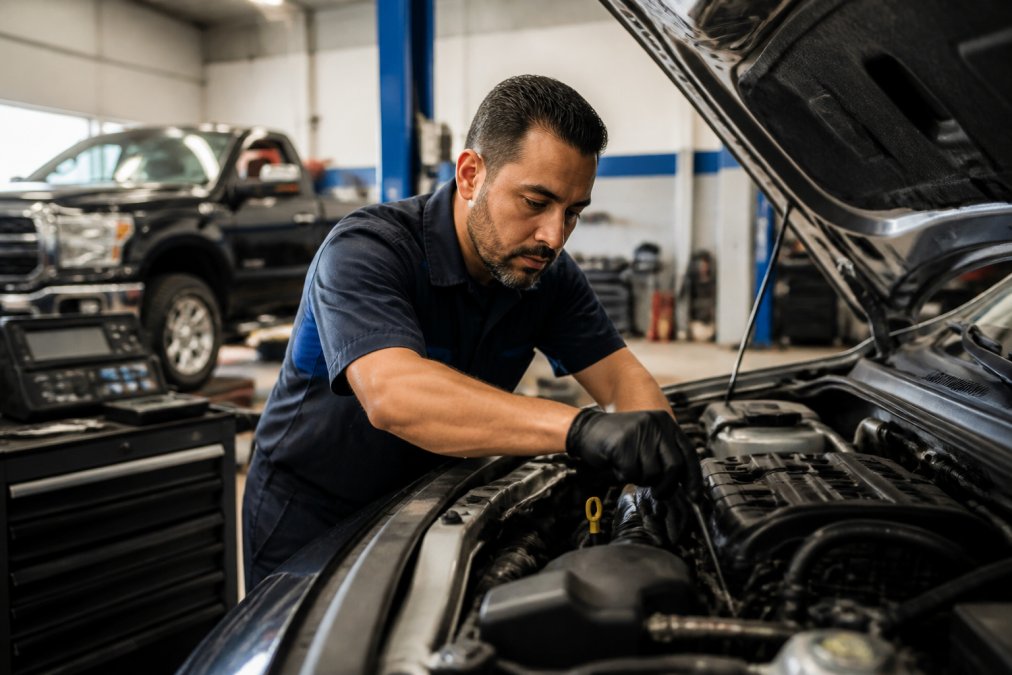
According to TechForce Foundation workforce report on automotive technicians, the industry faces a significant annual shortfall in qualified technicians, a gap that has widened as vehicles have grown more complex and fewer young workers enter the trade. When skilled labor is scarce, its market price rises. Technician training costs compound this problem. A technician working on advanced driver assistance systems or hybrid powertrains requires manufacturer-specific certifications and ongoing education. Shops that invest in their technicians' development carry higher overhead as a result.
A common mistake drivers make is assuming that a lower labor rate always means a better deal. A technician who misdiagnoses a problem due to insufficient training can cost you far more in repeat repairs than a higher hourly rate at a shop with properly trained staff.
Rising Parts Prices: Tariffs, Supply Chain, and Inflation
The cost of replacement parts has increased across virtually every vehicle category due to three forces: tariffs on imported components, supply chain disruptions that have not fully resolved, and persistent inflationary pressure on raw materials and manufacturing.
Impact of Tariffs on Imported Components
Tariffs on imported components have added a direct cost layer to parts that American repair shops source from overseas manufacturers. A significant portion of parts used in domestic vehicle repair, including sensors, electronic modules, bearings, and specialty fasteners, are manufactured abroad. As documented by U.S. International Trade Commission trade policy analysis, tariff adjustments on automotive components affect pricing throughout the supply chain, from importer to distributor to repair shop to customer.
Supply Chain Disruptions and Parts Availability
Parts availability has become a genuine operational challenge for repair shops. Supply chain disruptions that began in the early 2020s have not fully resolved, and certain components remain on extended backorder. When a vehicle sits in a bay waiting for a part, the shop still carries overhead costs. The practical impact for drivers is longer repair times and higher costs when expedited shipping is required to source a part quickly.
Aftermarket vs. OEM Parts Pricing: What Drivers Should Know
One of the most actionable decisions a driver can make to manage car repair costs is understanding the difference between aftermarket and original equipment manufacturer parts.
Original equipment manufacturer parts are components made to the exact specification of the vehicle's manufacturer. They are typically more expensive but carry a warranty.
Aftermarket parts are made by third-party manufacturers to fit the same application. Quality varies considerably across aftermarket suppliers. The price difference can be substantial, but so can the performance difference.
| Parts Type | Typical Cost Level | Quality Consistency | Warranty Coverage | Best For |
|---|---|---|---|---|
| OEM (Original Equipment Manufacturer) | Higher | Consistent, factory-spec | Usually included | Newer vehicles, safety-critical components |
| Quality Aftermarket | Moderate | Varies by brand | Often available | Older vehicles, non-critical components |
| Economy Aftermarket | Lower | Inconsistent | Limited or none | Budget repairs, short-term fixes |
For safety-critical components like brake systems, steering components, and airbag sensors, OEM or verified-quality aftermarket parts are worth the additional cost. For less critical components on older vehicles, quality aftermarket parts can deliver solid value. Ask your technician to explain the specific recommendation for each repair.
What Is the Average Car Repair Bill Today, and Why It Keeps Growing
The average car repair bill has grown considerably over the past decade, and the trajectory continues upward. While specific figures vary by region, vehicle type, and repair complexity, the consistent direction is clear: drivers are spending more per visit.
Older Vehicles, Longer Ownership, and Increased Repair Frequency
Americans are keeping their vehicles longer than at any point in recent automotive history, partly because new vehicle prices have climbed steeply and partly because modern vehicles are mechanically capable of lasting well beyond 150,000 miles with proper care. The trade-off is increased repair frequency. As vehicles age, the probability of mechanical failure on multiple systems simultaneously increases, making repair bills genuinely challenging.
Regional Cost Variance Across the United States
Car repair costs are not uniform across the country. Urban areas in high-cost states typically carry higher labor rates than rural markets. In the Maryland and Capitol Heights area specifically, drivers encounter a market shaped by proximity to the Washington, D.C. metro economy, which influences both technician wages and shop overhead.
DIY Car Repair Savings vs. Professional Service: An Honest Analysis
DIY car repair savings are real, but they come with conditions. The repairs where DIY genuinely saves money are limited to straightforward maintenance tasks: oil changes, air filter replacements, cabin filter swaps, wiper blade changes, and basic fluid top-offs.
The repairs where DIY becomes expensive include any work involving electronic systems or software, brake system work beyond simple pad replacement, suspension and alignment repairs, transmission service, and anything requiring specialized calibration. A DIY attempt on a sensor-equipped brake system that results in an improperly calibrated ABS module does not save money. It creates a safety risk and a more expensive professional repair.
The practical framework: if the repair requires a scan tool, alignment rack, specialized calibration procedure, or any component that affects vehicle safety systems, professional service is the right call. For straightforward maintenance, capable drivers can save meaningfully by doing it themselves.
How Preventative Maintenance Can Offset Why Car Repair Costs Increased
Preventative maintenance is the most effective strategy available to drivers who want to manage rising repair costs. A timing belt replacement performed at the manufacturer's recommended service interval costs a fraction of the engine repair required when a neglected timing belt fails. An oil change performed on schedule prevents the accelerated wear that leads to premature engine failure.
Preventative Maintenance ROI: Small Investments, Big Savings
The return on preventative maintenance is clearest when you map specific maintenance tasks against the failures they prevent.
| Maintenance Task | Typical Service Interval | Failure It Prevents | Relative Cost of Failure |
|---|---|---|---|
| Oil and filter change | Every 5,000-7,500 miles | Engine wear, oil sludge, premature engine failure | Extremely high |
| Coolant flush | Every 30,000-50,000 miles | Overheating, head gasket failure, radiator damage | Very high |
| Transmission fluid service | Every 30,000-60,000 miles | Transmission slippage, failure | Very high |
| Brake fluid flush | Every 2 years | Brake fade, caliper corrosion, master cylinder failure | High |
| Tire rotation | Every 5,000-7,500 miles | Uneven wear, premature tire replacement, alignment issues | Moderate |
| Air filter replacement | Every 15,000-30,000 miles | Reduced fuel economy, engine strain | Moderate |
Drivers who follow manufacturer-recommended service intervals consistently spend less on repairs over the life of a vehicle. As noted by Car Care Council vehicle maintenance guidance, vehicles that receive regular preventative maintenance have significantly longer service lives and lower total ownership costs than those that receive only reactive repairs. Consistent maintenance, informed parts decisions, and a repair shop relationship built on transparent communication are the three levers that matter most.
Frequently Asked Questions
Why are car parts so expensive right now?
Car parts have become more expensive due to a combination of inflationary pressure, tariffs on imported components, and ongoing supply chain disruptions that reduce parts availability. Modern vehicles also require more sophisticated components, sensors, modules, and advanced driver assistance system hardware, that cost significantly more than older mechanical parts. Choosing between aftermarket parts and original equipment manufacturer parts can affect your total bill, so always ask your shop to explain the options.
Why is mechanic labor so expensive compared to a few years ago?
Mechanic labor rates have risen sharply because of a well-documented technician shortage across the United States. Fewer people are entering the trade, and those who do require extensive training to service increasingly complex vehicles. Repair shop overhead, including rent, insurance premiums, and the cost of specialized diagnostic equipment, has also climbed. These combined economic headwinds mean shops must charge more per labor hour to remain viable and retain skilled staff.
Are older vehicles more expensive to repair than newer ones?
It depends on the repair. Older vehicles often have lower parts costs and simpler mechanical systems, but they may require more frequent repairs due to wear. Newer vehicles carry higher labor rates because technicians need advanced training and diagnostic equipment to service their complex electronics and advanced driver assistance systems. Vehicle longevity trends mean many Americans are keeping cars longer, which can increase the total cost of ownership over time regardless of the vehicle's age.
How can I reduce my car repair costs without sacrificing quality?
The most effective strategy is consistent preventative maintenance, regular oil changes, fluid checks, and timely service intervals catch small issues before they become costly mechanical failures. Ask your shop to explain every recommended repair so you can make informed decisions. For routine jobs, ask whether quality aftermarket parts are a suitable alternative to OEM parts. Finding a transparent, trustworthy repair shop that provides clear estimates upfront is also one of the best ways to avoid unexpected financial burden.
Does car insurance help cover rising repair costs?
Comprehensive and collision coverage can offset repair costs after an accident or covered event, but standard auto insurance does not cover mechanical failure or routine maintenance. Rising car repair costs have contributed to higher insurance premiums nationwide, as insurers factor in increased average repair bills when setting rates. Warranty coverage, whether a manufacturer or extended warranty, may cover certain repairs on qualifying vehicles, so reviewing your policy and warranty documents carefully is worthwhile before authorizing any major repair.
Rising repair costs are a real and ongoing challenge for drivers across Prince George's County and the broader Maryland area. Q3 Car & Truck Repair addresses that challenge directly through transparent estimates, honest communication about what repairs are genuinely necessary, and highly skilled technicians who explain the work before they perform it. If you want a stress-free repair experience where your needs come first, request an appointment with Q3 Car & Truck Repair today.
This article was written using GrandRanker