 how-to
Understanding Vehicle Repair Price Estimates
Table of Contents
- What Is a Vehicle Repair Estimate?
- Parts vs. Labor Cost Breakdown
- How to Read Your Repair Estimate Line by Line
- Questions to Ask Your Mechanic Before Repairs
- Is a Repair Estimate Legally Binding?
- Factors That Affect Your Final Repair Bill
- How to Spot a Fair and Honest Repair Quote
- Conclusion
Last Updated: August 25, 2026
What Is a Vehicle Repair Estimate?
A vehicle repair estimate is a written document that outlines the expected costs and scope of work your mechanic plans to perform on your car or truck. It breaks down labor charges, parts needed, and additional fees so you know exactly what to expect before repairs begin. At Q3 Car & Truck Repair, we believe a clear, detailed estimate is the foundation of trust. A legitimate estimate should include specific labor hours, parts costs, a total figure, and specify whether parts are OEM (original equipment manufacturer) components or aftermarket alternatives, along with warranty coverage details.
Parts vs. Labor Cost Breakdown
Understanding how repair costs split between parts and labor helps you evaluate whether a quote is fair. Labor typically accounts for 40-60% of a repair bill, depending on the job's complexity (the FTC). Repair shops charge labor based on either an hourly rate or a flat rate system. Flat rate pricing means the shop charges a predetermined amount for a specific job, regardless of how long it actually takes.
Parts represent the physical components being replaced or repaired. This is where OEM versus aftermarket decisions matter significantly. OEM parts come directly from the vehicle manufacturer and carry manufacturer warranties. Aftermarket parts are produced by third-party suppliers and typically cost less, though quality varies.
Understanding OEM and Aftermarket Parts
OEM parts fit your specific vehicle model and carry the manufacturer's warranty backing. If an OEM part fails prematurely, the manufacturer often covers replacement at no cost. This peace of mind comes at a premium price, OEM parts can cost 20-40% more than aftermarket equivalents (the FTC).
Aftermarket parts offer cost savings but require scrutiny. A reputable aftermarket supplier produces quality components that perform reliably, while a bargain-basement alternative might fail within months. Your repair estimate should clearly specify which type of parts will be used. If you see "parts" listed without this distinction, ask your mechanic directly.
How Labor Rates and Flat Rate Pricing Work
Hourly labor rates vary based on your vehicle type and repair complexity. A diagnostic fee often appears separately, usually charged at the hourly rate for the time spent identifying the problem. This fee may be waived or credited toward repair costs if you authorize the work.
Flat rate pricing protects you from surprise labor overages if the job takes longer than expected. Your estimate should clearly state which pricing method applies. Some estimates include shop supplies as a separate line item, a small charge covering rags, lubricants, and disposal materials. This is standard practice and typically reasonable.
How to Read Your Repair Estimate Line by Line
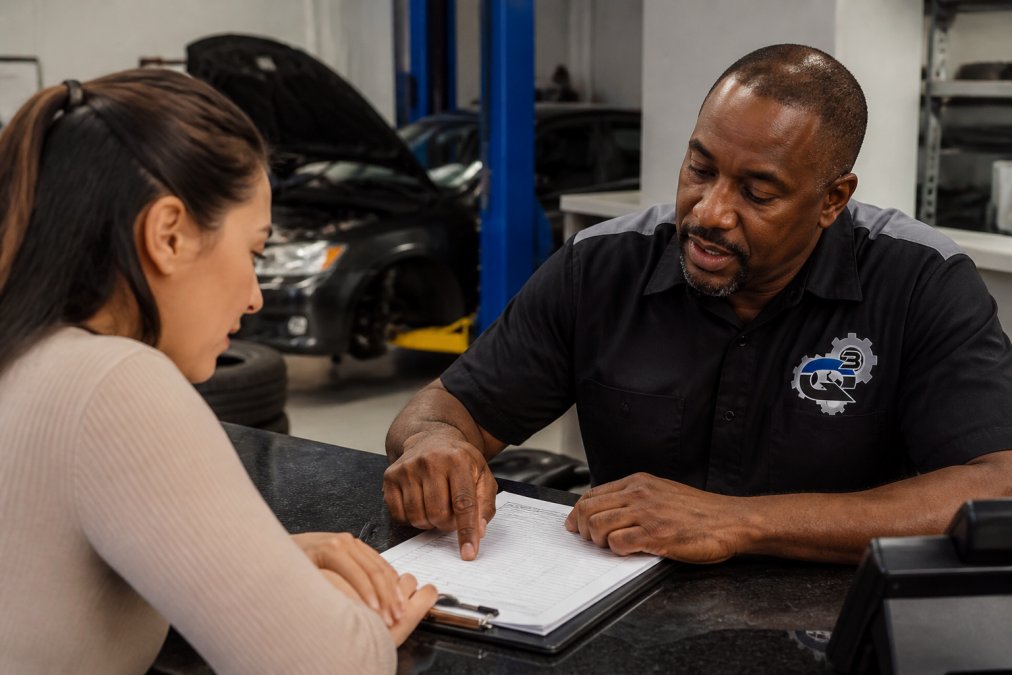
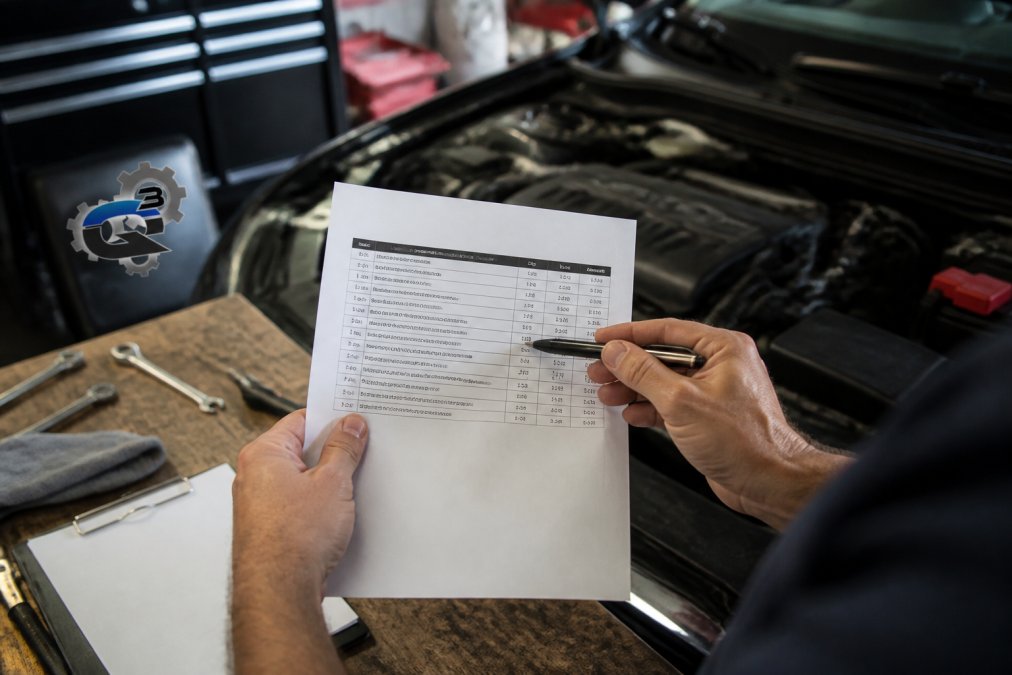
Breaking down your estimate reveals what's actually being charged and why. Start at the top with vehicle information: the VIN (vehicle identification number), mileage, and year/make/model. This ensures the estimate applies to your specific vehicle.
Next comes the diagnostic section, showing the charge for identifying the problem and what was diagnosed. Then comes the repairs section, where individual line items appear. Each repair should list the parts needed, the labor hours or flat rate charge, and the total for that repair.
Identifying Diagnostic Fees and Shop Supplies
A diagnostic fee covers the technician's time spent identifying what's wrong with your vehicle. This might involve computer scans, visual inspections, or test drives. However, some shops waive this fee if you approve the recommended repairs, crediting it toward your final bill.
Shop supplies appear as a separate charge on many estimates, covering rags, fluids, disposal fees, and other consumables used during the repair. The amount is typically modest, often 5-15% of the labor charge. Environmental disposal fees are legitimate and legally required, particularly for fluid replacements. A fair disposal charge for an oil change should be minimal, usually under $5.
Questions to Ask Your Mechanic Before Repairs
Before you approve any repair estimate, ask your mechanic specific questions that reveal whether the work is necessary and the pricing is fair. Start with: "Why is this repair necessary?" Your mechanic should explain the diagnostic findings clearly. Next, ask: "What happens if I don't do this repair?" Some repairs are safety-critical and non-negotiable, failed brakes, worn steering components, or severe tire damage. Others are maintenance items that can wait.
Ask whether the recommended parts are OEM or aftermarket, and why your mechanic chose that option. Inquire about warranty coverage on both parts and labor. How long does the warranty last? Does it cover parts only, labor only, or both? A reputable shop stands behind their work with a clear warranty, typically 12 months or 12,000 miles for labor.
Is a Repair Estimate Legally Binding?
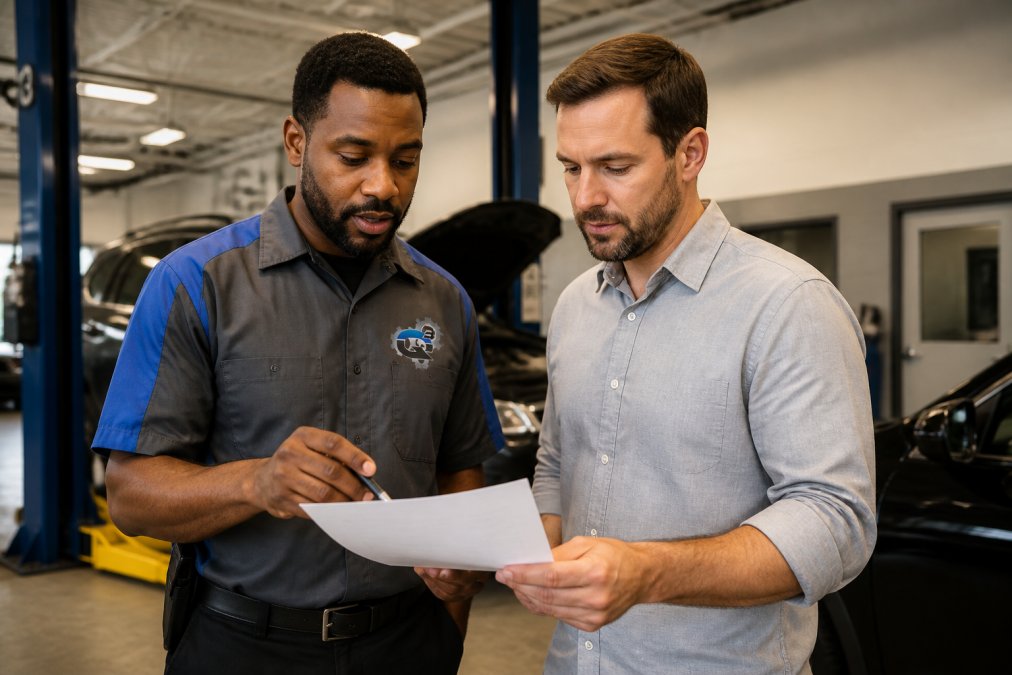
A repair estimate is generally not legally binding in the strict sense, but it carries significant weight in consumer protection law. Once you sign or verbally approve an estimate, you've authorized that specific work at that specific price. If the shop performs additional work not listed on the estimate without your approval, you're not obligated to pay for it.
Most states have consumer protection laws governing automotive repair (the FTC). These laws typically require shops to provide written estimates before starting work and to notify you if additional repairs are discovered during the job. If supplemental work is needed, the shop must contact you for approval before proceeding.
Factors That Affect Your Final Repair Bill
Several variables influence whether your final bill matches the estimate or exceeds it. The most common is discovery of additional problems during repair. Your mechanic removes a component to replace it and discovers related damage, worn bearings alongside a failed water pump, or rust and corrosion requiring extra work.
Your vehicle's age and condition significantly affect pricing. Older vehicles with high mileage often present complications. Bolts seize, fasteners break, and corrosion complicates removal of components. What should be straightforward becomes time-consuming.
Vehicle Identification Number and Service History
Your vehicle identification number (VIN) is crucial for accurate estimates. The VIN tells your mechanic the exact year, make, model, engine size, and transmission type. This ensures the right parts are ordered and the correct repair procedures are followed.
Your service history influences repair recommendations and costs. A vehicle with documented regular maintenance often requires less extensive repairs. A vehicle with spotty maintenance history might need supplemental work, fluid flushes, filter replacements, or preventative repairs, to address deferred maintenance.
Parts Availability and Hidden Mechanical Issues
Parts availability can extend repair timelines and affect costs. Common parts for popular vehicles are usually in stock or arrive quickly. Specialty parts for older vehicles might require ordering, adding days to the repair. Your estimate should note expected parts arrival time.
Hidden mechanical issues are genuine complications that extend repair costs. A fair shop contacts you before authorizing supplemental work and explains the findings clearly.
How to Spot a Fair and Honest Repair Quote
A fair repair quote includes specific details, clear explanations, and transparent pricing. Start by checking whether the estimate includes your vehicle's VIN, current mileage, and service date. Look for itemized line items where each repair lists the parts needed, labor hours or flat rate, and parts cost separately.
Fair quotes explain why each repair is necessary. The estimate might note "serpentine belt shows cracking and fraying, recommend replacement to prevent breakage" or "brake pads measured at 2mm thickness, below safe operating limit." Pricing transparency matters. The estimate should specify OEM versus aftermarket parts and explain the difference in cost. It should note any warranty coverage on parts and labor and itemize shop supplies, diagnostic fees, and environmental disposal separately.
A fair shop communicates about options. If your estimate recommends expensive OEM parts, a good mechanic explains why while offering aftermarket alternatives if appropriate. Compare estimates from multiple shops for major repairs. Watch for red flags: estimates without itemization, refusal to explain charges, pressure to approve supplemental work without details, or shops that won't show you failed parts after removal.
Understanding repair estimates helps you make informed decisions about your vehicle's care. A clear estimate protects both you and your repair shop by establishing expectations upfront. When you know what's being done, why it's necessary, and what it costs, you can approve repairs with confidence.
The best relationship with a repair shop is built on transparency and trust. At Q3 Car & Truck Repair, we prioritize straightforward communication and honest estimates. Our technicians take time to explain findings, present options fairly, and answer your questions thoroughly. We believe that informed customers make better decisions about their vehicles. Request an appointment today and experience the difference that genuine transparency makes.
Frequently Asked Questions
What is the difference between a repair estimate and a final invoice?
An estimate is a written prediction of repair costs before work begins, based on a service advisor's inspection. A final invoice is the actual bill after the repair is complete. The final cost may differ if the technician discovers additional damage during the repair. A written estimate protects you by requiring authorization before any work exceeds the quoted amount, though supplemental estimates may be issued if unexpected issues arise. Always ask whether your estimate includes all anticipated work or if additional charges are likely.
Should I get a second opinion on a car repair estimate?
Getting a second opinion is wise for major repairs, especially if you're unfamiliar with the shop or the work seems expensive. Different repair facilities may quote different labor hours, use different parts (OEM vs. aftermarket), or identify additional issues. A second estimate helps you compare pricing and understand whether the work is necessary. However, avoid moving your vehicle between shops during diagnostics, as this can generate multiple diagnostic fees. Reputable shops welcome informed customers and can explain why their estimate differs from competitors.
What costs should I expect to see on a repair estimate besides labor and parts?
Beyond labor and parts, estimates typically include diagnostic fees (for identifying the problem), shop supplies (fluids, filters, fasteners), environmental disposal fees (for old fluids or parts), and sometimes a shop charge or facility fee. Some shops add a parts markup to cover inventory costs. A clear, itemized estimate breaks down each charge so you understand the total cost of ownership for your repair. Ask your service advisor to explain any fees you don't recognize, transparent shops are happy to justify every line item.
How can I tell if a mechanic's labor rate is fair?
Labor rates vary by location, shop reputation, and technician certification level. Shops often charge either an hourly rate or a flat rate based on industry standards for your vehicle type. Certified technicians typically command higher rates because they have proven expertise. Compare labor rates across a few local shops, but don't choose based on price alone, a shop with lower rates may cut corners or take longer to complete work. Ask about technician certifications and warranty coverage to ensure fair value, not just a low price.
This article was written using GrandRanker