 listicle
Fair Pricing for Auto Repairs: A 2026 Guide
Table of Contents
- What Makes Auto Repair Pricing Fair
- Understanding the Average Mechanic Labor Rate Per Hour
- Parts Markup and Original Equipment Manufacturer Costs
- How to Get and Compare Auto Repair Estimate Tools
- How to Negotiate Car Repair Costs Effectively
- Red Flags That Signal Overcharging
- Building a Relationship with a Trusted Shop
- Conclusion
Last Updated: August 12, 2026
What Makes Auto Repair Pricing Fair
Fair pricing means paying a reasonable amount for work performed with no hidden charges, unnecessary services, or inflated labor rates. Most vehicle owners lack the technical knowledge to evaluate whether a quote is legitimate or exploitative.
At Q3 Car & Truck Repair, we've built our reputation on transparent pricing because we understand your skepticism. Fair pricing depends on three factors: actual time measured against industry standards, parts cost (OEM or aftermarket), and the shop's legitimate overhead. When you understand each component, you can spot inflated quotes immediately.
The difference between fair pricing and highway robbery often comes down to whether the shop uses industry-standard labor times or makes up numbers. A legitimate shop can justify every hour on your invoice.
Understanding the Average Mechanic Labor Rate Per Hour
The average mechanic labor rate varies significantly by geography, shop type, and specialization. Independent shops typically charge $75-$150 per hour, while dealerships charge $100-$200+ per hour. Specialty shops (transmission, diesel, collision) command premium rates reflecting their expertise.
The real issue isn't the hourly rate itself, it's billable hours, the difference between actual time spent and time charged.
Billable hours are defined by the flat rate manual, not by the clock. A transmission flush might take 1.5 actual hours, but the manual says it's a 2-hour job. You pay for 2 hours. This isn't fraud; it's industry standard. The problem arises when shops pad billable hours beyond what the manual specifies or charge diagnostic time that should be waived if you authorize the repair.
How Labor Rates Vary by Shop Type
Independent repair shops typically offer lower labor rates because their overhead is lower than dealerships. They have fewer administrative staff, smaller facilities, and lower insurance costs. An independent shop's $85/hour rate might be fair; a dealership's $150/hour reflects their brand reputation, warranty coverage, and higher operational costs.
Dealerships charge more because they use OEM parts, employ factory-trained technicians, and warranty their work under the manufacturer's name. That premium isn't dishonest, you're paying for accountability and parts quality.
Specialty shops charge premium rates because technicians require advanced certification and specialized equipment. A diesel technician with ASE certification commanding $120/hour is fair pricing.
What Billable Hours Really Mean
Billable hours are standardized estimates published in flat rate manuals like ALLDATA or Mitchell 1. A water pump replacement listed as 1.8 hours means you pay for 1.8 hours whether it takes the technician 1 hour or 2.5 hours. This protects both sides.
The catch is that flat rate times assume standard conditions. If your vehicle has rust, corrosion, or seized bolts, the job takes longer. A fair shop will notify you of this before starting work and provide a revised estimate.
Request the flat rate manual reference when you get a quote. "This job is quoted at 2.5 hours per the Mitchell 1 manual" is transparent. "This job will take about 2.5 hours" is vague and unverifiable.
Parts Markup and Original Equipment Manufacturer Costs
Parts represent the second major component of your repair bill. Understanding the difference between OEM and aftermarket parts is critical to evaluating fair pricing.
OEM parts are manufactured by the vehicle's maker or authorized suppliers. They carry the highest price but come with the manufacturer's warranty and guaranteed fit. Aftermarket parts are made by third-party manufacturers. Quality varies widely. A reputable aftermarket part from Dorman or Motorcraft is reliable; a no-name equivalent might fail in 6 months.
Fair pricing means the shop discloses which parts they're using and why. A responsible shop offers you the choice: "We can use OEM at $180 or quality aftermarket at $95. Both carry a one-year warranty." A dishonest shop orders the cheapest part and charges you the OEM price.
Parts markup is standard at 25-50% above cost. This covers inventory management, storage, handling, and risk. A 40% markup on a $100 part is fair; 100% is overcharging.
How to Get and Compare Auto Repair Estimate Tools
Getting multiple estimates is the single best defense against overcharging. Online tools help you establish a baseline before talking to any shop.
Kelley Blue Book Fair Repair Range (Kelley Blue Book Fair Repair Range) provides a free estimator showing typical cost ranges for common repairs in your area. Enter your vehicle's year, make, model, and ZIP code, then select the repair type. You get low, medium, and high estimates based on national averages and local market data.
RepairPal Fair Price Estimator (RepairPal Fair Price Estimator) customizes estimates to your ZIP code and connects you with certified shops that honor the quoted price through their Fair Price Guarantee, adding accountability.
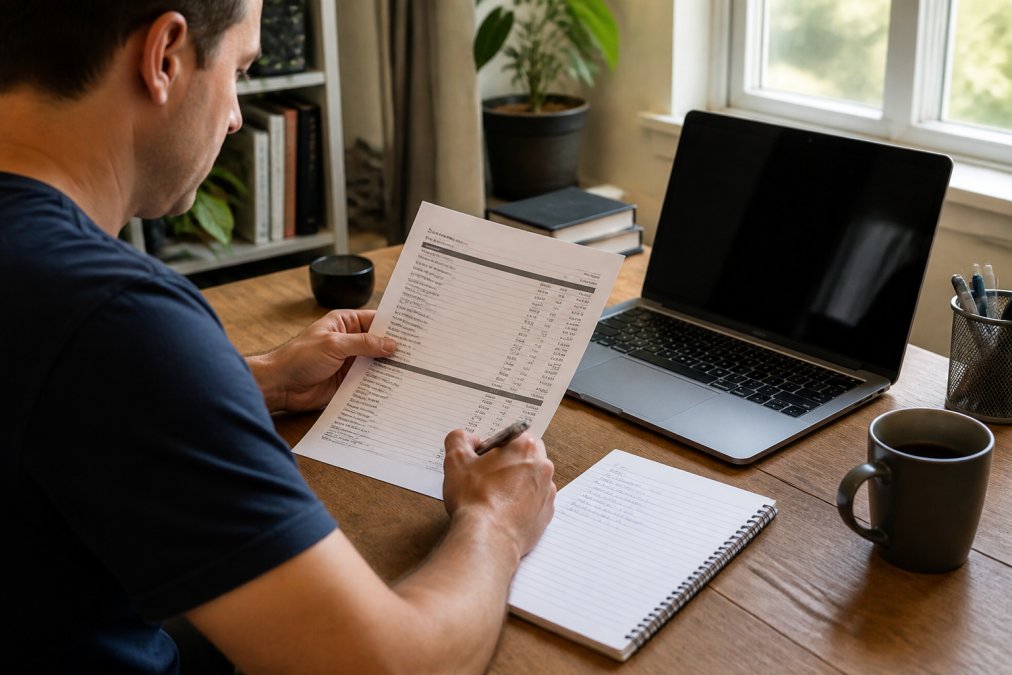
Using Online Estimators to Check Fair Repair Range
Online estimators work best as a sanity check, not as a definitive quote. They give you a ballpark figure so you know whether a shop's estimate is reasonable.
Start by gathering your vehicle's information: year, make, model, mileage, and ZIP code. Run the same repair scenario through both KBB and RepairPal. You'll see a range, say $450-$650 for brake pads. If a shop quotes $800, you have reason to negotiate or seek a second opinion.
Use online estimates to establish your baseline, then get quotes from actual shops. The real estimate from a technician who's examined your vehicle trumps the online tool. But the tool protects you from wildly inflated quotes.
Getting Multiple Quotes from Local Shops
Never accept the first estimate. Get at least two, ideally three, from different shops.
When you call or visit shops, be specific about the work needed. Request an itemized written estimate that breaks down:
- Parts (brand, quantity, unit price)
- Labor (hours, hourly rate, total labor cost)
- Diagnostic fee (if applicable)
- Warranty on parts and labor
Compare the estimates side by side. If one shop quotes $600 and another quotes $900 for the same work, ask the expensive shop why. Maybe they're using premium OEM parts. Maybe their labor rate is higher. Maybe they're overcharging.
How to Negotiate Car Repair Costs Effectively
Negotiation is possible, but it works only if you approach it strategically. Most vehicle owners either accept the first quote passively or demand a discount without justification. Neither works.
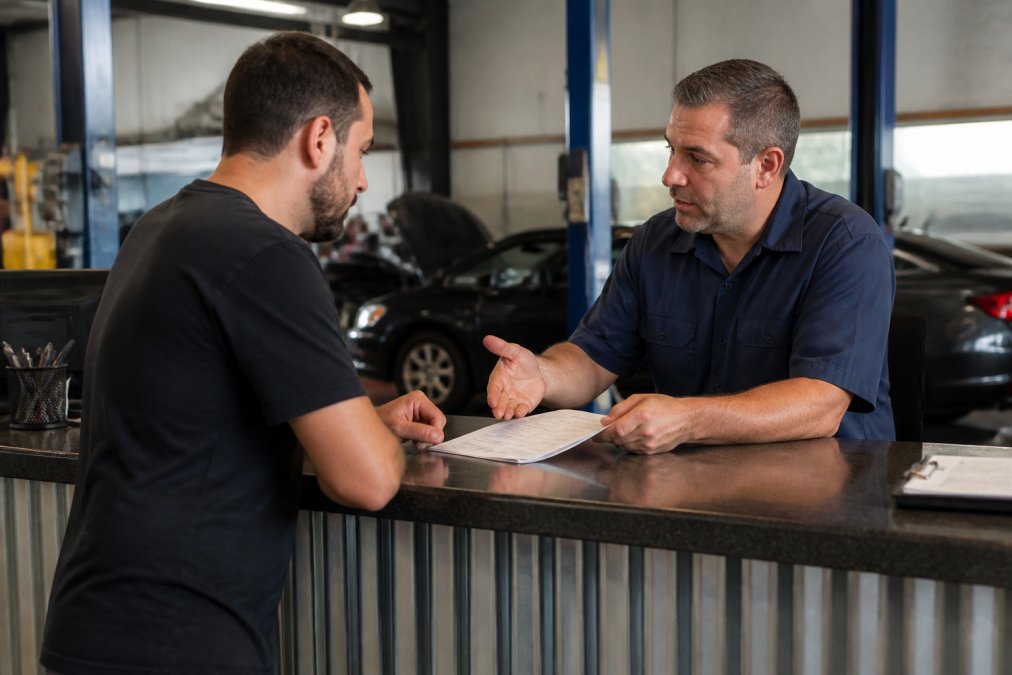
When and How to Ask for a Discount
Asking for a discount works only when you have leverage. Leverage comes from competition, volume, or identifying a legitimate error in the estimate.
Leverage through competition: If you have two quotes and one is higher, use the lower quote as a negotiating tool. Call the expensive shop and say, "I have another estimate at $550. Can you match that?" A fair shop might come down slightly to retain your business.
Leverage through volume: If you're bringing multiple vehicles or committing to ongoing maintenance, you have leverage. "I'm bringing three vehicles in for regular maintenance. What's your rate for ongoing service?"
Leverage through error identification: If you spot an error in the estimate, a duplicated charge, inflated labor time, or unnecessary service, bring it up directly. "I see you've listed a diagnostic fee and then charged full labor on the repair. Can you credit the diagnostic fee?"
Avoid asking for a discount just because you want one. Shops have margins built into their pricing. A fair shop won't discount arbitrarily.
Understanding Warranty Coverage and Repair Authorization
Before any work begins, understand the warranty on parts and labor. This protects you if the repair fails.
Parts warranty typically ranges from 30 days to one year. OEM parts usually carry longer warranties than aftermarket. A fair shop puts the warranty in writing on your estimate.
Labor warranty is the shop's guarantee that work is done correctly. A fair shop warrants labor for at least 30 days. If the repair fails within that window due to the shop's error, they redo the work at no charge.
Repair authorization is your explicit approval to proceed. Never sign a blank authorization. Your written estimate should detail exactly what work will be done, the cost, and the warranty.
A fair shop will call you if they discover additional work during the repair. An unfair shop completes unauthorized work and presents you with a surprise bill.
Red Flags That Signal Overcharging
Certain warning signs indicate you're dealing with a dishonest shop or inflated pricing.
Vague estimates: If an estimate doesn't break down parts and labor, walk away. Fair pricing is transparent.
Pressure to decide immediately: A shop that won't let you take the estimate home to review is using pressure tactics.
Refusal to show the flat rate manual: If a shop won't reference the labor time standard they're using, they're making up hours.
Diagnostic fee not credited: Charging the fee and full labor on the repair is double-billing.
Unnecessary services: Shops sometimes recommend flushing fluids before they're due or replacing parts that aren't worn. A fair shop recommends maintenance based on your vehicle's condition and the manufacturer's schedule.
Unwillingness to use aftermarket parts: Fair shops offer both OEM and aftermarket options and let you choose.
No warranty on labor: If a shop won't warrant their work, they lack confidence in their technicians.
Building a Relationship with a Trusted Shop
The best defense against overcharging is a long-term relationship with a shop you trust. Trust is built through transparency, consistency, and honest communication over time.
A trusted shop explains repairs in language you understand. When you ask why a repair is necessary, they articulate the failure mode and show you the damaged part. A trusted shop respects your budget and admits when they don't know something rather than guessing and billing you for their education.
Q3 Car & Truck Repair builds these relationships by prioritizing straightforward communication and honest guidance. Our team explains why repairs are necessary, shows you the damage, and respects your decision-making authority.
Develop a relationship with one or two shops you trust. When you bring your vehicle in, you're not a transaction; you're a customer with history. Shops treat long-term customers better because the relationship has value beyond a single repair.
Fair pricing for auto repairs isn't a mystery. It's the result of transparent communication, industry-standard labor times, and honest parts sourcing. The tools exist, KBB, RepairPal, and flat rate manuals, to verify whether a quote is reasonable. Use them.
When you're ready to work with a shop that prioritizes transparent estimates and straightforward communication, Q3 Car & Truck Repair is here. Our technicians use industry-standard labor manuals, source quality parts with clear warranties, and explain every repair before we perform it. Request an appointment and experience the difference that honest, reliable service makes.
Frequently Asked Questions
Is $100 an hour fair for mechanic labor?
Labor rates vary significantly based on location, shop type, and technician certification. Dealerships typically charge $75-$150 per hour, while independent shops often range from $50-$100. The average mechanic labor rate per hour in most markets falls between $75-$100. To determine fairness, compare quotes from multiple shops in your area, check online estimators like RepairPal, and verify the technician's certifications. Remember that higher rates sometimes reflect more experienced technicians and better equipment.
How can I tell if a car repair estimate is inflated?
Request an itemized invoice that breaks down parts and labor separately. Cross-check the estimate against online auto repair estimate tools like Kelley Blue Book or RepairPal to see the fair repair range for your vehicle and ZIP code. Ask your service advisor to explain why specific repairs are necessary and get a second opinion if the total cost seems unusually high. Red flags include vague descriptions, missing labor times, or pressure to approve additional work without explanation.
Can you negotiate auto repair prices with a mechanic?
Yes, negotiation is possible in many situations. You can ask about discounts for paying cash, bundling multiple repairs, or scheduling during slower business periods. If you have quotes from competing shops, you can ask your preferred mechanic to match or come close to that price. However, negotiating labor rates on diagnostic fees or complex repairs is less common. Focus negotiations on parts pricing, warranty terms, and service packages rather than the hourly labor rate itself.
What should I do if I suspect I was overcharged for car repairs?
Request a detailed, itemized invoice showing all parts and labor charges. Compare it against fair repair ranges using online estimators and quotes from other shops. If the charges still seem excessive, contact your state's Attorney General office or file a complaint with the Better Business Bureau. Ask the shop to justify the charges in writing. For future repairs, always get estimates upfront, ask questions about necessary work, and consider building a relationship with a trusted shop that prioritizes cost transparency.
This article was written using GrandRanker