 ultimate-guide
Benefits of Professional Truck Maintenance
Table of Contents
- Why Professional Truck Maintenance Matters
- Improved Driver Safety and Reduced Accidents
- Extending Vehicle Lifespan and Asset Longevity
- Minimizing Unplanned Vehicle Downtime
- Fleet Vehicle Maintenance in Waldorf and Beyond
- Preventive Maintenance Checklist for Commercial Trucks
- Understanding the Cost of Truck Downtime
- Additional Benefits: Compliance, Resale Value, and Driver Retention
Last Updated: August 22, 2026
Why Professional Truck Maintenance Matters
Professional truck maintenance protects your investment, safety, and bottom line. Whether managing multiple vehicles or relying on a single truck, maintenance decisions directly impact operational efficiency, costs, and liability exposure.
At Q3 Car & Truck Repair, we've worked with truck owners who initially viewed maintenance as an expense to minimize, only to discover that skipping professional care created far greater expenses. The pattern is consistent: preventive care costs less than reactive repairs. The real question isn't whether you can afford professional truck maintenance, it's whether you can afford not to have it. A single catastrophic breakdown costs more than months of preventive maintenance, while unplanned downtime eats into productivity and creates liability exposure.
Improved Driver Safety and Reduced Accidents
A truck in poor mechanical condition puts drivers at risk. Brake fade, tire blowouts, steering problems, and electrical failures don't announce themselves, they fail when they fail, often at the worst possible moment.
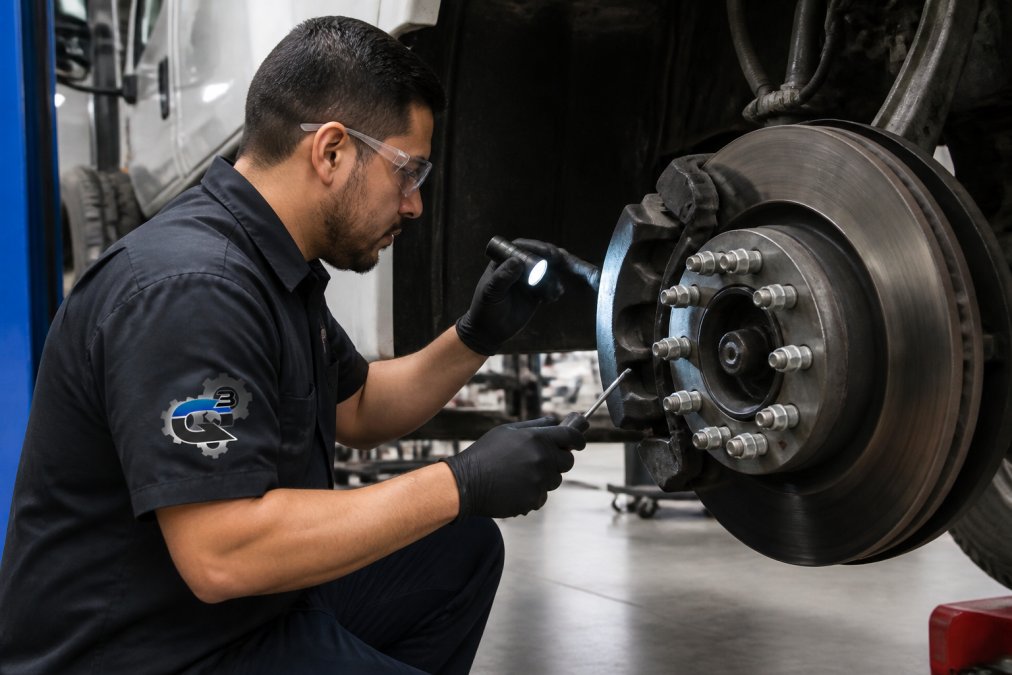
Professional truck maintenance catches these issues before they become emergencies. Regular brake inspections identify worn pads and hydraulic problems. Tire rotations prevent blowouts at highway speeds. Steering system checks catch looseness or fluid leaks. Lighting inspections ensure visibility for other drivers.
When drivers know their vehicle has been professionally inspected and maintained, their confidence increases and they report problems earlier. This reduces accident rates independent of mechanical improvements. Professional maintenance documentation also protects you legally, if an accident occurs and investigation reveals neglected maintenance, your insurance may deny claims. Documentation proves you took reasonable care.
Extending Vehicle Lifespan and Asset Longevity
Trucks are capital assets. A well-maintained truck can operate reliably for 300,000 miles or more, while a neglected truck might fail at 150,000 miles (ase.com). That's the difference between a 10-year asset and a 5-year asset.
Professional truck maintenance extends vehicle lifespan by addressing wear systematically. Oil changes prevent engine sludge buildup. Transmission fluid service keeps internal components lubricated. Coolant flushes prevent corrosion. Suspension work prevents uneven tire wear. Each service targets a specific wear mechanism that accelerates vehicle degradation if left unchecked.
A truck receiving excellent maintenance at year three retains strong resale value at year seven. For fleet operators, vehicle longevity directly affects capital planning. Extending truck lifespan from 5 years to 8 years through better maintenance reduces replacement cycles and maintains consistent fleet capability.
Minimizing Unplanned Vehicle Downtime
Downtime is the silent killer of fleet productivity. A truck sitting in a repair bay generates zero return on investment. Professional truck maintenance prevents most unplanned downtime through scheduled service, allowing you to plan maintenance during low-activity periods and control timing.
Unplanned breakdowns eliminate that control. A truck fails on a Friday afternoon, the nearest shop is booked, and you wait until Monday. Your customer waits. Your reputation takes a hit. The repair might take longer because the failure cascaded, a belt broke and seized the alternator, or a fluid leak damaged the transmission. What could have been a $500 repair became a $3,000 catastrophe.
Fleet vehicle maintenance schedules prevent exactly this scenario. Regular inspections catch problems while they're still small. Fluid checks catch leaks before they become major failures. The schedule itself creates predictability, you know when service is needed and can plan accordingly.
Fleet Vehicle Maintenance in Waldorf and Beyond
Managing multiple vehicles requires consistency, reliability, and transparent communication with your service provider. A professional fleet maintenance program starts with a master maintenance schedule that applies consistently across all vehicles.
Q3 Car & Truck Repair understands fleet operations. When you bring multiple vehicles to us, you get a dedicated relationship with technicians who know your fleet and understand the specific demands your vehicles face.
Documentation becomes critical at fleet scale. Professional fleet maintenance providers maintain service records meticulously, so you know which vehicles are due for service and have proof of maintenance for warranty and liability purposes.
Preventive Maintenance Checklist for Commercial Trucks
A professional truck maintenance program includes regular inspections and services designed to catch problems before they become failures. The specific schedule depends on your truck's age, mileage, and operating conditions.
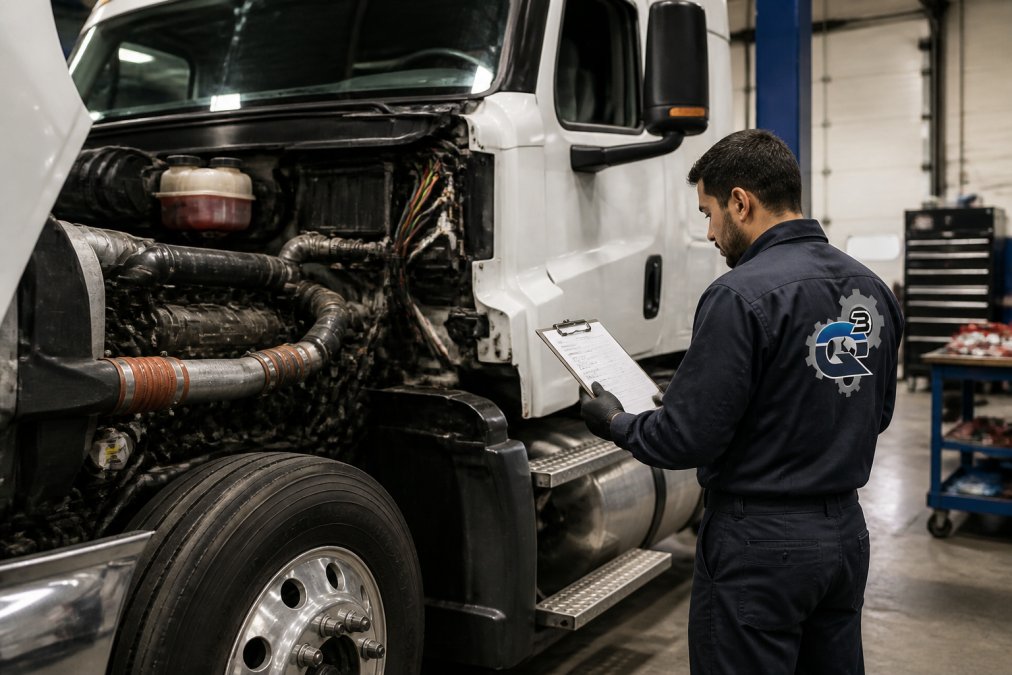
Essential preventive maintenance includes:
- Oil and filter changes (typically every 3,000-5,000 miles or as recommended by manufacturer) (fmcsa.dot.gov)
- Fluid inspections and top-offs (coolant, transmission, brake, power steering)
- Tire rotation and wear inspection (every 5,000-7,000 miles)
- Brake system inspection (pads, rotors, fluid, lines)
- Suspension and steering inspection (alignment, wear, responsiveness)
- Lighting and electrical system check (headlights, taillights, warning lights)
- Battery inspection and testing (terminals, charge capacity)
- Air filter replacement (engine and cabin air filters)
- Hose and belt inspection (cracks, leaks, tension)
- Fluid leak inspection (under vehicle, engine compartment)
A professional maintenance provider creates a schedule specific to your truck and usage patterns. The key is consistency, a truck receiving all scheduled maintenance stays reliable, while sporadic maintenance develops problems unpredictably.
Understanding the Cost of Truck Downtime
Downtime costs are often invisible until you experience them. For a service business, downtime means missed appointments. For delivery operations, it means late deliveries and potential penalties. For construction companies, it means crews sitting idle. A high-use truck might generate several hundred dollars per day in revenue, making a week of downtime represent thousands in lost revenue.
This is where the economic case for professional truck maintenance becomes clear. Preventive maintenance costs money, but it's predictable and manageable. Unplanned downtime costs far more and is unpredictable. You can budget for scheduled maintenance but not for emergency repairs that sideline your vehicle at a critical moment.
Optimizing Fuel Efficiency and Consumption
A truck that's properly maintained runs more efficiently than one that's neglected, directly impacting fuel consumption and operating costs.
Proper tire pressure, wheel alignment, and suspension condition affect rolling resistance. A misaligned truck or one with underinflated tires works harder, consuming more fuel. Engine condition affects fuel consumption too, a dirty air filter or worn spark plugs cause the engine to work harder and burn more fuel. Transmission and drivetrain condition matter as well; proper fluid levels ensure smooth power delivery.
Professional truck maintenance addresses all these factors. A well-maintained truck consumes noticeably less fuel than a neglected one. Over thousands of miles, that efficiency difference represents significant cost savings.
Reducing Long-Term Repair and Maintenance Costs
Small problems cost less to fix than large ones. A worn brake pad costs $100 to replace; an ignored pad that damages the rotor costs $600 to repair. A small fluid leak costs $50 to seal; an ignored leak that damages the transmission costs $3,000 to rebuild. A worn serpentine belt costs $150 to replace; an ignored belt that breaks and damages the alternator costs $800 to repair.
Professional truck maintenance catches these small problems while they're still small, avoiding the cascade of secondary damage. Over the life of a vehicle, this approach costs substantially less than reactive repairs. Fleet operators see this clearly, fleets receiving consistent preventive maintenance have lower average repair costs per vehicle than those receiving sporadic maintenance.
Maintaining Regulatory Compliance and Inspections
Commercial trucks are subject to regulatory requirements governing brake systems, lighting, emissions, and safety equipment (fmcsa.dot.gov). Failing to maintain compliance creates legal liability and can result in fines or vehicle impoundment.
Professional truck maintenance keeps your vehicle compliant with these regulations. Regular inspections catch violations before they become problems, and service records document that you're maintaining your vehicle properly. For fleet operators, professional fleet maintenance programs include compliance tracking so you know which vehicles are due for required inspections and have documentation proving compliance.
Additional Benefits: Resale Value and Driver Retention
Beyond primary benefits, professional truck maintenance delivers secondary advantages that compound over time.
Resale value matters when you eventually replace a vehicle. A well-maintained truck with complete service records commands a higher resale price than a neglected truck. Buyers trust documented maintenance and are willing to pay more for a vehicle they know has been cared for.
Driver retention improves when drivers trust their vehicles. Drivers who experience frequent breakdowns become frustrated and unreliable. Drivers who trust their vehicles show up consistently and perform better. Professional truck maintenance creates that trust and signals to your team that you're serious about their safety and comfort.
Professional truck maintenance is an investment in reliability, safety, and cost control. It prevents catastrophic failures that create downtime and liability, extends vehicle lifespan, protects resale value, and keeps drivers safe and confident.
Q3 Car & Truck Repair has helped local business owners and individual truck owners in the Waldorf area protect their vehicles through consistent professional maintenance. Our technicians understand the demands commercial trucks face. We provide transparent communication about maintenance needs and straightforward estimates so you understand exactly what's being done and why. Request an appointment with Q3 Car & Truck Repair and experience a maintenance program built on reliability and honest service.
| Benefit | Impact | Timeframe |
|---|---|---|
| Preventive maintenance | Prevents catastrophic failures | Ongoing |
| Professional inspections | Catches small problems early | Every service |
| Consistent scheduling | Eliminates guesswork | Planned intervals |
| Documentation | Proves compliance and care | Permanent record |
| Fleet consistency | Ensures uniform vehicle quality | Across all vehicles |
| Driver confidence | Improves reliability and safety | Immediate and ongoing |
Frequently Asked Questions
Q: What is the difference between reactive repairs and professional preventive maintenance?
A: Reactive repairs address problems after they occur, often at higher cost and with unexpected downtime. Professional preventive maintenance catches issues early through scheduled inspections and planned service. This approach reduces emergency breakdowns, extends component life, and keeps your truck operating at peak efficiency. Preventive maintenance follows a structured schedule based on mileage and time intervals, while reactive repairs are emergency responses that disrupt operations.
Q: How does a preventive maintenance checklist for commercial trucks protect your investment?
A: A preventive maintenance checklist ensures no critical system is overlooked. It documents oil changes, filter replacements, fluid levels, brake inspections, tire rotations, and electrical checks at regular intervals. This systematic approach prevents mechanical failure before it happens, maintains manufacturer warranty coverage, and creates a maintenance history that supports resale value. Regular documentation also satisfies regulatory compliance requirements for commercial fleets.
Q: What is the 30-60-90 rule for truck maintenance?
A: The 30-60-90 rule is a maintenance milestone framework: at 30,000 miles, perform basic fluid checks and filter changes; at 60,000 miles, inspect brakes, suspension, and transmission; at 90,000 miles, conduct major component assessment and fluid flushes. This tiered approach spreads maintenance costs and prevents catastrophic failures. Following this schedule keeps your truck reliable and helps maintain resale value by showing consistent professional care.
Q: How does the cost of truck downtime compare to preventive maintenance spending?
A: Unplanned downtime costs far exceed preventive maintenance expenses. When a truck breaks down, you lose revenue from missed deliveries, pay emergency repair rates, and may incur towing fees. A single breakdown can cost hundreds or thousands in lost productivity alone. Preventive maintenance is scheduled during non-peak hours, costs less per service, and eliminates emergency situations. Most fleet operators find that investing in regular maintenance saves 3-5 times the amount they would spend on unexpected repairs and lost operations.
This article was written using GrandRanker