 How-to
Signs of a Clogged Catalytic Converter
Table of Contents
- What a Clogged Catalytic Converter Does to Your Engine
- Clogged Catalytic Converter Symptoms You'll Notice While Driving
- Check-Engine Light and Diagnostic Trouble Codes
- How to Perform a Catalytic Converter Diagnostic Test
- Can You Drive with a Clogged Catalytic Converter
- Common Causes of Clogged Catalytic Converter Failure
- What Happens If You Ignore a Clogged Catalytic Converter
- Getting Your Catalytic Converter Inspected and Repaired
- Frequently Asked Questions
Last Updated: October 21, 2026
What a Clogged Catalytic Converter Does to Your Engine
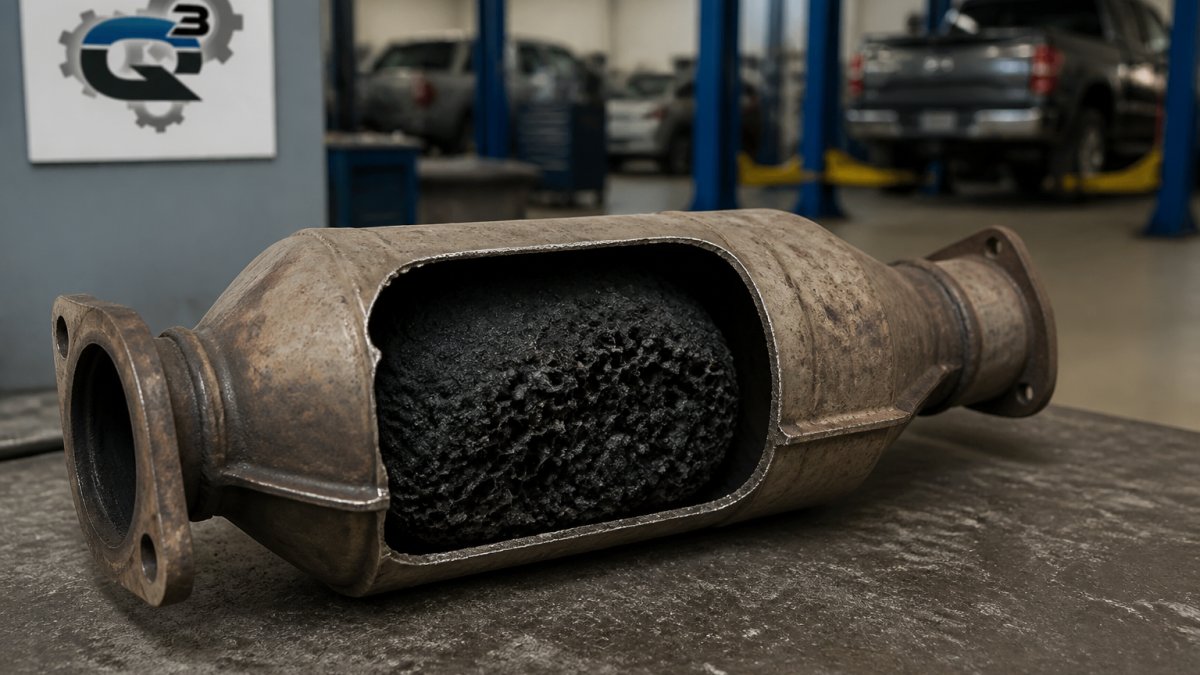
A clogged catalytic converter is a blocked or restricted part of your exhaust system that prevents harmful gases from flowing freely out of your vehicle.
Think of it like a traffic jam. When traffic flows, everyone moves. When it backs up, nothing moves well. Your engine experiences the same problem. Exhaust gases can't escape properly.
We see this issue frequently in older vehicles and cars that haven't received regular maintenance. The damage happens gradually. You might not notice it at first. But as the clog worsens, your vehicle's behavior changes noticeably.
Clogged Catalytic Converter Symptoms You'll Notice While Driving
The warning signs of a clogged catalytic converter show up in specific ways. Your vehicle will tell you something is wrong through its performance, sounds, and smells. Understanding these symptoms helps you catch the problem early.
Reduced Engine Power and Sluggish Acceleration
Your engine feels weak when you press the gas pedal. The vehicle doesn't respond with the normal surge of power. Instead, it hesitates and feels like it's dragging.
When the catalytic converter clogs, exhaust gases can't escape. This means fresh air and fuel can't enter the combustion chamber as efficiently. Your engine loses power. Acceleration becomes noticeably slower, especially when merging onto highways or climbing hills.
This symptom often appears first. Many drivers notice it before anything else goes wrong. If your truck or car feels sluggish during normal driving, a restricted catalytic converter could be the culprit.
Engine Hesitation at Higher RPMs
Your engine stumbles when you try to accelerate hard or reach higher speeds. The hesitation happens most when you push the engine to work harder.
This occurs because a clogged catalytic converter creates extreme backpressure at higher engine speeds. Your engine struggles to push exhaust out. The combustion process becomes uneven. You get hesitation instead of smooth acceleration.
Many drivers describe this as "bucking" or "surging." The engine feels like it's fighting itself. This symptom is a clear sign that exhaust flow is restricted somewhere in your system.
Rough Idle and Unexpected Stalling
Your engine shakes or vibrates when stopped at a red light. The shaking might be gentle at first, then grow more noticeable. In severe cases, your engine stalls unexpectedly, especially when idling in traffic.
A clogged catalytic converter causes uneven fuel combustion. Your engine misfires. Cylinders don't fire in the correct sequence. This creates the rough, shaky feeling you notice at idle.
Stalling happens when backpressure gets so severe that your engine can't maintain steady combustion. The engine simply shuts down. This is dangerous in traffic and signals that your converter needs immediate attention.
Sulfur or Rotten-Egg Exhaust Odor
You smell something like rotten eggs or sulfur coming from your exhaust. This smell is distinctive and unmistakable. It means your catalytic converter isn't converting sulfur compounds as it should.
When a converter clogs, sulfur-based emissions pass through without being neutralized. Your exhaust smells like a sulfur factory. The stronger the smell, the worse the clog.
This symptom often appears alongside other warning signs. Don't ignore it. The smell tells you that your exhaust system isn't working correctly and that harmful emissions are escaping into the environment.
Dark Exhaust Smoke and Unusual Emissions
Dark smoke pours from your tailpipe. The smoke might be gray, black, or even bluish. This indicates that unburned fuel is leaving your engine and being released into the air.
When a catalytic converter clogs, your engine can't burn fuel efficiently. Excess fuel escapes as smoke. The darker the smoke, the more fuel is being wasted. This also means your fuel economy drops significantly.
Unusual emissions also include visible soot around your tailpipe. If you see black residue building up, your engine is running too rich. This often happens when a converter is failing or clogged.
Rattling or Thumping Noises Under the Vehicle
You hear a rattling, metallic sound coming from underneath your car. The noise might sound like something loose is bouncing around. It's often worse when you accelerate or drive over bumps.
This noise comes from the catalytic converter itself. When it clogs severely, the internal catalyst material can break apart. These pieces rattle around inside the converter housing. The sound is distinctive and hard to miss.
In extreme cases, you might hear a thumping sound. This means the broken converter material is moving around inside. This is a sign that your converter is failing and needs replacement soon.
Check-Engine Light and Diagnostic Trouble Codes
Your check-engine light turns on for a reason. It's your vehicle's way of telling you something is wrong.
The most common code is P0420. This code means your catalytic converter isn't working efficiently. Your oxygen sensors detect that the converter isn't doing its job.
When you see the check-engine light, don't ignore it. Get your vehicle scanned right away. The diagnostic trouble code tells a technician exactly what's wrong.
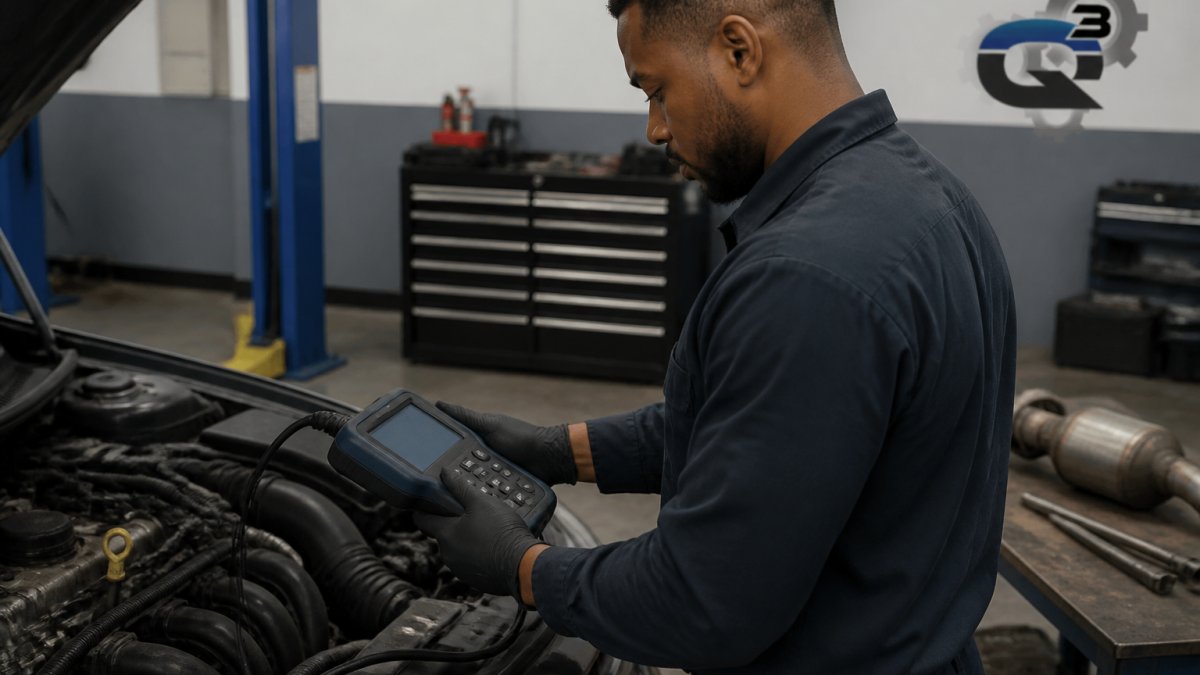
We use advanced diagnostic equipment to read these codes and pinpoint the exact issue. We don't guess.
How to Perform a Catalytic Converter Diagnostic Test
Testing a clogged catalytic converter requires specific steps. You can perform some basic checks yourself. Others require professional equipment.
Visual Inspection and Exhaust Backpressure Check
Start by looking under your vehicle. Check for dark soot buildup around the tailpipe. Look for any visible damage to the exhaust system.
Next, perform a simple backpressure test. Start your engine and let it idle. Place your hand near the tailpipe opening (be careful, it's hot).
For a more accurate test, use a vacuum gauge. Connect it to a vacuum port on your engine.
A professional can measure exhaust backpressure directly using specialized equipment. If backpressure exceeds 2 pounds per square inch at idle, your converter is likely clogged.
Distinguishing a Clog from Other Engine Faults
Not every performance problem points to a clogged catalytic converter. Other issues can cause similar symptoms. You need to rule them out.
Engine misfires can feel like hesitation. But they're caused by bad spark plugs, coils, or fuel injectors.
Oxygen sensor failure also triggers check-engine lights. Bad sensors can mimic converter problems.
Exhaust leaks create unusual sounds but not the same backpressure buildup. A visual inspection usually finds leaks.
The best way to distinguish a true clog is to measure exhaust backpressure and read diagnostic codes. This combination tells you exactly what's wrong.
Can You Drive with a Clogged Catalytic Converter
You can drive with a clogged catalytic converter, but you shouldn't for long.
Short trips to a repair shop are acceptable. But extended driving makes things worse. Your engine overheats from the buildup of backpressure.
Safety is the main concern. A severely clogged converter can cause your engine to stall unexpectedly. This is dangerous in traffic.
Emissions also worsen. Your vehicle releases more harmful pollutants. This harms air quality and violates emissions regulations in many areas.
The longer you wait, the more expensive repairs become. A failing converter might damage your engine or transmission.
Common Causes of Clogged Catalytic Converter Failure
Understanding why converters clog helps you prevent future problems. Several root causes lead to blockages.
Engine Misfire and Unburned Fuel
Engine misfire is the leading cause of catalytic converter damage. When a cylinder doesn't fire correctly, unburned fuel enters the exhaust system. This fuel ignites inside the converter, overheating it and damaging the internal catalyst material.
Bad spark plugs cause misfire. So do faulty ignition coils and fuel injectors. A weak fuel pump can also trigger misfire by not delivering enough pressure.
Once misfire happens repeatedly, your converter starts to fail. The damage is cumulative. Each misfire weakens the internal catalyst. Eventually, the converter clogs or fails completely.
Oil Leaks and Carbon Buildup
Oil leaking into the combustion chamber burns inside the engine. This oil then enters the exhaust system as carbon particles.
Worn piston rings and valve seals are common sources of oil leaks. A leaking valve cover gasket can also allow oil into the engine.
Carbon buildup also happens from poor fuel quality and infrequent oil changes. Thick, dirty oil doesn't protect engine parts properly. Wear increases. More oil escapes into the combustion chamber.
Fixing the oil leak stops the problem. But your converter might already be damaged. If carbon buildup is severe, replacement is necessary.
Poor Fuel Quality and Oxygen Sensor Failure
Low-quality fuel contains more contaminants. These burn incompletely, creating excess carbon. Carbon clogs your converter over time.
Always use fuel from reputable stations. Top-tier gasoline contains better detergents. It burns cleaner and produces fewer deposits.
A failing oxygen sensor tells your engine to run too rich. The engine burns more fuel than necessary. Excess fuel enters the exhaust system. This overloads your converter with unburned fuel.
Oxygen sensors wear out over time. Replace them according to your vehicle's maintenance schedule. This prevents your converter from being damaged by a rich fuel mixture.
What Happens If You Ignore a Clogged Catalytic Converter
Ignoring a clogged converter leads to serious consequences. The damage spreads beyond the converter itself.
Your engine overheats from extreme backpressure. Metal parts warp and fail. Valves stick.
Your oxygen sensors fail from exposure to unburned fuel and extreme heat.
Your transmission suffers too. Excess backpressure forces hot exhaust gases into places they shouldn't be.
In extreme cases, your catalytic converter fails completely. The internal material breaks apart.
Emissions violations are another consequence. Your vehicle fails inspection. You can't register it legally. Fines accumulate.
The financial impact grows quickly. What started as a converter problem becomes engine damage.
Getting Your Catalytic Converter Inspected and Repaired
Professional inspection is the right move. Don't try to guess what's wrong.
A technician connects a diagnostic scanner to read trouble codes. They measure exhaust backpressure. They inspect the converter visually.
If replacement is needed, your technician removes the old converter and installs a new one.
We handle catalytic converter diagnostics and replacements with precision. Our technicians explain exactly what's happening with your vehicle.
We understand that repair costs matter. We provide transparent pricing. No surprises. No hidden charges.
If your vehicle shows signs of a clogged catalytic converter, don't wait. The longer you delay, the more damage occurs.
Frequently Asked Questions
Can a clogged catalytic converter cause poor acceleration?
Yes. When a catalytic converter becomes clogged, exhaust gases cannot flow freely from the engine. This creates backpressure that restricts engine performance, making acceleration sluggish and hesitant, especially when you press the gas pedal hard or drive at higher RPMs. The engine struggles to expel exhaust efficiently, which limits power output.
How long will a car run with a clogged catalytic converter?
A vehicle can run with a clogged catalytic converter for weeks or even months, depending on how severe the blockage is. However, the longer you drive with a clog, the greater the risk of engine damage. Continued driving forces unburned fuel into the converter, which can overheat and damage internal components, potentially leading to much costlier repairs than converter replacement alone.
Will a check engine light come on if the catalytic converter is clogged?
In most cases, yes. A clogged catalytic converter triggers the check-engine light because the oxygen sensor detects that exhaust is not being processed correctly. The diagnostic system logs trouble code P0420, which signals a catalyst system efficiency problem. However, not all converters fail in ways that immediately trigger the light, so other symptoms may appear first.
What does a bad catalytic converter sound like at idle?
A failing catalytic converter at idle often produces a rough, uneven engine sound, similar to a misfire or stuttering. You may also hear rattling or thumping noises underneath the vehicle if the converter's internal components have broken apart. These sounds indicate that the converter's honeycomb structure is deteriorating or that exhaust flow is severely restricted.
A clogged catalytic converter doesn't fix itself. Ignoring the warning signs leads to expensive engine damage and safety risks. At Q3 Car & Truck Repair, we diagnose converter problems quickly and explain your repair options clearly. Our skilled technicians use advanced diagnostic equipment to identify the exact issue. We provide straightforward estimates and transparent communication throughout the repair process. Request an appointment today to get your vehicle back to peak performance.