 how-to
Questions to Ask Before Authorizing Repairs
Table of Contents
- What Exactly Needs to Be Repaired?
- Is This Repair Urgent or Can It Wait?
- What's the Total Cost Breakdown?
- Understanding Your Auto Repair Estimate Template
- What Warranty Coverage Applies to Parts and Labor?
- What Are Your Consumer Rights in Auto Repair?
- How to Dispute a Car Repair Bill If Something Goes Wrong
- What Should You Know About Average Auto Repair Diagnostic Fees?
Last Updated: August 9, 2026
What Exactly Needs to Be Repaired?
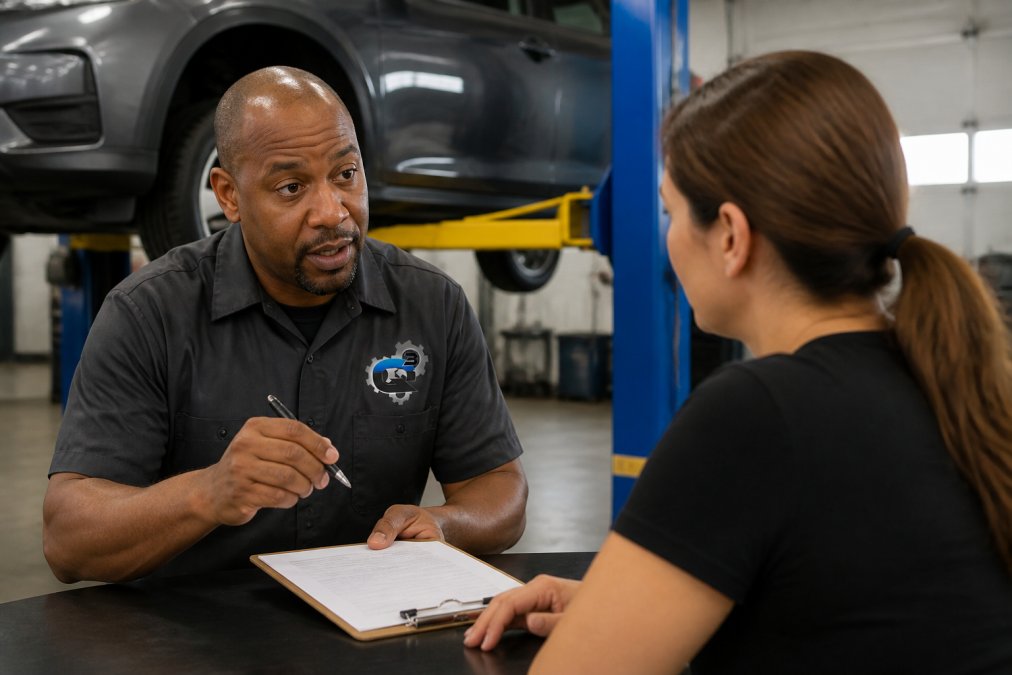
Before authorizing any repair, you need a clear answer: what's actually broken? Many technicians will tell you which component failed but won't explain what that failure means for your vehicle's operation or safety.
Ask your service advisor to walk you through the specific component or system requiring attention. Don't accept vague language like "your transmission needs work", understand which part within that system is failing and why. A qualified technician will show you the affected area, explain the symptoms you've experienced, and connect them to the root cause.
At Q3 Car & Truck Repair, we prioritize this transparency from the first conversation. Our technicians perform a thorough vehicle inspection and explain findings in plain language, not shop jargon.
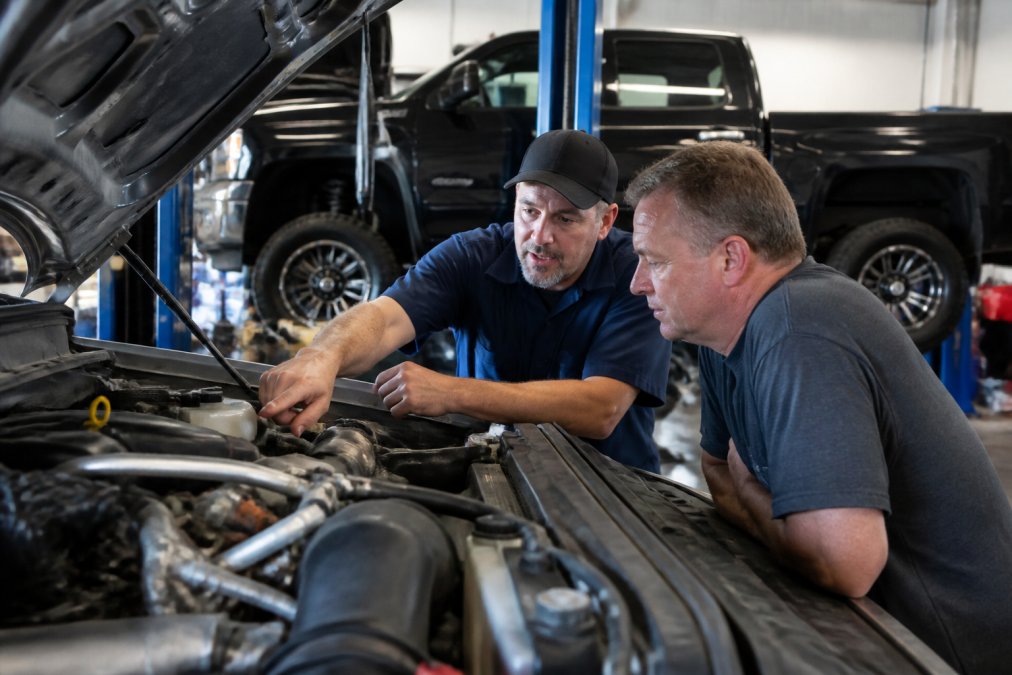
Understanding the difference between what failed and why it failed is key. Sometimes a part breaks from normal wear. Other times, failure is a symptom of a larger problem. For example, brake pad wear is expected maintenance, but premature wear might indicate a stuck caliper or warped rotor, problems that need addressing to prevent recurrence.
Ask these specific questions during inspection:
- What component or system failed?
- What are the visible signs of this failure?
- Did this component fail due to normal wear, or is there an underlying cause?
- Will this failure affect my ability to drive the vehicle safely?
A reputable repair shop will answer each directly. If they won't, that's a red flag.
Is This Repair Urgent or Can It Wait?
Not every repair needs immediate attention. Understanding urgency helps you prioritize your budget and plan ahead.
Safety-critical repairs cannot wait. If your brakes are failing, steering is compromised, or tires are unsafe, do not drive the vehicle until resolved. These repairs directly affect your ability to control the vehicle and avoid accidents. Your service advisor should clearly identify any repairs in this category.
Preventative maintenance and wear items typically have more flexibility. An air filter replacement, oil change, or serpentine belt showing early wear can often be scheduled around your budget and availability.
Ask your technician to categorize identified repairs:
- Which repairs are mandatory for safety?
- Which repairs are recommended to prevent future damage?
- Which repairs are optional maintenance items?
- What happens if I delay the recommended repairs?
Some repairs become more expensive if delayed. A small transmission leak might be inexpensive to fix now, but ignoring it could cause complete transmission failure, turning a minor repair into a major one. A worn serpentine belt might slip occasionally now, but breaking while driving could cause loss of power steering, battery charging failure, and engine overheating.
Q3 Car & Truck Repair's technicians explain not just what needs fixing, but when and why timing matters.
What's the Total Cost Breakdown?
Before authorizing any repair, you deserve a written estimate breaking down total cost clearly. A proper auto repair estimate should itemize every expense so you understand exactly where your money goes.
Your written estimate should include three sections: parts, labor, and additional fees. Parts are the physical components being replaced or repaired. Labor is the technician's time, calculated as hours multiplied by the shop's hourly rate. Additional fees might include diagnostic charges, disposal fees, or shop supplies.
A comprehensive itemized invoice shows specific parts being used, whether OEM (original equipment manufacturer) or aftermarket, and each cost. It shows labor hours estimated for the job and the shop's labor rate. It shows diagnostic fees separately so you understand what you're being charged for inspection and troubleshooting.
Ask for a written estimate before authorizing repairs. This protects you by giving a clear picture of total cost, creating a documented record of what you agreed to, and preventing surprise charges. If the technician discovers additional problems during repair, they should contact you before proceeding and provide an updated estimate.
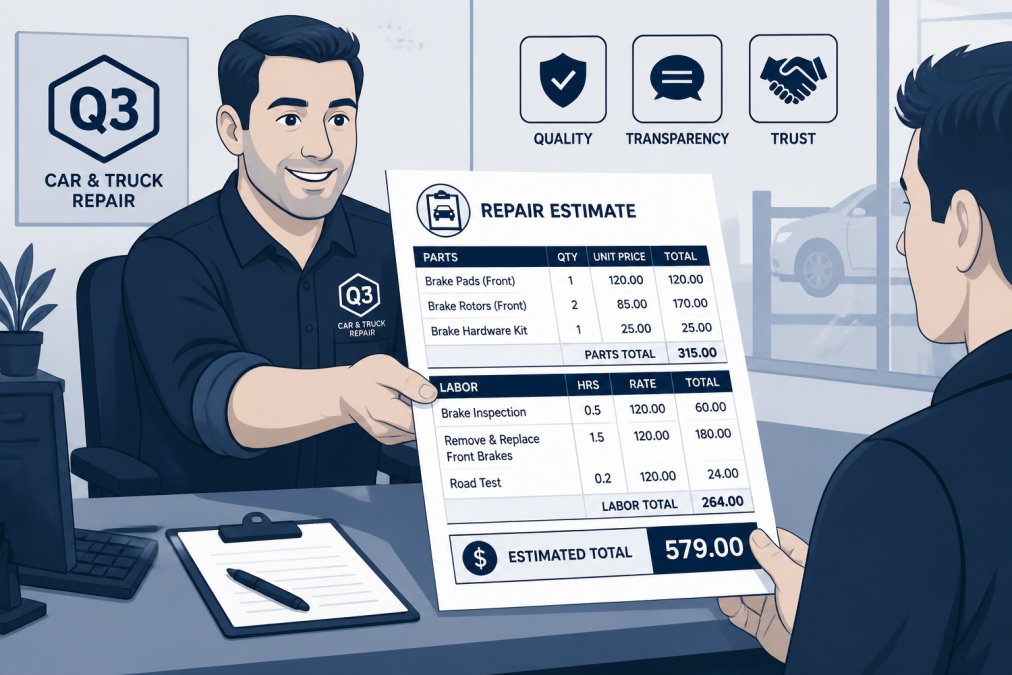
A shop providing detailed, itemized estimates signals they have nothing to hide and are confident in their pricing and work.
Understanding Your Auto Repair Estimate Template
A well-structured auto repair estimate template is your roadmap to understanding what you're paying for. It should follow a standard format enabling comparison shopping and complete visibility into repair costs.
The first section identifies your vehicle: year, make, model, and vehicle identification number (VIN). This ensures the estimate is specific to your car. The estimate date and unique estimate number create a paper trail.
Next comes the itemized parts list. Each part should list description, part number, quantity, unit cost, and total cost. This detail shows whether the shop uses quality parts or cuts corners. OEM parts typically cost more than aftermarket alternatives but are engineered specifically for your vehicle. Aftermarket parts are often cheaper and may be adequate, but you should know which type you're getting.
The labor section breaks down work into specific tasks. Instead of "transmission repair, 8 hours," a detailed estimate lists individual operations: remove transmission, inspect internal components, replace seals, reinstall transmission, test drive. Each task should have estimated time and the shop's labor rate (typically per hour).
Additional charges follow: diagnostic fees, shop supplies, disposal fees, or other costs. Diagnostic fees deserve attention. Many shops charge separately to troubleshoot your vehicle's problem, this is standard and legitimate. However, you should know upfront what that fee is and whether it applies if you authorize the repair.
Finally, the estimate should show total cost and note any warranty coverage. Many shops warranty parts and labor for 12 months or 12,000 miles. This warranty information should appear on the estimate so you know what's covered if something goes wrong after repair.
What Warranty Coverage Applies to Parts and Labor?
Warranty coverage is your safety net after repair is complete. It protects you if a part fails prematurely or if the repair doesn't solve the problem.
Most reputable shops offer warranty on both parts and labor. A typical warranty covers parts for 12 months or 12,000 miles, whichever comes first. Labor warranties are often similar, though some shops extend labor coverage to match parts warranty. This means if something goes wrong within that timeframe due to a defect in the part or installation mistake, the shop will fix it at no charge.
Warranty coverage doesn't apply to normal wear and tear on a replaced part. If you replace brake pads and they wear out again in two years, that's normal, the warranty doesn't cover it. But if brake pads fail after two months due to a defective pad or improper installation, the warranty applies.
Ask your service advisor these specific questions about warranty:
- What parts are covered under warranty?
- What labor is covered under warranty?
- How long is the warranty period?
- What does the warranty cover and what's excluded?
- If something fails under warranty, how do I get it fixed?
Some shops offer extended warranties on certain components, particularly major repairs like transmissions or engines. These might cover 24 months or 24,000 miles instead of the standard 12 months or 12,000 miles. Extended warranties cost more but provide additional peace of mind on expensive repairs.
OEM parts often come with their own manufacturer warranty, which may differ from the shop's warranty. Understanding both layers of coverage matters.
What Are Your Consumer Rights in Auto Repair?
Your rights as a consumer in auto repair are protected by state and federal law. Federal law requires that any estimate you receive be in writing and that you authorize repairs in writing before work begins. A verbal estimate or authorization is not sufficient. If a shop performs work without your written authorization, you may have legal grounds to dispute the charges.
The repair authorization process is your opportunity to control what gets fixed. You authorize specific repairs on the written estimate. If the technician discovers additional problems during repair, they must contact you and get your authorization before proceeding. They cannot simply add charges to your bill without approval.
Many states have additional consumer protection laws specific to auto repair. Some require shops to return replaced parts so you can verify work was done. Some require shops to disclose labor rates upfront and in writing. Some impose strict rules about diagnostic fees and whether they apply toward repair costs.
Maryland, where Q3 Car & Truck Repair operates, has specific regulations governing auto repair shops. Shops must display labor rates prominently, provide written estimates before work begins, and honor those estimates unless you authorize additional work in writing.
Your right to a second opinion is fundamental. You are never obligated to authorize repairs at the first shop you visit. If uncertain about a repair recommendation, get a second opinion from another technician. This is especially important for expensive repairs.
You also have the right to dispute a repair bill if you believe you've been overcharged or if work wasn't done properly. Keep your written estimate, itemized invoice, and receipts. Keep notes about what the technician told you and when. This documentation supports your claim if you need to dispute the bill.
How to Dispute a Car Repair Bill If Something Goes Wrong
Despite your best efforts, disputes sometimes arise. A repair might not fix the problem, you might be charged for unauthorized work, or labor charges might seem excessive.
Start by documenting everything. Return to the shop with your written estimate and itemized invoice. Point out the specific discrepancy or problem. Was the repair supposed to fix a particular symptom, and does that symptom still exist? Were you charged for labor hours that seem excessive?
Many disputes resolve through direct conversation with the shop manager or owner. Approach calmly and factually, explaining the problem clearly and referencing specific line items. If the shop made an error, they may correct it. If you were overcharged, they might adjust the bill.
If the shop won't resolve the dispute, you have options. Check whether your credit card company offers dispute resolution. If you paid by credit card, you can file a chargeback claim with your card issuer.
You can file a complaint with your state's attorney general or consumer protection office. Maryland's Consumer Protection Division handles complaints about unfair or deceptive business practices, including auto repair shops.
You can pursue the dispute through small claims court if the amount is within your state's small claims limit (typically $2,500 to $5,000). Small claims court is designed for consumers and doesn't require an attorney.
Consider hiring an independent mechanic to inspect the work and provide a written assessment. If they find improper work or unreasonable charges, that assessment strengthens your case.
Document your efforts to resolve the dispute. Keep records of every conversation, email, or letter sent to the shop. Keep copies of all repair-related documents. This documentation is essential if you pursue formal complaint or court action.
What Should You Know About Average Auto Repair Diagnostic Fees?
Diagnostic fees are standard in auto repair, but many consumers don't understand what they cover or why they exist. A diagnostic fee is a charge for the technician's time to identify what's wrong with your vehicle, separate from the cost of fixing it.
Modern vehicles are complex. A check engine light might indicate a dozen different problems. The technician connects a diagnostic scanner to your vehicle's computer, reads fault codes, performs additional tests, and narrows down the root cause. This process takes time and skill.
A typical diagnostic fee ranges based on problem complexity and the shop's labor rate. Some shops charge a flat fee for basic diagnostics, perhaps $50 to $100. Others charge hourly, so the diagnostic fee depends on troubleshooting time. Some shops apply the diagnostic fee toward repair costs if you authorize the work. Others keep the fee regardless.
Before authorizing diagnostic work, ask:
- What is your diagnostic fee?
- Does the diagnostic fee apply toward repairs if I authorize them?
- What does the diagnostic process include?
- How long will diagnostics take?
- Will you contact me with results before proceeding to repairs?
A reputable shop will answer these questions clearly and upfront. If one shop recommends a $2,000 transmission overhaul and another says your transmission just needs a fluid change, the second opinion is worth the diagnostic fee.
Modern diagnostic tools have made troubleshooting faster and more accurate. A good technician with proper equipment can often pinpoint a problem in 30 minutes to an hour. If a shop charges for eight hours of diagnostic labor, ask why.
Authorizing repairs without asking the right questions is how consumers end up frustrated and overcharged. You have the right to understand what's being repaired, why it needs repair, what it will cost, and what protections you have if something goes wrong. A trustworthy repair shop, like Q3 Car & Truck Repair, welcomes these questions and answers them thoroughly. They understand that transparency builds trust and informed customers become loyal customers. Take the time to ask before you authorize. Your wallet and your peace of mind depend on it.
Frequently Asked Questions
What should be included in a written auto repair estimate?
A complete written estimate must list each repair item separately with labor hours, parts costs, and total labor charges. It should identify whether parts are OEM (original equipment manufacturer) or aftermarket, include the shop rate (hourly labor cost), specify warranty coverage on parts and labor, and outline any diagnostic fees. The estimate should also note which repairs are safety-critical versus optional, and state whether the shop will contact you before exceeding the estimate amount.
Can a mechanic charge more than the estimate in the US?
Under most state consumer protection laws, mechanics must obtain your written approval before charging more than the original estimate. If unexpected issues arise during repair, the shop must contact you with an updated estimate and get your authorization before proceeding. Charges exceeding the estimate without approval may violate state regulations. Always ask the shop's policy on estimate overages before authorizing work.
What are my rights if a repair shop fails to fix my car?
You have the right to demand the shop rework the repair at no additional cost if the problem persists after the initial repair. You can request a second opinion from another certified technician, file a complaint with your state's consumer protection agency, dispute the charge through your credit card company or bank, and pursue small claims court if the repair cost is below your state's limit. Keep all documentation including the work order, estimate, and invoice.
What's the difference between a diagnostic fee and a repair estimate?
A diagnostic fee covers the technician's time to identify what's wrong with your vehicle, typically ranging based on complexity. Once the diagnosis is complete, the repair estimate quotes the cost to fix the identified problem, breaking down parts and labor separately. Some shops credit the diagnostic fee toward repair costs if you authorize the work; others charge it separately. Always ask upfront whether the diagnostic fee is refundable or credited before authorizing diagnostics.
This article was written using GrandRanker