 ultimate-guide
Expert Truck Repair for Commuters: A 2026 Guide
Table of Contents
- Why Expert Truck Repair Matters for Commuters
- Diesel Truck Maintenance Schedule: Staying Ahead of Breakdowns
- Emergency Roadside Truck Repair Services: When You Need Help Now
- Cost of Heavy Duty Truck Repairs: Understanding Your Investment
- DIY vs. Professional Repair: When to Handle It Yourself
- Commuter-Specific Downtime Management
- What Makes Expert Truck Repair Different
- Conclusion
Last Updated: August 13, 2026
Why Expert Truck Repair Matters for Commuters
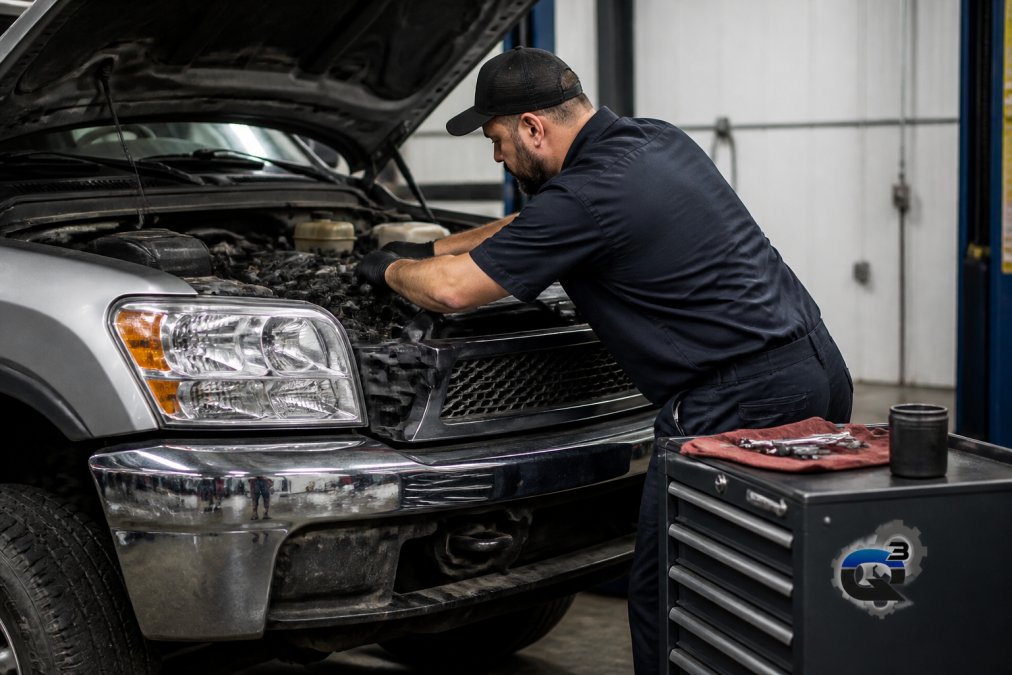
Your truck is your lifeline. Whether you're driving to work, managing deliveries, or hauling equipment, downtime hits your wallet hard. A breakdown isn't just an inconvenience, it's lost income, missed appointments, and the stress of wondering if you're getting overcharged at the repair shop. Expert truck repair for commuters means having a technician who understands your vehicle's specific needs and won't recommend repairs you don't actually need.
At Q3 Car & Truck Repair, we work with commuters every day who've been burned by shops that treat their truck like a cash machine. The difference between a mediocre repair shop and an expert one comes down to honesty, technical skill, and genuine care about your vehicle's long-term health. A real expert doesn't just fix what's broken today, they help you avoid expensive problems tomorrow.
This guide walks you through what expert truck repair actually looks like, how to manage downtime, and how to make smart decisions about when to handle repairs yourself versus when you need professional help. By the end, you'll understand exactly what separates trustworthy shops from the rest.
Diesel Truck Maintenance Schedule: Staying Ahead of Breakdowns
A diesel truck maintenance schedule isn't optional, it's the difference between a truck that runs reliably for 200,000 miles and one that fails when you need it most. Most commuters don't realize that skipping routine maintenance doesn't save money. It guarantees expensive emergency repairs down the line.
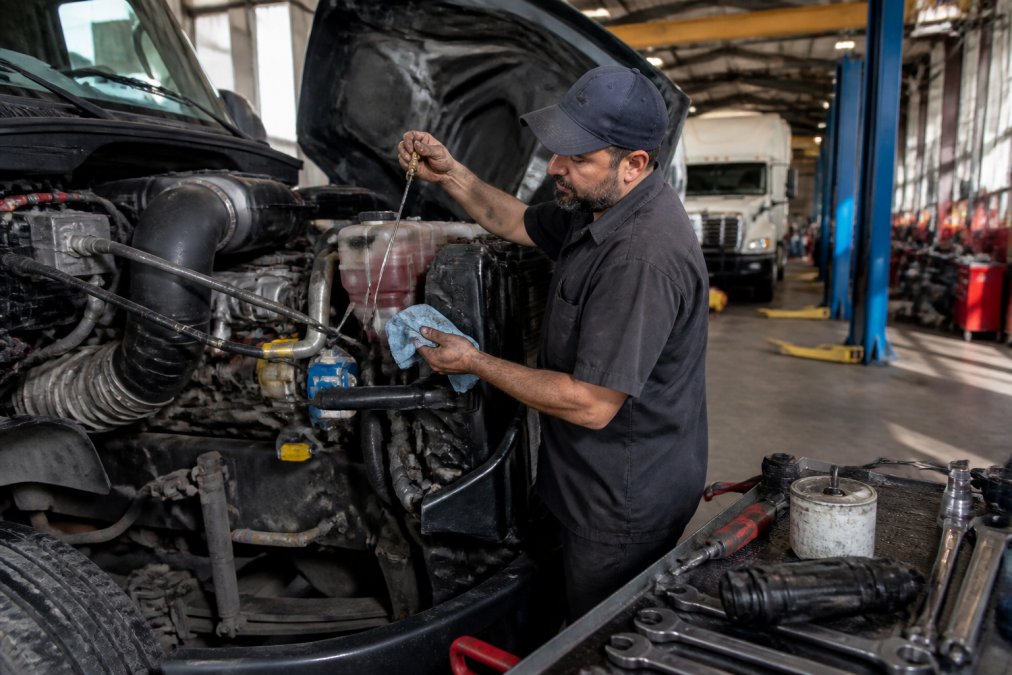
The key to avoiding breakdowns is understanding your truck's service intervals. Diesel engines run hotter and work harder than gasoline engines, which means they need more frequent attention to stay healthy. Your owner's manual specifies intervals, but real-world conditions, towing, dusty environments, frequent idling, often demand more aggressive maintenance schedules.
30-60-90 Mile Service Intervals Explained
Most diesel truck maintenance follows a tiered approach. Every 30,000 miles, you're looking at basic services: oil and filter changes, fluid level checks, and visual inspections. This is the foundation. Skip it, and everything else falls apart.
At 60,000 miles, maintenance gets more involved. Transmission fluid, coolant condition, and brake system inspections become critical. Your drivetrain is under stress, and catching problems early prevents catastrophic failures. A transmission rebuild costs thousands of dollars. Preventative maintenance costs hundreds.
The 90,000-mile service is where major components get serious attention. Fuel system cleaning, emissions system checks, and differential service come into play. Diesel engines accumulate carbon buildup over time, which affects performance and fuel economy. A professional diesel truck maintenance schedule addresses this systematically.
Between these intervals, you should perform monthly checks: tire pressure and condition, fluid levels (oil, coolant, transmission, brake), battery health, and light function. A truck that's checked monthly rarely surprises you with emergency repairs.
Common Maintenance Gaps That Lead to Emergency Repairs
The biggest mistake commuters make is treating maintenance as optional until something breaks. You skip the scheduled service because you're busy or the truck seems fine. Then one morning, your truck won't start, or you hear a grinding noise that shouldn't be there.
DEF fluid, diesel exhaust fluid, is one of the most overlooked maintenance items. Modern diesel trucks require it to meet emissions standards. Running out of DEF doesn't just reduce performance. It triggers a limp-home mode that limits your truck's power and speed. On a commute, that's a disaster. Checking DEF levels should be as routine as checking your fuel gauge.
Cooling system neglect is another silent killer. Diesel engines generate serious heat. If your coolant is degraded or your radiator is clogged with debris, your engine temperature climbs. Overheating can warp cylinder heads, a repair that costs more than most people's monthly car payment. Routine coolant flushes prevent this entirely.
Electrical system problems often go unnoticed until your truck fails to start. Battery terminals corrode, alternators weaken, and wiring harnesses develop faults. These aren't dramatic failures, they're gradual. A professional inspection catches them before you're stranded.
Emergency Roadside Truck Repair Services: When You Need Help Now
Not every problem announces itself during your pre-trip inspection. Sometimes your truck breaks down on the highway, in a parking lot, or miles from the nearest shop. That's when emergency roadside truck repair services become invaluable.
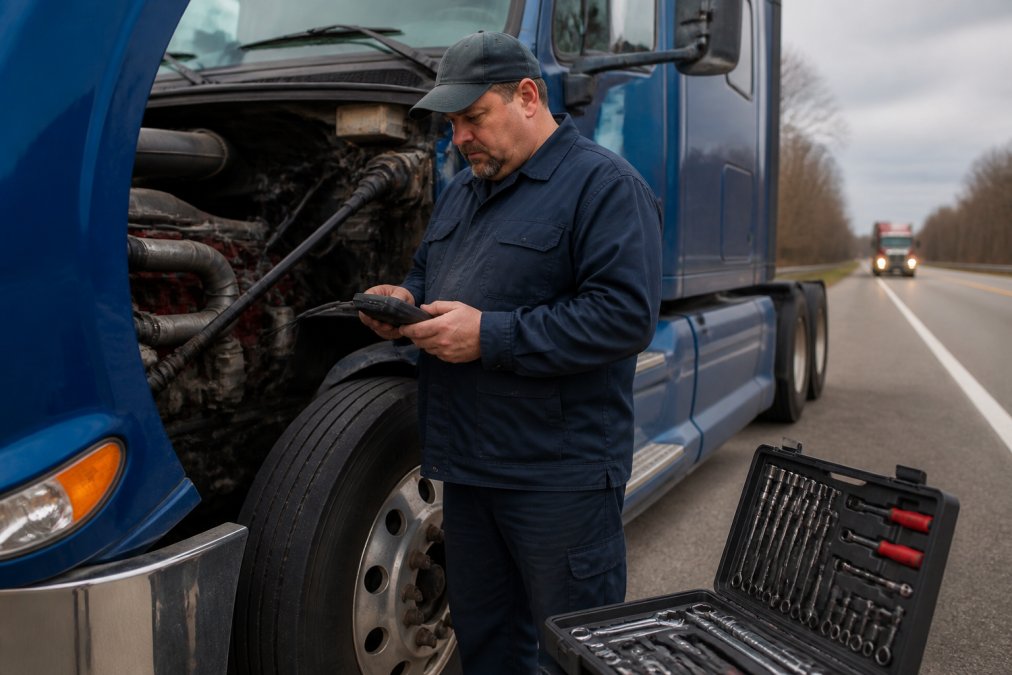
The difference between a roadside service that actually helps and one that leaves you stranded comes down to expertise. A basic towing service gets your truck to a shop. A mobile repair technician diagnoses the problem on the spot and often fixes it right there, saving you hours and keeping you on schedule.
What Qualifies as an Emergency vs. Scheduled Repair
An emergency repair is anything that prevents your truck from running safely or at all. No-start issues, brake failure, overheating, electrical faults that disable the engine, these need immediate attention. A grinding noise in the transmission, a slow coolant leak, or worn brake pads are serious but not emergencies. They can wait for a scheduled appointment.
The practical difference matters. An emergency repair might cost more because it happens outside normal business hours and requires immediate diagnosis. A scheduled repair is planned, allowing the technician to order parts and allocate time efficiently. Both are necessary, but understanding which category your problem falls into helps you manage costs and downtime.
Some problems seem like emergencies but aren't. A warning light on your dashboard is unsettling, but it's not necessarily an emergency. A professional can read the diagnostic code and tell you whether you need to pull over immediately or schedule an appointment. That's the value of expert truck repair, knowing the difference between urgent and critical.
Cost of Heavy Duty Truck Repairs: Understanding Your Investment
Heavy-duty truck repairs aren't cheap. A transmission service can run several hundred dollars. Engine work climbs into the thousands. But the cost of not repairing your truck is often worse, lost income, towing fees, rental vehicles, and the stress of being without your primary tool.
The real question isn't "How much does this repair cost?" It's "How much does this repair cost compared to the cost of not doing it?" A $500 fuel system cleaning prevents a $3,000 engine failure. A $200 coolant flush prevents a $5,000 cylinder head repair. The math is straightforward once you see it.
Many commuters hesitate to authorize repairs because they're worried about being overcharged. That's a legitimate concern. The solution isn't to avoid repairs, it's to work with a shop that explains what's wrong, why it matters, and what the fix actually costs. Q3 Car & Truck Repair prioritizes transparency. You get a straightforward estimate before work begins, and if something unexpected comes up, you're informed immediately.
Why Preventative Maintenance Saves Money Long-Term
Preventative maintenance is the cheapest insurance you can buy. A diesel truck maintenance schedule costs money upfront, but it prevents emergencies that cost exponentially more. This isn't theoretical, it's how professional fleet operators manage their vehicles.
Consider fuel system health. Diesel fuel can accumulate water and contaminants over time. A fuel system cleaning performed every 50,000 miles costs a few hundred dollars. Ignoring this leads to injector failure, which can cost $1,500 or more to repair. The preventative approach saves money and keeps your truck running.
Transmission fluid degradation is another example. Your transmission fluid breaks down under heat and stress. Checking it regularly and replacing it on schedule prevents transmission failure. Transmission rebuilds or replacements run into the thousands. Preventative maintenance prevents this catastrophic expense.
The cost-benefit analysis is simple: spend money on scheduled maintenance now, or spend significantly more on emergency repairs later. Commuters who embrace preventative maintenance schedules enjoy reliable trucks, lower total repair costs, and peace of mind. Those who skip it face unexpected breakdowns, higher repair bills, and constant stress about whether their truck will make it through the day.
DIY vs. Professional Repair: When to Handle It Yourself
Not every truck repair requires a professional shop. Some maintenance tasks are straightforward enough for a commuter to handle. Others demand specialized tools, training, and certification. Knowing the difference saves you money and prevents costly mistakes.
Oil and filter changes are the obvious DIY task. You need basic tools, the right oil type, and a safe place to work. If you're comfortable getting under your truck and following the process, you can save money on routine maintenance. Same with air filter replacement, cabin filter changes, and fluid level checks.
Brake work is where DIY gets risky. Brakes are safety-critical. A mistake doesn't just cost money, it puts you and others at risk. Unless you have specific training and the right tools, brake service belongs in a professional shop. Electrical diagnostics are similar. Modern trucks have complex electrical systems tied to engine management computers. Misdiagnosing an electrical fault can create new problems. An expert uses diagnostic equipment to identify the real issue.
Transmission and drivetrain work is firmly in professional territory. These systems are complex, require specialized tools, and demand expertise. A mistake here is expensive and dangerous. Emissions system repairs, fuel system work, and engine diagnostics also require professional-grade equipment and training.
The honest answer: if you're asking whether you should do it yourself, you probably shouldn't. A professional catches problems you'd miss, uses the right tools, and stands behind the work with a warranty. For commuters, the cost of professional service is insurance against downtime and mistakes.
Commuter-Specific Downtime Management
When your truck is in the shop, your life stops. If your truck is your primary income source, every hour in the shop is an hour you're not working. That's why managing downtime strategically matters.
The first step is communication. Before you drop your truck off, ask the shop how long the repair will take. Get a realistic timeline. Ask if they have loaner vehicles available. Some shops offer this service, it's a huge convenience for commuters. If not, plan your transportation in advance. Arrange a ride, rent a vehicle, or schedule the repair when you have backup transportation.
For routine maintenance, schedule appointments during slow periods. Early morning appointments mean you might get your truck back the same day. Scheduling a major repair on a Friday gives the shop the weekend to work if needed, and you have time to arrange alternative transportation.
Keep detailed records of all maintenance and repairs. This documentation helps you track patterns, plan future service, and prove to potential buyers that your truck has been well-maintained. It also helps a new technician understand your truck's history if you switch shops.
What Makes Expert Truck Repair Different
Expert truck repair isn't about fancy equipment or expensive facilities. It's about technicians who understand trucks, communicate clearly, and genuinely care about solving your problem rather than maximizing the repair bill.
An expert listens to your description of the problem and asks clarifying questions. They understand that you know your truck, you drive it every day. They use that information combined with diagnostic equipment to identify the real issue. They explain what they found in language you understand, not technical jargon designed to confuse you.
An expert also knows when a repair isn't necessary. They might say, "Your brake pads are at 40% wear. They're fine for another 15,000 miles. I recommend monitoring them, and we'll check again at your next service." That's the opposite of shops that recommend every possible service to inflate the bill.
Q3 Car & Truck Repair builds relationships with commuters based on honesty and transparency. You get straightforward estimates, clear explanations of what's wrong and why it matters, and genuine care for your vehicle's health. That's what expert truck repair actually means, a shop that treats your truck like it matters because it does.
The technicians at Q3 Car & Truck Repair have years of training and hands-on experience with diesel engines, transmissions, electrical systems, and the full range of truck repairs. They understand the specific demands of commuter vehicles, reliability, efficiency, and durability under real-world conditions. That expertise is what separates a trustworthy shop from one that sees your truck as a transaction.
Expert truck repair for commuters isn't a luxury, it's a necessity. Your truck is too important to your livelihood to trust it to anyone. Q3 Car & Truck Repair understands that reality. We've built our reputation on transparent communication, skilled technicians, and a genuine commitment to keeping your truck running reliably. When you're ready to experience the difference that expert truck repair makes, [Request Appointment] with our team and let us show you what honest, professional service actually looks like.
Frequently Asked Questions
What are the most common signs that your truck needs professional repair?
Watch for warning lights on your dashboard, unusual noises (grinding, knocking, or squealing), difficulty starting, fluid leaks under the vehicle, reduced fuel economy, or vibration while driving. For diesel trucks specifically, rough idling, white or black smoke from the exhaust, and DEF system warnings require immediate attention. Don't ignore these signs, addressing them early prevents costly emergency repairs and keeps your commute reliable.
What is included in a standard 30-60-90 mile maintenance schedule?
A 30-60-90 maintenance schedule breaks service into intervals: at 30,000 miles, focus on fluid checks and filter replacements; at 60,000 miles, inspect transmission and drivetrain components; at 90,000 miles, address more intensive items like spark plugs and cooling system service. The exact services depend on your truck's make and model. Heavy-duty and diesel trucks often need more frequent intervals due to their demanding workload, so consult your manufacturer's guidelines and a certified technician.
How can commuters minimize downtime during truck repairs?
Schedule preventative maintenance during planned downtime rather than waiting for breakdowns. Choose a repair shop that offers weekend or early-morning appointments to fit your work schedule. Ask about loaner vehicles or shuttle services while your truck is being serviced. For fleet managers, stagger vehicle maintenance so not all trucks are down simultaneously. Emergency roadside truck repair services can also minimize lost time by diagnosing issues on-site and arranging faster repairs.
What should you look for when choosing a certified diesel mechanic?
Verify certifications (ASE, diesel-specific training, manufacturer credentials), ask about experience with your truck's model, and request references from other fleet or commercial customers. A trustworthy mechanic provides transparent estimates, explains repairs clearly, and doesn't pressure you into unnecessary work. Check reviews and ask directly how they handle diagnostics, good shops use proper diagnostic tools rather than guessing. Experience with emissions systems, DEF fluid handling, and heavy-duty drivetrain work is essential for diesel trucks.
This article was written using GrandRanker