 listicle
Trustworthy Mechanic for Fleet Service: 2026 Guide
Table of Contents
- What Makes a Trustworthy Mechanic for Fleet Service
- ASE Certified Fleet Mechanic Credentials and Training
- Fleet Vehicle Preventative Maintenance Schedule and Best Practices
- Fleet Maintenance Checklist for Ongoing Vehicle Health
- Diagnostic Equipment and Vehicle Safety Inspection Capabilities
- Fleet Downtime Cost Analysis and Repair Turnaround
- Vetting Checklist for Fleet Managers: Questions to Ask
- Why Q3 Car & Truck Repair Stands Out for Fleet Service
Last Updated: August 10, 2026
What Makes a Trustworthy Mechanic for Fleet Service
Finding a trustworthy mechanic for fleet service protects your operation's bottom line. When your work trucks are down, revenue stops. A trustworthy mechanic for fleet service combines three critical elements: radical transparency in communication, proven experience with commercial vehicles at scale, and a verifiable track record from other fleet operators.
At Q3 Car & Truck Repair, we understand that fleet managers operate under constant pressure. You need a partner who won't pad the invoice, who explains what's actually wrong before fixing it, and who delivers vehicles back on schedule.
Transparency in Estimates and Communication
The biggest red flag in any repair shop is vague estimates. A trustworthy mechanic provides a detailed breakdown of what's wrong, why it needs fixing, and exactly what it will cost before touching your vehicle.
Get a written estimate listing specific parts, labor hours, and diagnostics separately. A good shop also explains the difference between urgent repairs and work that can wait, and keeps you updated as work progresses. If they discover something unexpected, they contact you immediately with options and pricing before proceeding.
Proven Track Record with Commercial Vehicles
Commercial vehicles demand different expertise than passenger cars. A truck running 60,000 miles annually experiences wear patterns a typical sedan won't see in five years.
A trustworthy mechanic for fleet service has documented experience with the specific makes and models in your fleet. Ask directly: How many commercial fleets do you currently service? What's the size of their operations? Can you speak with a fleet manager who's been with you for at least two years? Real experience shows in their shop setup, well-stocked parts inventory, diagnostic equipment rated for your engine types, and fleet-specific scheduling.
ASE Certified Fleet Mechanic Credentials and Training
ASE certification matters. It's not a guarantee of perfection, but it's a baseline standard that separates trained technicians from people who learned on YouTube.
Why ASE Certification Matters for Your Fleet
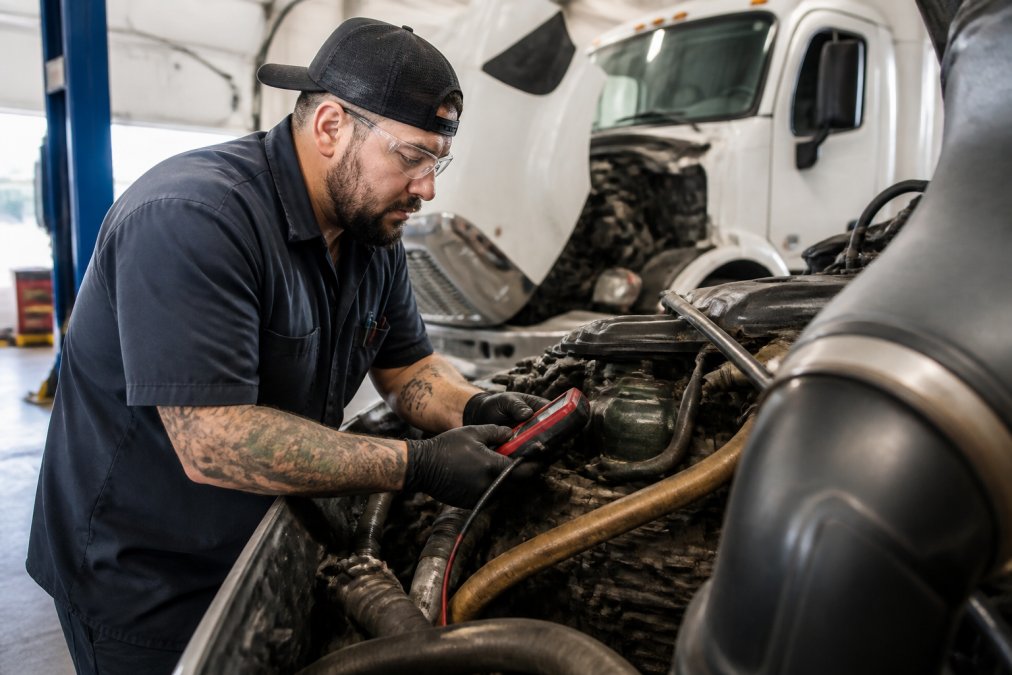
An ASE certified fleet mechanic has passed rigorous exams covering engine diagnostics, transmission repair, and brake systems. For commercial vehicles, the relevant certifications are Medium/Heavy Truck (T2), Diesel Engines (T4), and Drivetrain (T5).
ASE certification requires both classroom study and hands-on experience, typically three years of documented work before you're eligible to test. Most importantly for your fleet: ASE certified technicians are trained in diagnostic methodology. They don't guess. They follow a structured process to identify root causes, not just symptoms.
Beyond ASE: Additional Fleet Qualifications
ASE is the foundation, but a truly qualified fleet mechanic has additional credentials specific to your vehicles. If you run diesel trucks, look for technicians certified in diesel engine repair. Some shops pursue manufacturer certifications from Cummins, Duramax, Powerstroke, or Allison, which provide access to proprietary diagnostic software and repair procedures.
Don't overlook DOT compliance training either. A trustworthy mechanic for fleet service understands federal Department of Transportation regulations for commercial vehicles and how to perform inspections that satisfy regulatory requirements.
Fleet Vehicle Preventative Maintenance Schedule and Best Practices
Preventative maintenance isn't an expense; it's insurance. A vehicle that receives scheduled oil changes, filter replacements, and fluid checks will run longer and cost less to repair than one that's neglected until something breaks.
Standard Service Intervals for Work Trucks
Work trucks typically follow these service intervals, though your specific schedule depends on operating conditions and manufacturer recommendations:
- Oil and filter changes: Every 5,000 to 7,500 miles or quarterly
- Fluid inspections: Every service (transmission, coolant, brake fluid, power steering)
- Tire rotation and pressure check: Every 7,500 miles
- Air filter replacement: Every 15,000 to 30,000 miles
- Transmission fluid and filter: Every 30,000 to 60,000 miles for heavy-duty vehicles
- Coolant system flush: Every 50,000 to 100,000 miles
- Brake inspection: Every 15,000 miles
- Battery test: Annually
Severe-duty use, towing, idling, dusty environments, stop-and-go delivery routes, shortens these intervals. A trustworthy mechanic adjusts your schedule based on actual operating conditions.
How Preventative Maintenance Reduces Downtime
Preventative maintenance catches wear before it becomes failure. A technician inspecting your brakes finds pad wear at 50% thickness and schedules replacement during planned downtime. Fleet downtime cost analysis shows that most fleet operations see a 20% to 30% reduction in emergency repairs after implementing a disciplined preventative maintenance program.
Fleet Maintenance Checklist for Ongoing Vehicle Health
A structured maintenance checklist ensures nothing gets missed. This isn't just paperwork; it's your defense against catastrophic failures and your proof of due diligence if regulatory issues arise.
Monthly and Quarterly Inspection Points
Fleet managers should conduct or require their mechanics to conduct these inspections:
Monthly (or every 500 miles, whichever comes first):
- Visual fluid level checks (oil, coolant, transmission, power steering, brake)
- Tire pressure and condition (cracks, bulges, tread depth)
- Lights (headlights, brake lights, turn signals, warning indicators)
- Wipers and washer fluid
- Battery terminals for corrosion
Quarterly (or every 3,000 miles):
- Brake pad thickness and rotor condition
- Hose inspection (radiator, brake, power steering, fuel)
- Belt condition and tension
- Air filter visual inspection
- Suspension components for leaks or wear
- Undercarriage inspection for rust or damage
A trustworthy mechanic for fleet service provides these inspections as part of routine service visits and documents findings before they become emergencies.

Documentation and Service Logs
Every service performed should be documented with date, mileage, work completed, parts replaced, and technician name. This creates a complete history of your vehicle's maintenance and tracks service intervals so you know when the next maintenance is due. Digital service logs are better than paper; they're searchable, harder to lose, and easier to share across your team.
Diagnostic Equipment and Vehicle Safety Inspection Capabilities
Modern vehicles are computers on wheels. A mechanic working without proper diagnostic equipment is working blind.
Engine Diagnostics and Fault Code Analysis
When your check engine light comes on, that's your vehicle's computer telling you something is wrong. A trustworthy mechanic for fleet service has diagnostic scanners rated for your vehicle types. Real diagnostic capability goes beyond reading codes, a technician uses live data streaming to monitor sensor readings, fuel pressure, and injection timing while the engine runs, testing components individually to isolate failures.
DOT Compliance and Safety Inspections
Commercial vehicles are subject to Department of Transportation regulations. Your fleet must pass annual inspections covering brake condition, lighting, tire safety, coupling devices, and structural integrity. A trustworthy mechanic for fleet service understands these requirements and performs inspections that satisfy regulatory standards.
Fleet Downtime Cost Analysis and Repair Turnaround
Speed matters when your vehicles are out of service. Understanding downtime costs helps you make smarter decisions about repair priorities and shop selection.
Why Repair Speed Matters for Your Bottom Line
Fleet downtime cost is straightforward to calculate: daily revenue per vehicle multiplied by the number of days out of service. If your truck generates $300 daily and is down for three days, that's $900 in lost revenue. This math explains why a shop's repair turnaround matters. A mechanic who can diagnose and repair your transmission in one day saves you far more than the labor cost difference between shops.
Emergency Roadside Assistance and Mobile Repair
Breakdowns happen. A trustworthy mechanic for fleet service offers roadside assistance or knows repair providers who do. Even if your primary mechanic doesn't provide mobile service, they should have relationships with roadside providers who respond quickly.
Vetting Checklist for Fleet Managers: Questions to Ask
Before committing your fleet to a new mechanic, ask these questions. The answers reveal whether you're dealing with a trustworthy operation or someone cutting corners.
Evaluating Service Reliability and Warranty Coverage
Ask these specific questions:
- How many commercial fleets do you currently service?
- What's your average repair turnaround time for fleet work?
- Do you provide written estimates before work begins?
- What warranty do you provide on parts and labor?
- If a repair fails within warranty, how do you handle it?
- Can I speak with fleet managers currently using your shop?
- What happens if you discover additional work needed during a repair?
- How do you handle emergency repairs outside business hours?
- Do you have ASE certified technicians? Which certifications do they hold?
- What's your parts sourcing strategy?
| Question | What You're Looking For | Red Flag |
|---|---|---|
| Fleet customers currently served | Specific number (5+) shows experience | "We serve all types of customers" |
| Repair turnaround | 1-3 days typical for standard work | "It depends" with no timeline |
| Estimate detail | Written, itemized, parts and labor separated | Verbal estimates or vague descriptions |
| Warranty coverage | 30+ days parts, 90+ days labor | No warranty or "as-is" repairs |
| References | Willing to provide 3+ fleet manager contacts | Refuses or offers only generic reviews |
| Unexpected work protocol | Always contacts customer first | Proceeds without authorization |
| Emergency availability | 24/7 or clear after-hours protocol | No emergency support |
| ASE certification | Technicians hold relevant certifications | No certifications or unwilling to discuss |
| Parts sourcing | Stocks common parts, quick ordering | Everything special-ordered, long waits |
Assessing Integration with Fleet Management Software
Modern fleet operations use software to track maintenance schedules and manage work orders. Ask whether your mechanic can accept work orders through your fleet management software, provide real-time status updates, and integrate maintenance history into your fleet records.
Why Q3 Car & Truck Repair Stands Out for Fleet Service
Q3 Car & Truck Repair has built its reputation on the principles that matter most to fleet operators: transparency, reliability, and genuine expertise with commercial vehicles.
Our team of highly skilled technicians brings years of training and hands-on experience working with work trucks and commercial vehicles. We prioritize your peace of mind by providing straightforward estimates before any work begins. We understand that your fleet's downtime is our responsibility and schedule fleet work to minimize disruption to your operation. For fleet managers in the Capitol Heights and Waldorf areas managing multiple work trucks, Q3 Car & Truck Repair is the trustworthy mechanic for fleet service you need.
Frequently Asked Questions
How do I know if a trustworthy mechanic for fleet service is honest about repairs?
An honest mechanic explains why each repair is necessary before proceeding, provides written estimates upfront, and walks you through diagnostic findings. They should never pressure you into unnecessary work. Ask for references from other fleet managers and request a detailed breakdown of labor and parts costs. A trustworthy mechanic welcomes questions and takes time to educate you about your vehicles' condition.
What certifications should a fleet mechanic hold?
Look for ASE (Automotive Service Excellence) certification, which demonstrates expertise in specific vehicle systems. For commercial fleets, additional qualifications matter: heavy-duty truck specialization, DOT inspection authorization, and diesel engine certification if your fleet runs diesel vehicles. Verify certifications directly through the ASE website or ask to see current credentials. Ongoing training in telematics and modern diagnostic equipment is also important for managing fleet downtime effectively.
How often should fleet vehicles undergo preventative maintenance?
Most work trucks follow a preventative maintenance schedule based on hours or miles: oil changes typically every 5,000-7,500 miles, fluid checks monthly, and comprehensive inspections quarterly or semi-annually. Heavy-duty vehicles may have different intervals. A trustworthy mechanic will establish a fleet vehicle preventative maintenance schedule tailored to your vehicle types, usage patterns, and manufacturer recommendations. Regular preventative maintenance reduces unexpected breakdowns and fleet downtime costs significantly.
What should I look for when hiring a fleet maintenance provider?
Evaluate their experience with commercial vehicles, certified technician staff, transparent pricing, and ability to handle your fleet size. Ask about their repair turnaround time, emergency roadside assistance availability, and whether they integrate with fleet management software. Request references from other fleet managers in your area. A vetting checklist should include warranty coverage, service area coverage, and their process for communicating repairs before work begins. Honest communication and reliability matter more than brand recognition.
How can fleet management software help reduce repair costs?
Fleet management software tracks service intervals, generates maintenance reminders, and logs all repairs, preventing missed preventative maintenance that leads to costly emergency repairs. Platforms like Fleetio and Samsara provide diagnostic data that helps mechanics identify issues early before they cause fleet downtime. Integration between your mechanic and fleet software ensures consistent communication, reduces duplicate work, and gives you visibility into which vehicles need attention. This proactive approach cuts unnecessary repairs and extends vehicle longevity.
Fleet reliability depends on finding the right mechanic. A trustworthy mechanic for fleet service combines ASE certification, transparent communication, proven experience with commercial vehicles, and a commitment to minimizing your downtime. Q3 Car & Truck Repair delivers on all these fronts. Request an appointment today and experience the difference that genuine expertise and transparent service make for your fleet operation.
This article was written using GrandRanker