 listicle
Signs Your Car Needs Preventative Maintenance
Table of Contents
- Dashboard Warning Lights and What They Mean
- Engine Noises That Signal Maintenance Issues
- Fluid Level Checks and What to Monitor
- How to Check Brake Health and Performance
- Tire Pressure, Tread Depth, and Wear Patterns
- Building Your Car Maintenance Checklist
- Creating a Preventative Maintenance Schedule
- Why Preventative Maintenance Beats Emergency Repairs
Last Updated: August 27, 2026
Dashboard Warning Lights and What They Mean
Your dashboard lights flag issues before they become expensive problems. The check engine light illuminates when your vehicle's onboard diagnostic system detects an issue with the engine, emissions system, or transmission. This could signal a loose gas cap or something more serious. Get it scanned with a diagnostic tool like FIXD's OBD2 scanner app, which translates engine codes into plain language.
The oil pressure warning light looks like an old-fashioned oil can. When it comes on, your engine isn't receiving adequate oil pressure. Check your oil immediately. If the level is fine, you need professional attention right away, driving on low pressure will destroy your engine.
Temperature warnings indicate your engine is overheating. Pull over safely, turn off the engine, and let it cool. Don't open the radiator cap while hot. Once cooled, check your coolant level and look for leaks underneath your vehicle.
The battery light means your charging system isn't working properly. Your alternator may be failing, or there's an issue with the battery itself. The brake warning light indicates low brake fluid or brake pad wear. Since your brakes are safety-critical, address this immediately.
Engine Noises That Signal Maintenance Issues
Strange sounds from under the hood are your early warning system. Learning to distinguish between normal engine operation and concerning noises can save you thousands in repair costs.
Squealing typically points to a serpentine belt issue. This rubber belt drives your alternator, power steering pump, and air conditioning compressor. When it wears or cracks, it squeals, especially when you first start the engine or accelerate. A worn serpentine belt can snap without warning. If you hear squealing, have the belt inspected.
Grinding sounds during braking mean your brake pads are worn down to the metal backing. This damages your rotors and reduces stopping power. Get new pads installed immediately.
Knocking or pinging under acceleration often indicates low-octane fuel or carbon buildup in the combustion chamber. Try switching to premium fuel for a tank. If it persists, you may need fuel system cleaning.
Clunking sounds when turning or going over bumps suggest suspension problems. Your struts, shocks, or control arm bushings may be worn. Have a technician inspect the suspension system.
Rattling under the hood can indicate loose heat shields, a failing catalytic converter, or engine knock. A professional inspection pinpoints the cause.
Fluid Level Checks and What to Monitor
Your vehicle relies on multiple fluids to operate safely. Regular fluid checks catch problems before they cascade into larger failures.
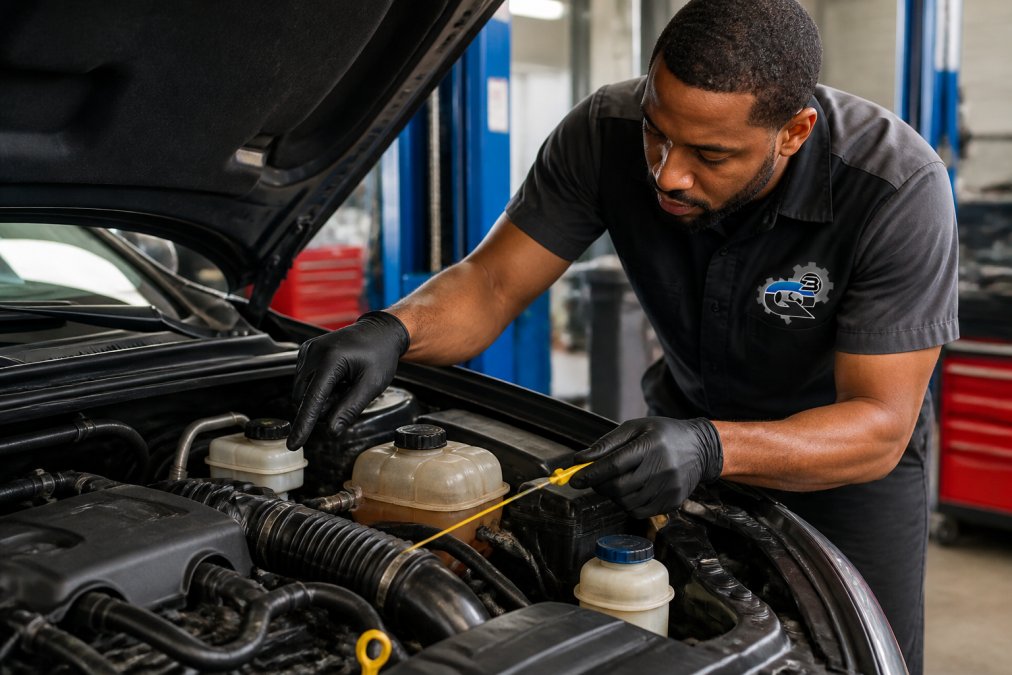
Engine oil lubricates internal components and reduces friction. Check your oil level monthly using the dipstick. The level should be between the minimum and maximum marks. Low oil forces your engine to work harder and generates excessive heat, shortening engine life. If you're losing oil between changes, you likely have a leak.
Coolant regulates engine temperature and prevents freezing in winter. Check coolant level when the engine is cold, never when hot. Low coolant indicates a leak or cooling system malfunction. Address leaks quickly to avoid engine overheating.
Transmission fluid keeps your transmission cool and provides hydraulic pressure for gear changes. Transmission fluid should be bright red and smell slightly sweet. If it's dark brown or smells burnt, your transmission is overheating or the fluid is degraded. Transmission repairs are expensive, so maintaining proper fluid levels is critical.
Power steering fluid allows your steering system to operate smoothly. Low power steering fluid makes steering difficult and can damage the pump. If you're constantly topping it off, you have a leak that needs professional diagnosis.
Brake fluid is hygroscopic, it absorbs moisture from the air. Over time, this moisture lowers the boiling point of the fluid, reducing braking effectiveness. Most manufacturers recommend flushing brake fluid every two years.
How to Check Brake Health and Performance
Your brakes are the most critical safety system on your vehicle. Brake maintenance is essential for protecting you, your passengers, and others on the road.
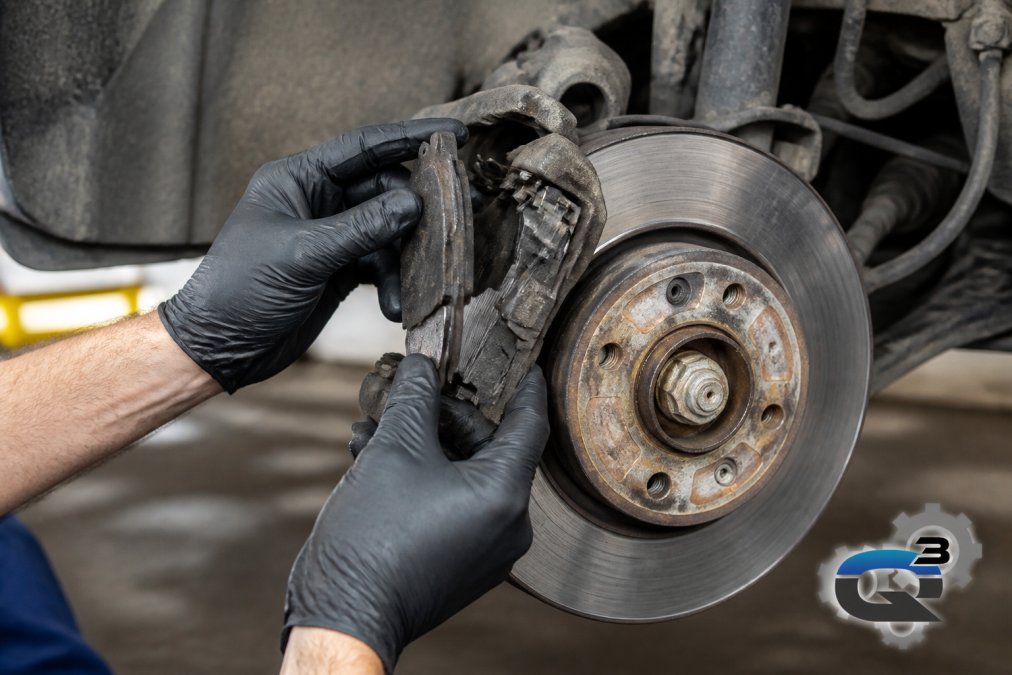
Brake pads are wear items designed to be replaced. Most vehicles have brake pad wear indicators, small metal tabs that contact the rotor when pads are worn down. When you hear squealing or squeaking during braking, your wear indicators are touching the rotor. This signals you to replace the pads soon. Continuing to drive on worn pads damages the rotors, which are more expensive to replace.
To visually inspect brake pads, look through the wheel spokes at the pad thickness. Pads should be at least a quarter-inch thick. If they're thinner, schedule replacement. Uneven wear sometimes indicates a sticking caliper or suspension alignment issues.
Brake fluid should be clear or slightly amber. Dark brown or black fluid indicates contamination or overheating, reducing braking performance. Fluid flushing should happen every two years.
Your brakes should feel firm and responsive. Soft or spongy pedal feel suggests air in the brake lines or low fluid level. A pedal that goes to the floor without stopping the vehicle is a serious safety issue. A pulsating pedal during braking suggests warped rotors, which need replacement.
Squealing can indicate wear indicators or glazed pads. Grinding means metal-on-metal contact and requires immediate attention. Creaking sounds sometimes indicate caliper hardware issues.
Tire Pressure, Tread Depth, and Wear Patterns
Your tires are your only contact with the road. Tire maintenance directly affects safety, fuel efficiency, and tire longevity. Checking tires monthly takes five minutes and prevents blowouts.
Tire pressure should match the specification in your owner's manual or on the driver's door jamb, not the maximum pressure listed on the tire sidewall. Underinflated tires generate excess heat, wear faster, and reduce fuel efficiency. Overinflated tires wear unevenly. Check pressure when tires are cold. Temperature changes affect pressure: tires lose about one pound per square inch for every ten-degree temperature drop.
Tire tread depth determines your grip in wet conditions. The penny test is quick: insert a penny into the tread with Lincoln's head upside down. If you can see the top of Lincoln's head, your tread is too worn and you need new tires. Tread depth below 4/32 inch significantly reduces wet-weather traction and increases hydroplaning risk.
Uneven wear patterns signal alignment or suspension problems. If the inside or outside edges wear faster than the center, your wheels are misaligned. If one tire wears faster than others, you may have a suspension issue or a tire pressure problem on that wheel. Addressing alignment early prevents accelerated tire wear.
Bulges or cuts in the sidewall mean the tire is unsafe and needs immediate replacement. Don't attempt to repair sidewall damage.
Building Your Car Maintenance Checklist
A maintenance checklist transforms vague intentions into actionable tasks. Start with your vehicle's manufacturer maintenance schedule in your owner's manual. This specifies service intervals based on mileage and time.
Your checklist should include items you can inspect yourself monthly: oil level, coolant level, brake fluid level, tire pressure, and tire tread depth. These take fifteen minutes total and catch problems early.
Seasonal items belong on your checklist too. Before winter, verify your battery is in good condition and check that your heating system works. Before summer, test your air conditioning and check hose condition.
Professional services should be scheduled according to your manufacturer's interval. Oil changes typically happen every 5,000 to 7,500 miles or annually. Tire rotation every 6,000 to 8,000 miles promotes even wear. Brake inspection every 12,000 miles catches pad wear early.
Create a simple table or use an app to track what's been done and when the next service is due. Tools like CARFAX Car Care provide free maintenance reminders and automatically track your vehicle's service history.
| Maintenance Task | Interval | Last Completed | Next Due |
|---|---|---|---|
| Oil and filter change | 5,000-7,500 miles | , | , |
| Tire rotation | 6,000-8,000 miles | , | , |
| Brake inspection | 12,000 miles | , | , |
| Fluid level checks | Monthly | , | , |
| Tire pressure check | Monthly | , | , |
| Battery test | Annually | , | , |
Creating a Preventative Maintenance Schedule
Preventative maintenance follows a predictable schedule tied to mileage and time. Your first step is locating your vehicle's maintenance schedule in your owner's manual or from your manufacturer's website. Follow this schedule religiously.
Mileage-based intervals are the foundation of preventative maintenance. Oil changes happen early and often because oil degrades with use. Transmission fluid service happens at higher mileage because transmissions accumulate wear slowly. Coolant flushing happens at 30,000 or 60,000 miles because coolant loses its protective properties over time.
Time-based intervals matter too. Even if you drive infrequently, your vehicle needs annual service. Brake fluid absorbs moisture from the air whether you drive or not. Coolant oxidizes over time. Batteries lose capacity with age.
Climate affects your schedule. Vehicles in harsh climates need more frequent maintenance. Cold climates stress batteries and require winter-specific checks. Hot climates stress cooling systems. Salty environments accelerate corrosion. Dusty environments require more frequent air filter changes.
Document your schedule in writing or use a digital tool. Drivvo's fleet management app lets you create custom maintenance schedules and sends reminders when services are due.
Why Preventative Maintenance Beats Emergency Repairs
The difference between preventative maintenance and reactive repair is the difference between spending a few hundred dollars and spending thousands. A worn serpentine belt costs $150 to replace. A serpentine belt that snaps and damages your alternator costs $800 to repair. An oil change costs $40. Engine damage from low oil costs $5,000 or more. A brake pad replacement costs $300. Brake rotor replacement from worn pads costs $1,200.
Emergency repairs happen at the worst times. Your transmission fails on a Friday night, and you're stuck waiting for Monday. Your brakes fail, and you're in danger. Preventative maintenance eliminates these scenarios by catching issues before they become catastrophic.
If your vehicle is your primary transportation, being without it affects your work, appointments, and daily life. Emergency repairs often require days in the shop. Preventative maintenance is scheduled at your convenience and takes hours, not days.
Preventative maintenance also maintains your vehicle's resale value. Buyers want documentation that your vehicle was maintained properly. A complete service history proves you took care of the vehicle. Vehicles with gaps in maintenance records sell for less.
Your vehicle is one of your largest assets. Protecting that investment through preventative maintenance is the most cost-effective decision you can make. Start today by checking your fluid levels, tire pressure, and brake condition. Schedule your next service according to your manufacturer's interval.
Preventative maintenance isn't complicated, but it requires consistency. Small problems left unchecked become expensive failures. At Q3 Car & Truck Repair, our highly skilled technicians help you stay ahead of maintenance needs with transparent communication and straightforward estimates. We'll walk you through why each service matters and help you build a maintenance plan that keeps your vehicle reliable. Request an appointment and let's build a preventative maintenance strategy that protects your investment and keeps you on the road safely.
Frequently Asked Questions
What is considered preventative maintenance on a car?
Preventative maintenance includes regular services performed before problems develop, such as oil and filter changes, fluid checks, brake pad replacement, tire rotation, and belt inspections. These routine tasks address normal wear and tear, helping you avoid breakdowns and costly repairs. Services like checking coolant levels, transmission fluid, power steering fluid, and cabin air filter replacement also fall under preventative maintenance. By staying ahead of these items, you extend your vehicle's lifespan and maintain safety and performance.
How often should you perform preventative maintenance on your vehicle?
Most manufacturers recommend maintenance at specific mileage intervals and timeframes. Oil changes typically occur every 3,000 to 7,500 miles or every three to six months, depending on your vehicle and oil type. Tire rotations should happen every 5,000 to 7,000 miles. Brake inspections and fluid checks should be part of your routine every 12 months or 12,000 miles. Your vehicle's owner manual provides the exact preventative maintenance schedule for your make and model. Following these intervals prevents unexpected failures and keeps your warranty valid.
Why is preventative maintenance more cost-effective than emergency repairs?
Preventative maintenance catches issues early when they're inexpensive to fix. A worn serpentine belt costs less to replace during a scheduled service than an engine breakdown on the highway. Regular oil changes prevent engine overheating and sludge buildup, avoiding thousands in engine damage. Brake pad replacement before they wear through protects your rotors from costly damage. Emergency repairs often happen at inconvenient times, may require towing, and carry the risk of additional damage. Investing in preventative care now saves significantly on repair bills and keeps your vehicle reliable.
What are the most common signs of neglected car maintenance?
Neglected maintenance shows up as check engine lights, unusual grinding or squealing noises, poor acceleration, reduced fuel efficiency, and dashboard warning indicators. You may notice soft or spongy brakes, excessive vibration during braking, difficulty steering, and visible fluid leaks under your vehicle. Tire tread depth becomes unsafe, and the cabin air filter clogs, reducing air quality. Headlights and turn signals may fail. These signs indicate wear and tear that's progressed beyond simple preventative fixes. Addressing them promptly prevents safety hazards and more expensive repairs down the road.
This article was written using GrandRanker