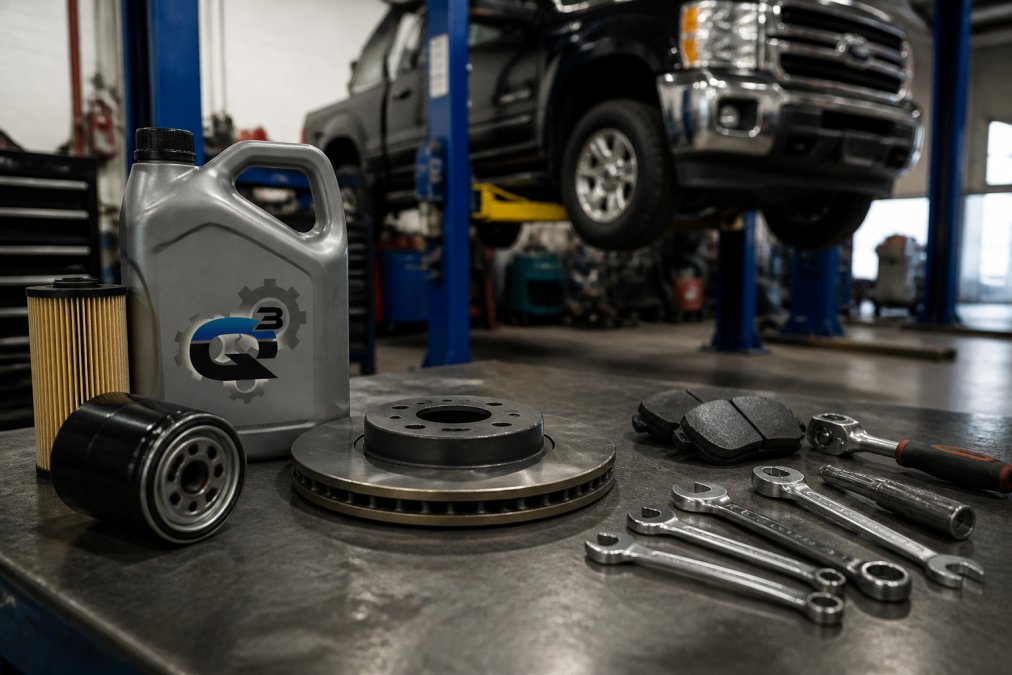
 listicle
Professional Automotive Maintenance Services 2026
Table of Contents
- Why Professional Automotive Maintenance Matters in 2026
- Preventative Maintenance for Older Cars: What You Need to Know
- The 30-60-90 Mile Maintenance Schedule Explained
- Routine Service Intervals and Fleet Efficiency
- Technician Certification and Training Standards
- How Professional Maintenance Reduces Long-Term Operational Costs
- Digital Transformation and Predictive Maintenance Technology
- Conclusion
Last Updated: August 17, 2026
Why Professional Automotive Maintenance Matters in 2026
Professional automotive maintenance has become more critical than ever. Vehicle systems grow increasingly complex each year, with integrated electronics, advanced emissions controls, and sophisticated safety features that demand expertise to maintain properly. At Q3 Car & Truck Repair, we understand that skipping or delaying maintenance doesn't save money, it costs it. A single missed service interval can trigger cascading problems that turn a $200 maintenance visit into a $2,000 repair.
The reality is straightforward: professional automotive maintenance services protect your investment and keep you safe on the road. Modern vehicles communicate their needs through onboard diagnostics, but interpreting those signals requires training and specialized equipment. When you choose professional automotive maintenance, you're choosing preventative care over crisis management.
According to the National Institute for Automotive Service Excellence, properly maintained vehicles experience fewer breakdowns and maintain higher resale value. This isn't theoretical, it's the difference between a vehicle that runs reliably for 200,000 miles and one that becomes unreliable at 100,000.
The stakes are higher in 2026 than they've ever been. Repair costs have climbed, supply chains remain unpredictable, and vehicle downtime directly impacts your work schedule and personal life. Professional automotive maintenance services eliminate guesswork and give you a clear roadmap for keeping your car or truck in top condition.
Preventative Maintenance for Older Cars: What You Need to Know
Preventative maintenance for older cars isn't optional, it's the only strategy that keeps aging vehicles reliable. Older vehicles have more wear on their systems, and components that were new when the car rolled off the lot are now tired. Seals dry out, hoses crack, and metal corrodes. Without preventative maintenance, an older car becomes a liability rather than an asset.
The challenge with older vehicles is that problems don't announce themselves until they've become expensive. A small coolant leak becomes a head gasket failure. A worn serpentine belt becomes alternator damage. Preventative maintenance for older cars catches these issues before they cascade.
What makes this different from newer vehicles is the inspection intensity. Older cars need more frequent fluid analysis, more careful monitoring of belts and hoses, and closer attention to brake system components. A professional technician knows which systems on your specific model year tend to fail first and can prioritize those inspections accordingly.
Common maintenance tasks for older vehicles include:
- Fluid analysis and replacement at shorter intervals than manufacturers originally specified
- Brake system inspection and component replacement before failure
- Cooling system flushing to remove corrosion buildup
- Transmission fluid analysis to catch internal wear early
- Suspension component inspection for wear and safety
The cost of preventative maintenance for older cars is predictable. The cost of deferred maintenance is not. One catastrophic failure can total an older vehicle that would have been reliable for years with proper care.
The 30-60-90 Mile Maintenance Schedule Explained
The 30-60-90 mile maintenance schedule is a proven framework for keeping vehicles in peak condition. This tiered approach breaks vehicle maintenance into manageable intervals that align with how components wear over time. Understanding this schedule prevents you from either over-maintaining your vehicle or under-maintaining it.
At 30,000 miles, your vehicle needs its first major service. This is when initial wear patterns emerge and some components approach their first replacement interval. The 30,000-mile service typically includes:
- Oil and filter change
- Tire rotation and balance
- Brake inspection
- Fluid level checks (coolant, transmission, power steering)
- Air filter replacement
- Battery health assessment
At 60,000 miles, your vehicle enters its second major service phase. Wear accelerates at this point, and components that showed early wear at 30,000 miles may need replacement. The 60,000-mile service typically includes:
- Transmission fluid analysis and possible replacement
- Coolant system flush
- Brake pad and rotor inspection
- Suspension component wear assessment
- Spark plug evaluation
- Cabin air filter replacement
At 90,000 miles, your vehicle demands intensive attention. This is where preventative maintenance truly separates reliable vehicles from problem vehicles. The 90,000-mile service includes:
- Major fluid replacements (transmission, coolant, brake fluid)
- Suspension component replacement
- Brake system overhaul
- Electrical system comprehensive check
- Engine diagnostic scan
The 30-60-90 mile maintenance schedule isn't arbitrary. It reflects how vehicle systems degrade under real-world driving conditions. Following this schedule keeps repair costs predictable and prevents catastrophic failures that strand you on the roadside.
Routine Service Intervals and Fleet Efficiency
Routine service intervals are the backbone of fleet efficiency. For businesses managing multiple vehicles, consistent maintenance scheduling directly impacts operational costs, vehicle availability, and driver safety. A fleet without structured service intervals becomes a money pit, vehicles fail unpredictably, drivers lose productivity, and replacement costs skyrocket.
Fleet efficiency depends on three elements: preventative maintenance, predictive scheduling, and consistent execution. Routine service intervals provide the framework for all three.
Preventative maintenance keeps fleet vehicles on the road. A single vehicle breakdown costs a business money through lost productivity, towing fees, and repair expenses. When you multiply that across a fleet of 5, 10, or 20 vehicles, the cost of unplanned downtime becomes enormous. Routine service intervals prevent those breakdowns by catching wear before it becomes failure.
Predictive scheduling allows fleet managers to plan maintenance during slow business periods rather than during peak operations. Instead of losing a vehicle when it fails unexpectedly, you schedule its maintenance during a planned window. This keeps your fleet operational and your customers served.
Consistent execution requires a maintenance tracking system. Spreadsheets fail. Fleet managers forget which vehicle is due for service. Professional shops like Q3 Car & Truck Repair maintain detailed service records and send reminders, ensuring no vehicle slips through the cracks.
The routine service intervals for fleet vehicles typically follow this pattern:
- Every 3,000-5,000 miles: oil changes, filter replacements, fluid level checks
- Every 15,000-20,000 miles: tire rotation, brake inspection, suspension check
- Every 30,000-50,000 miles: major fluid replacements, component wear assessment
- Every 60,000+ miles: transmission service, coolant system overhaul, electrical diagnostics
Fleet efficiency isn't about doing more maintenance, it's about doing the right maintenance at the right time. Routine service intervals provide that clarity.
Technician Certification and Training Standards
Professional technician certification separates shops that know what they're doing from shops that guess. ASE certification, the Automotive Service Excellence credential, is the industry standard that tells you a technician has demonstrated competency in their specialty. When you bring your vehicle to a shop with certified technicians, you know they've been tested and verified.
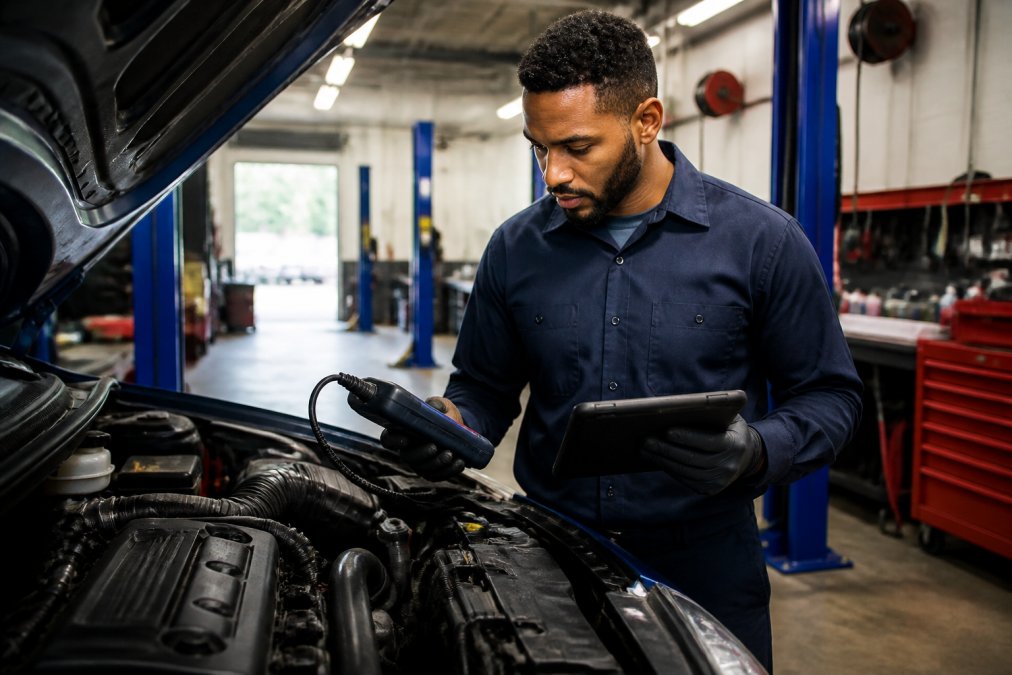
ASE certification requires technicians to pass rigorous exams covering their specialty area. A technician certified in engine repair has proven they understand engine systems, diagnostics, and repair procedures. A technician certified in transmission repair has demonstrated expertise specific to transmission systems. This specialization matters because modern vehicles are complex, a technician who understands engines may not understand transmissions.
Beyond ASE certification, professional technicians pursue ongoing training. Vehicle systems change every year. New diagnostic tools emerge. Repair procedures evolve. Shops that invest in technician training stay current with these changes. Shops that don't fall behind.
The training standards for automotive technicians include:
- ASE certification in at least one specialty area (engine repair, transmission, brakes, electrical, heating/cooling, suspension)
- Manufacturer-specific training for vehicles they service regularly
- Diagnostic equipment operation and interpretation
- Safety procedures and hazardous material handling
- Customer communication and service documentation
- Continuing education to maintain certifications
When you choose a shop with certified technicians, you're choosing expertise. Q3 Car & Truck Repair's commitment to hiring skilled technicians with years of training means your vehicle receives professional attention from people who know exactly what they're doing.
Technician certification and training standards exist because vehicle repair isn't guesswork. It's a profession that demands knowledge, skill, and continuous learning. Certified technicians have proven they meet those standards.
How Professional Maintenance Reduces Long-Term Operational Costs
Professional maintenance reduces long-term operational costs through a simple mechanism: prevention is cheaper than repair. This principle applies whether you're maintaining a personal vehicle or managing a fleet of work trucks.
The math is straightforward. A preventative oil change costs less than an engine replacement. A brake pad replacement costs less than a rotor and caliper replacement. A coolant flush costs less than a head gasket repair. Professional automotive maintenance services intercept problems before they become expensive.
Long-term operational costs include more than just repair expenses. They include vehicle downtime, towing fees, rental vehicle costs, lost productivity, and reduced resale value. A vehicle that's regularly maintained stays on the road, maintains its value, and keeps your business running. A vehicle that's neglected fails unexpectedly, creating cascading costs.
Consider the cost profile of a typical vehicle over 150,000 miles:
| Maintenance Approach | Preventative (Regular Service) | Deferred (Skip Maintenance) |
|---|---|---|
| Routine fluid changes | Scheduled, predictable | Delayed, then emergency |
| Component replacement | Planned intervals | Unexpected failures |
| Downtime | Minimal, scheduled | Frequent, unplanned |
| Repair costs | Moderate, spread over time | Severe, concentrated |
| Resale value | Higher | Significantly lower |
| Total operational cost | Lower | Much higher |
Professional maintenance also reduces operational costs through efficiency. A well-maintained vehicle runs more efficiently, consuming less fuel and requiring fewer repairs. For fleet operations, this efficiency multiplies across every vehicle.
The long-term perspective matters. A business owner who skips maintenance to save money in year one faces catastrophic costs in year two when vehicles fail. A business owner who invests in professional maintenance spreads costs predictably and avoids crisis expenses.
Digital Transformation and Predictive Maintenance Technology
Digital transformation in automotive maintenance has fundamentally changed how professionals diagnose and prevent vehicle problems. Where technicians once relied on experience and intuition, they now use data and predictive analytics to identify issues before they become failures.
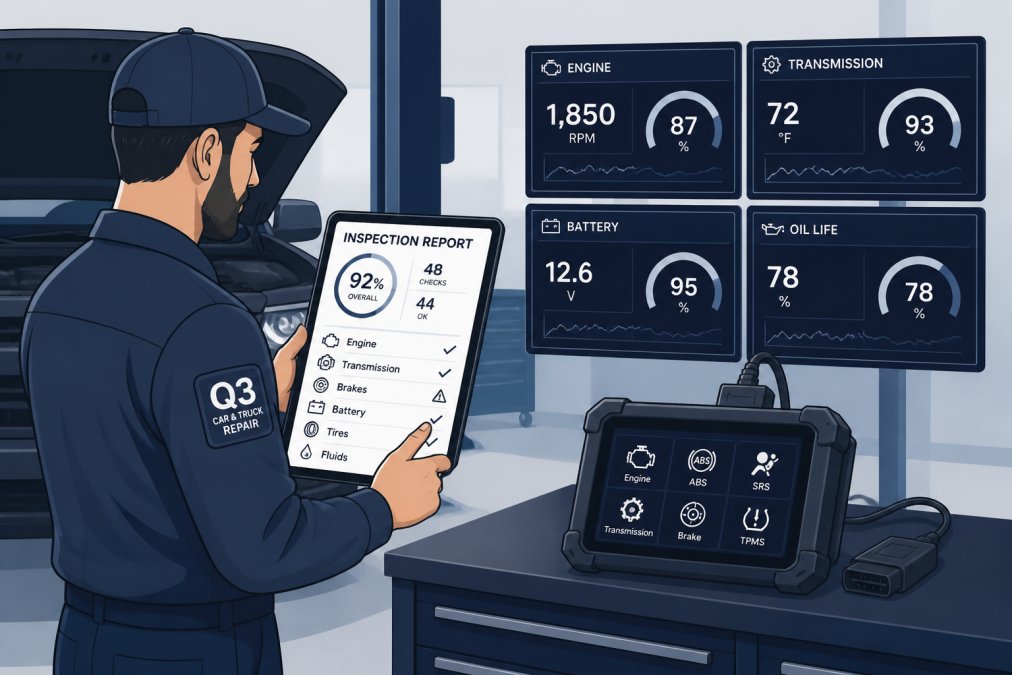
Predictive maintenance technology works by monitoring vehicle systems continuously. Modern vehicles generate thousands of data points every minute, engine temperature, fuel mixture, tire pressure, brake wear, electrical system voltage, transmission fluid condition. Professional shops now capture this data and analyze it to predict failures before they occur.
The practical benefit is enormous. Instead of waiting for a warning light to illuminate, a technician can see that a component is degrading and schedule replacement during planned maintenance. Instead of a customer stranded on the highway, they get a call suggesting service before failure occurs.
Digital transformation also improves transparency. Q3 Car & Truck Repair uses digital vehicle inspections to show customers exactly what they found. Rather than describing problems verbally, technicians provide visual documentation. Customers see the worn brake pads, the cracked hose, the corroded battery terminal. This transparency builds trust and helps customers understand why repairs are necessary.
Predictive maintenance technology includes:
- Onboard diagnostic systems that monitor all vehicle systems
- Fluid analysis that detects wear particles and contamination
- Thermal imaging that identifies electrical problems and overheating components
- Vibration analysis that detects bearing wear and suspension problems
- Pressure testing that reveals cooling system and brake system issues
The result is professional automotive maintenance services that are more accurate, more transparent, and more cost-effective. Technicians catch problems earlier. Customers understand what's happening. Vehicles stay reliable longer.
Digital transformation has also improved service scheduling and record-keeping. Professional shops now maintain detailed digital records of every service, making it easy to track maintenance history and plan future service intervals. This documentation is invaluable for resale value and warranty claims.
Professional automotive maintenance services in 2026 represent your best defense against vehicle failures, unexpected repair costs, and the frustration of unreliable transportation. Whether you drive an older vehicle that needs extra attention or manage a fleet that depends on consistent uptime, professional maintenance prevents problems and keeps costs predictable.
The choice between professional maintenance and deferred maintenance isn't really a choice, it's the difference between planning for success and hoping for luck. Q3 Car & Truck Repair brings certified technicians, transparent communication, and a commitment to quality workmanship to every vehicle that comes through our doors. We handle cars and trucks of all ages, from routine maintenance to complex repairs, with the expertise and care your vehicle deserves.
Request an appointment with Q3 Car & Truck Repair today and experience the difference professional automotive maintenance makes. Our straightforward estimates and honest guidance ensure you understand exactly what your vehicle needs and why.
Frequently Asked Questions
What is the 30-60-90 rule for car maintenance?
The 30-60-90 mile maintenance schedule refers to service intervals at 30,000, 60,000, and 90,000 miles. At 30,000 miles, rotate tires and inspect brakes. At 60,000 miles, replace engine air filters and check transmission fluid. At 90,000 miles, replace spark plugs and perform fluid analysis. Following this schedule keeps your vehicle running efficiently and prevents costly repairs down the road.
Why is preventative maintenance more cost-effective than emergency repairs?
Preventative maintenance catches small problems before they become expensive failures. Regular oil changes, fluid checks, and inspections cost far less than replacing an engine or transmission. A blown engine can cost $4,000 to $8,000, while routine maintenance runs a fraction of that annually. Professional automotive maintenance extends vehicle longevity and saves money over time by addressing wear before it causes breakdown.
What certifications should I look for in a professional automotive technician?
Look for ASE (Automotive Service Excellence) certification, which requires technicians to pass rigorous exams and maintain continuing education. ASE-certified technicians demonstrate expertise in engine repair, brakes, electrical systems, and diagnostics. Many shops also employ technicians trained on specific vehicle brands. Ask about your technician's certifications and years of experience, this directly reflects the quality of service you'll receive.
How often should I schedule professional maintenance for an older vehicle?
Older vehicles typically need more frequent professional maintenance than newer models. Schedule service every 3,000 to 5,000 miles for oil changes, and perform comprehensive inspections twice yearly. Fluid analysis helps identify wear patterns early. Work with a technician experienced in older vehicles who can spot developing issues before they strand you. Regular preventative maintenance for older cars keeps them reliable and safe.
This article was written using GrandRanker