 ultimate-guide
How to Manage Vehicle Fleet: A Complete 2026 Guide
Table of Contents
- What Is Fleet Management and Why It Matters
- Core Benefits of Fleet Management for Your Business
- Preventative Maintenance for Older Cars and Vehicles
- Creating a Fleet Maintenance Schedule Template
- Best Fleet Management Software for Small Business
- Reducing Fleet Operational Costs Without Sacrificing Quality
- Driver Safety, Compliance, and Risk Management
- Conclusion
Last Updated: August 20, 2026
What Is Fleet Management and Why It Matters
Fleet management is the practice of overseeing and coordinating a group of vehicles to optimize operational efficiency, reduce costs, and ensure regulatory compliance. For businesses managing multiple cars, trucks, or specialized vehicles, this involves real-time monitoring, preventive maintenance scheduling, driver behavior tracking, and strategic asset use.
Why does this matter? A fleet is often a company's second-largest operating expense after labor. Without structured management, vehicles sit idle, maintenance gets deferred until breakdowns occur, fuel costs spiral, and compliance violations pile up. The difference between a managed fleet and an unmanaged one isn't subtle, it's the difference between predictable costs and constant surprises.
At Q3 Car & Truck Repair, we work with local business owners who manage small fleets of work vehicles. The ones who succeed are the ones who treat fleet management as a system, not a reaction. They schedule maintenance before problems start. They track which drivers are burning fuel unnecessarily. They know their vehicle acquisition and disposal cycles. They understand their total cost of ownership, not just the sticker price.
This guide walks you through the core practices that separate well-run fleets from ones that hemorrhage money. We'll cover the benefits you'll actually see, the maintenance schedules that prevent breakdowns, the software tools that make tracking manageable, and the cost-control strategies that work in practice, not just in theory.
Core Benefits of Fleet Management for Your Business
The benefits of implementing fleet management aren't abstract. They hit your bottom line directly.
Reduced operational costs come first. When you track fuel consumption, optimize routes, and schedule preventive maintenance instead of emergency repairs, your per-vehicle costs drop measurably. A transmission failure that costs several thousand dollars gets prevented by a maintenance schedule that costs hundreds. Fuel waste from inefficient driving patterns gets caught and corrected. These aren't small savings, they compound across every vehicle in your fleet.
Extended vehicle lifecycle is the second major benefit. A well-maintained vehicle lasts longer and retains more resale value. Preventive maintenance scheduling keeps components in working order before they fail catastrophically. This means your vehicles stay in service longer, you get better returns when you dispose of them, and you avoid the hidden costs of downtime while waiting for repairs.
Improved driver safety and accountability matters legally and operationally. When drivers know their behavior is monitored, acceleration patterns, braking habits, idle time, they drive more carefully. Real-time monitoring through telematics systems also helps you identify risky driving patterns before they result in accidents. Insurance companies recognize this and often offer lower premiums for fleets with documented safety programs.
Regulatory compliance becomes manageable instead of chaotic. Different jurisdictions have different requirements for vehicle inspections, emissions testing, and maintenance records. A structured fleet management approach ensures you're documenting everything correctly, which protects you if an audit happens.
Better data for decision-making is the final piece. You'll know which vehicles are costing you the most to operate, which drivers need additional training, which routes consume the most fuel, and when your fleet is ready for replacement cycles. These insights let you make strategic decisions instead of reactive ones.
Preventative Maintenance for Older Cars and Vehicles
Older vehicles require more attention, not less. This is where many small business owners make their biggest mistake, they wait until something breaks, then pay premium prices for emergency repairs.
Preventative maintenance for older cars means establishing a schedule based on the vehicle's age, mileage, and manufacturer recommendations. Common maintenance intervals include oil changes, filter replacements, coolant flushes, transmission fluid checks, and brake inspections. The specific schedule depends on whether you're managing passenger vehicles, work trucks, or specialized equipment.
For older vehicles specifically, several components deserve extra attention. Belts and hoses become brittle and prone to failure as vehicles age. Transmission fluid degrades over time, and transmission repairs are expensive. Cooling systems develop leaks. Suspension components wear out. Electrical systems can become unreliable. A preventative approach means replacing these items before they fail, not after.
The cost-benefit calculation is straightforward: a $200 belt replacement during scheduled maintenance beats a $2,000 repair bill when the belt breaks on the highway and damages the engine. A $300 transmission fluid flush every 50,000 miles costs far less than a transmission rebuild.
Q3 Car & Truck Repair works with business owners managing older vehicles because we understand that age doesn't mean unreliable if maintenance is consistent. We've seen work trucks operate reliably for years beyond their expected service life because their owners stayed disciplined about preventive maintenance. The alternative, ignoring maintenance and hoping the vehicle holds up, is how you end up with a broken-down truck and a job site waiting for a replacement.
Creating a Fleet Maintenance Schedule Template
A maintenance schedule template is your operational foundation. Without it, maintenance gets forgotten, deferred, or done inconsistently across different vehicles.
Start with the manufacturer's recommendations for each vehicle type in your fleet. These are baseline minimums, not optional suggestions. Group vehicles by type, all pickup trucks might follow one schedule, all vans another. This simplifies tracking and ensures consistency.
Your template should include:
- Oil and filter changes at the manufacturer's recommended intervals (typically 3,000-7,500 miles for older vehicles, longer for newer ones)
- Fluid checks and replacements including coolant, transmission fluid, brake fluid, and power steering fluid
- Brake inspections and pad replacements based on wear patterns and mileage
- Tire rotation and replacement on a schedule tied to mileage or condition
- Battery testing and replacement before failure occurs
- Filter replacements for engine air, cabin air, and fuel filters
- Suspension and steering inspections to catch wear before it becomes dangerous
- Electrical system checks for older vehicles prone to charging or starting issues
Document everything. Record the date, mileage, work performed, parts replaced, and technician who did the work. This creates accountability and gives you data to identify patterns, if one vehicle consistently needs expensive repairs, that's a signal it might be time to replace it.
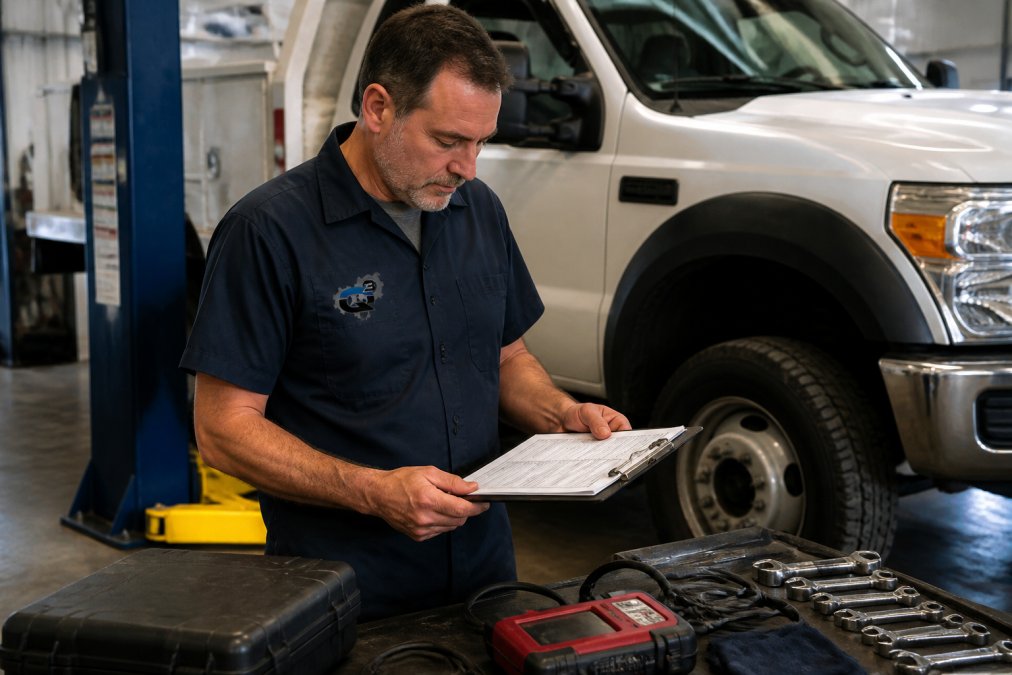
The schedule should be tied to your fleet management software or a simple spreadsheet if you're starting small. When a vehicle reaches its next scheduled maintenance date, someone should be notified and the appointment should be booked. This prevents the common mistake of letting maintenance slide because nobody remembered it was due.
For small fleets, quarterly reviews of your maintenance schedule make sense. Are vehicles hitting their service dates on time? Are there patterns of unexpected repairs between scheduled maintenance? Are you finding issues during preventive inspections that would have become major problems? Use this data to refine your schedule.
Best Fleet Management Software for Small Business
Fleet management software transforms scattered maintenance records and manual tracking into a centralized system where you can see the health and status of every vehicle in real time.
For small business owners, the software needs to be affordable, relatively simple to implement, and focused on the metrics that actually matter: maintenance schedules, fuel consumption, driver behavior, and vehicle location.
Key features to look for include:
- GPS tracking and route optimization so you know where vehicles are and can identify inefficient routing
- Maintenance scheduling and alerts that remind you when service is due and track completed work
- Fuel consumption monitoring to catch excessive fuel use or potential fuel theft
- Driver behavior tracking through telematics data on acceleration, braking, and idle time
- Vehicle diagnostics integration that pulls data directly from vehicle computers to surface problems early
- Mobile app access so drivers and managers can update information and check status from anywhere
- Reporting and analytics that show you cost trends, maintenance history, and fleet health over time

The software landscape includes enterprise solutions designed for fleets of hundreds of vehicles, which are overkill and expensive for small businesses. Mid-market options are more appropriate. Many of these platforms offer tiered pricing based on fleet size, so you pay for what you use.
Implementation typically takes a few weeks. You'll need to input your vehicle data, connect any available vehicle diagnostics systems, set up maintenance schedules in the software, and train your team on how to use it. The learning curve is manageable for most small business owners and their teams.
The real value emerges after a few months of data collection. You'll start seeing patterns: which vehicles are most expensive to operate, which drivers need additional training, which routes are most efficient. These insights let you make informed decisions about vehicle replacement, driver management, and route planning.
Reducing Fleet Operational Costs Without Sacrificing Quality
Cost reduction in fleet management isn't about cutting corners on maintenance or pushing vehicles past their limits. It's about eliminating waste and inefficiency.
Start with fuel management. Excessive idling burns fuel without moving anything. Aggressive acceleration and hard braking waste fuel and increase wear on components. Underinflated tires increase fuel consumption. Poor route planning means unnecessary miles. A fleet management system with telematics data shows you exactly where fuel waste is happening, then you can address it through driver training, route optimization, or vehicle maintenance.
Vehicle acquisition and disposal decisions significantly impact total cost of ownership. Buying used vehicles instead of new ones can reduce initial capital expense, but older vehicles typically have higher maintenance and fuel costs. The sweet spot for many small fleets is vehicles in the 3-5 year age range, past the steep depreciation curve but still reliable enough that maintenance costs are predictable. When you dispose of vehicles, timing matters. Selling a vehicle before major repairs become necessary preserves resale value.
Preventive maintenance scheduling reduces emergency repairs, which are always more expensive than planned maintenance. An oil change on schedule costs less than engine damage from running low on oil. A transmission fluid flush on schedule costs less than a transmission rebuild.
Driver training programs reduce accidents, insurance claims, and vehicle damage. Drivers who understand fuel-efficient driving techniques consume less fuel. Drivers trained on proper vehicle operation and care cause fewer mechanical failures. These aren't soft benefits, they're measurable cost reductions.
Consolidate service providers where possible. If you're taking vehicles to different shops for different services, you lose economies of scale and consistency. Working with a single trusted shop like Q3 Car & Truck Repair means you build a relationship, the technicians know your vehicles, and you get consistent pricing and quality. This also simplifies your maintenance documentation and scheduling.
Review your fleet composition regularly. If you have vehicles sitting idle frequently, that's a cost you're carrying without benefit. If certain vehicles consistently have high repair costs, replacement might be more economical than continuing to repair them. Data-driven decisions about fleet composition are more profitable than keeping vehicles out of habit.
Driver Safety, Compliance, and Risk Management
Fleet safety isn't just about preventing accidents, it's about protecting your business legally and financially.
Driver behavior monitoring through telematics systems provides data on how safely drivers are operating vehicles. Excessive speeding, hard braking, rapid acceleration, and aggressive turning patterns all increase accident risk. When you have this data, you can intervene with additional training before an accident happens.
Driver training programs should cover vehicle operation, fuel-efficient driving, and safety protocols. Many insurance companies offer discounted rates for fleets with documented driver training programs. The investment in training typically pays for itself through reduced accidents and insurance claims.
Maintenance compliance is a safety issue. Vehicles with faulty brakes, worn tires, or failed lighting systems are hazards. Preventive maintenance schedules ensure vehicles stay mechanically sound. Regular inspections catch problems before they become dangerous.
Regulatory compliance varies by jurisdiction and vehicle type. Commercial vehicles may require specific inspections, emissions testing, or safety certifications. Vehicles operating across state lines may have additional requirements. Keeping detailed maintenance records and inspection documentation protects you if a regulatory audit occurs.
Insurance and risk mitigation should include documented safety programs, maintenance records, and driver training. Insurance companies view fleets with formal safety and maintenance programs as lower-risk, which translates to lower premiums. The documentation also protects you if an accident results in liability claims, you can demonstrate that you took reasonable steps to maintain safe vehicles and train safe drivers.
Managing a vehicle fleet effectively separates thriving small businesses from ones constantly dealing with breakdowns, unexpected costs, and operational chaos. The practices covered here, preventive maintenance scheduling, fleet management software, cost control, and safety programs, aren't complicated, but they do require discipline and consistency.
Q3 Car & Truck Repair has worked with local business owners managing small fleets for years. The ones who succeed are the ones who treat maintenance as a system, not an afterthought. They understand that a $300 scheduled maintenance appointment prevents a $3,000 emergency repair. They track their vehicles' health and costs. They invest in driver training and safety programs. They work with a shop they trust to deliver honest, reliable service without surprises.
If you're managing a fleet of work vehicles and need a partner you can trust for consistent, transparent maintenance and repair work, Q3 Car & Truck Repair is here to help. Our team of skilled technicians knows how to keep older vehicles and work trucks operating reliably. We provide straightforward estimates, honest communication about what your vehicles actually need, and quality workmanship that keeps your fleet on the road. Request an appointment today and let's build a maintenance plan that works for your business.
Frequently Asked Questions
How are fleet vehicles managed effectively?
Fleet vehicles are managed through a combination of preventive maintenance scheduling, real-time GPS tracking, driver behavior monitoring, and fuel management systems. Successful fleet management requires regular maintenance logs, compliance tracking, and data-driven decision-making. Most businesses use fleet management software to automate scheduling, monitor vehicle diagnostics, and track asset utilization. The key is establishing clear policies, maintaining consistent communication with drivers, and addressing issues before they become costly problems.
What is the most important aspect of fleet maintenance?
Preventive maintenance is the most critical aspect of fleet management. Regular servicing prevents unexpected breakdowns, extends vehicle lifecycle, and reduces total cost of ownership significantly. A structured maintenance schedule template ensures no vehicle is overlooked and catches small issues before they become expensive repairs. Preventative maintenance for older cars is especially important, as these vehicles require more frequent attention to maintain reliability and safety compliance.
How do I keep track of a fleet of vehicles?
Use fleet management software that provides real-time monitoring, GPS tracking, and maintenance scheduling capabilities. Document all service records, fuel purchases, and repair history in a centralized system. Assign each vehicle a unique identifier and track its operational metrics including mileage, fuel efficiency, and idle time. Regular audits of your fleet maintenance schedule template help identify patterns and catch compliance issues early. For small businesses, cloud-based solutions offer affordable tracking without expensive infrastructure.
Is fleet management difficult for small businesses?
Fleet management becomes manageable when you implement the right systems and processes. Small businesses benefit from starting with basic preventive maintenance schedules and simple tracking tools before upgrading to comprehensive software. The challenge is consistency rather than complexity. Many small business owners successfully manage fleets by establishing clear maintenance policies, training drivers on vehicle care, and using affordable fleet management software designed for small operations. Professional guidance from trusted repair shops helps ensure your vehicles receive proper care.
How can reducing fleet operational costs improve profitability?
Reducing fleet operational costs directly increases profit margins by controlling fuel expenses, minimizing unexpected repairs, and optimizing driver efficiency. Preventive maintenance reduces breakdown costs by up to 40%. Route optimization cuts fuel consumption and idle time. Driver training programs improve vehicle care and safety. Fleet management software identifies inefficiencies in real-time. Even small improvements in fuel efficiency and maintenance intervals compound across multiple vehicles, making cost reduction one of the highest-impact fleet management strategies.
What should a fleet maintenance schedule template include?
A comprehensive fleet maintenance schedule template should include routine oil changes, tire rotations, brake inspections, fluid top-ups, and manufacturer-recommended service intervals. It must track preventive maintenance dates, document completed work, record parts replaced, and flag upcoming services. For older vehicles, add more frequent inspections for wear items. Include seasonal maintenance like battery checks and coolant flushes. The template should identify which vehicles need service, assign responsibility, and provide space for technician notes. Digital templates in fleet management software send automatic reminders and generate compliance reports.
How does fleet management software help small businesses?
Best fleet management software for small business automates maintenance scheduling, tracks vehicle health through diagnostics, monitors GPS location and fuel consumption, and generates compliance reports. It eliminates manual tracking, reduces administrative time, and provides data-driven insights for cost control. Software alerts you to maintenance needs before breakdowns occur, helping you plan repairs efficiently. Many solutions offer mobile-friendly interfaces so drivers can report issues in real-time. Small businesses can start with basic features and scale up as they grow without major infrastructure investments.
This article was written using GrandRanker